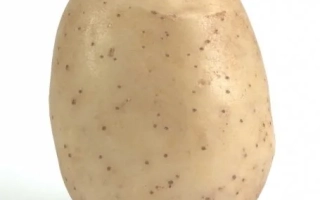
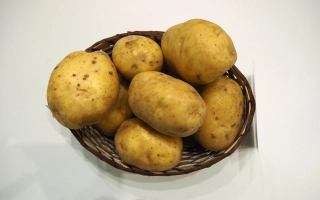
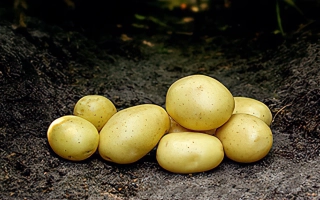
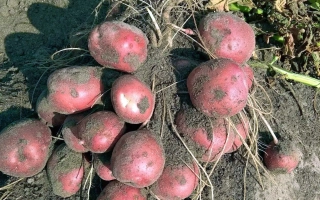
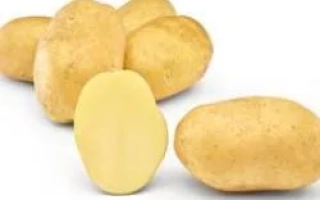
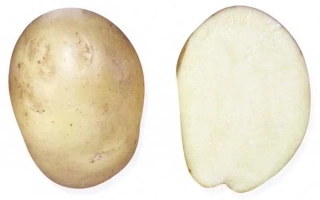
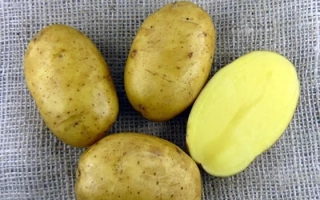
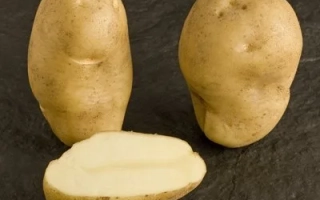
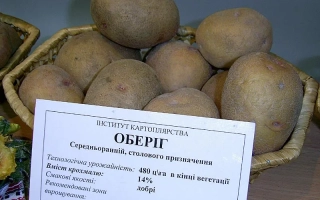
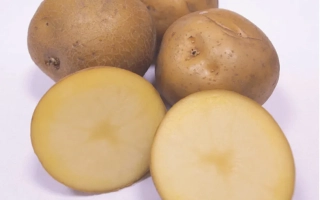
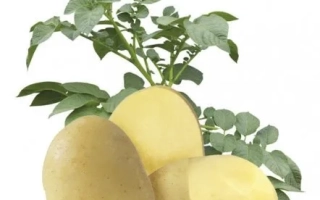
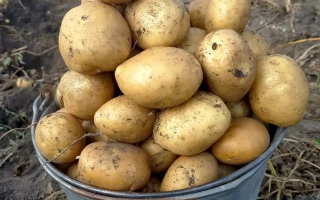
The Melody potato is a medium-late, table-type variety of Dutch origin with a vegetation period of 115-120 days. Tubers have an oval-round shape, large size — the mass of a single tuber ranges from 96 to 179 grams. The skin is light-yellow with a smooth surface and superficially located eyes, while the flesh is also light-yellow and does not darken during boiling. The variety belongs to the culinary type AV, indicating moderately dense flesh with low starch content (11-17%) and moderate moisture. During thermal processing, tubers do not break down or break down slightly, allowing for a crumbly texture after boiling and a soft interior with a crispy crust when fried.
Melody potato plants are characterized by a strong root system and stress resistance, ensuring stable and high yield. Each plant forms 7 to 15 medium-sized tubers. With proper agronomic practices, including watering, fertilization, and soil loosening, yields can reach 176 to 335 centners per hectare, with maximum yields up to 636 centners per hectare. The variety is resistant to several diseases, including potato cancer, golden cyst nematode, crinkly mosaic, and has moderate resistance to late blight of foliage and tubers.
Melody potato has high storability — up to 95% over a 7-8 month storage period, preserving flavor and appearance of tubers. The variety is suitable for industrial and organic cultivation throughout Ukraine, and is popular in Russia and Moldova. Due to its versatile culinary properties, this potato is ideal for preparing various dishes, offering excellent taste and appealing appearance.