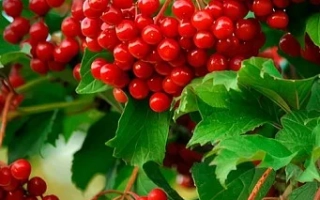
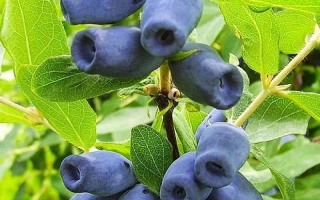
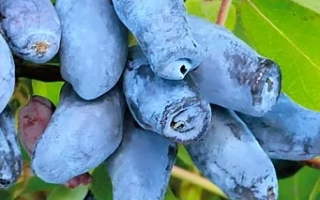
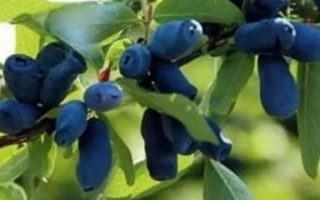
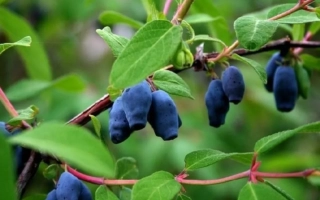
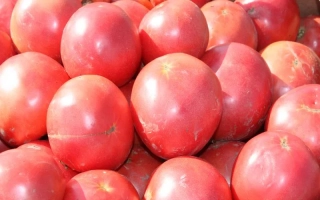
Ribes «Big-Berried» – medium-sized bush or small tree, reaching a height of 3–3.5 m, bearing fruit regularly from the third to the fourth year after planting. It is noted for its high resistance to diseases, frost, and drought, as well as low maintenance complexity: it requires only a sunny spot and moderate watering in soil of normal quality or chernozem. The recommended distance between plants is 1–2 m.
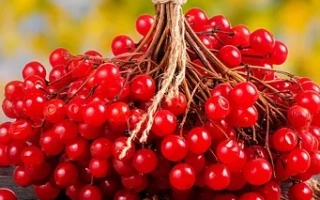
The berries of big-berried ribes have an average weight of up to 1.3 g and a bright red flesh color. They are tender, sweet with a slight bitter aftertaste, and have a high vitamin C content (up to 82 mg per 100 g). The fruits are well preserved when cut and are used to make compotes, jellies, jams, juices, marmalade, and pastilles.
Ribes has medicinal properties: the juice is used for bronchial asthma, hypertension, cough, colds, as well as an external remedy for pimples and skin disorders. Decoctions with honey are used for kidney diseases and jaundice, while infusions are used for gastritis, ulcers, and liver problems. Thanks to its decorative qualities, ribes is often planted both in groups and individually, as its bright berries attract attention even in winter.