
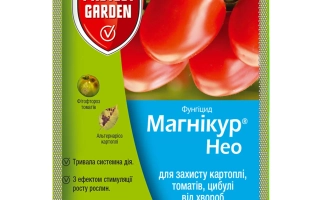

SKU #618
·
2 920 views
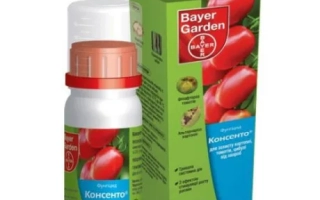
Concento 450 SC
Fungicides
Schirm GmbHUser rating
0 votes0% positive reviews
No ratings yet — be the first.
Maximum number of treatments
2
Last Processing Date, Days
20
Type of Action
Systemic fungicide
Form of the preparation
Suspension concentrate
Prices in stores
from8.88 €per 1 l
pack from 0.83 € per 20 ml
5 offers from 3 stores
Store offers · 5 from 3 stores
Prices are updated on loadLoading offers…
Available at: 2sotki · Agrolider N · Agrolife · Agromax · agroteka.com.ua · Pomidorka · Дім садівника · Все Росте
Aggregator catalog: prices are collected automatically from store websites, normalized by AI and converted at the current exchange rate. Before ordering, confirm the price and availability on the store's website. This block is not indexed by search engines — the data is loaded after the page opens.
About product

A systemic fungicide with a dual mechanism of action, designed to protect vegetable and oilseed crops from late blight and alternaria.
Maximum number of treatments
2
Last Processing Date, Days
20
Type of Action
Systemic fungicide
Form of the preparation
Suspension concentrate
Description
Synergy of Active Ingredients
"Consento 450 SC" relies on the combination of two active substances: propamocarb hydrochloride (375 g/l) and fenamidone (75 g/l). This dual-action approach transforms the product into a versatile tool for comprehensive pathogen control. Propamocarb provides systemic action, rapidly infiltrating plant tissues, which is essential for protecting potatoes and tomatoes from late blight, even if the infection has already begun. Fenamidone provides strong translaminar and protective properties, establishing a durable barrier on the leaf surface to block alternaria and downy mildew.
Technological Formulation Benefits
The suspension concentrate (SC) formulation ensures optimal working solution stability and high adhesion. Due to its systemic nature, the product distributes effectively throughout the vegetative parts of the crop, reducing risks associated with uneven spray coverage. This is particularly advantageous for crops with dense canopy structures, such as sunflower or bulb onions.
Application Guidelines for Agronomists
- Resistance Management: The combination of different chemical classes prevents the development of cross-resistance in fungal pathogens.
- Dosage and Timing: Recommended application rates range from 1.0 to 2.0 L/ha. A maximum of 2 applications per season is permitted.
- Harvest Intervals: A pre-harvest interval of 14 days ensures compliance with safety standards, making it suitable for both preventive care and early-stage treatment.
With manufacturing pedigree from leading industry players including Bayer AG, Arista LifeScience, and specialized EU production sites, Consento 450 SC delivers high technical consistency and active ingredient purity, ensuring reliable field performance in diverse agricultural conditions.
Composition
Active ingredients
- Fenamidone фунгицид Имидозолиноны
- Propamocarb hydrochloride фунгицид Карбаматы
Application
Used on crops
Against diseases
Specifications hover over for a hint about the specification
|
Maximum number of treatments
Maximum number of treatments
Maximum recommended number of treatments per vegetation period. |
2 |
|---|---|
|
Last Processing Date, Days
Last Processing Date, Days
Number of days from processing to harvest cleanup |
20 |
|
Type of Action
Type of Action
Insecticides are divided into contact, systemic, stomach, and fumigants based on their mode of entry into the organism. Contact insecticides affect insects upon contact with any part of their body, penetrating into their organism through the integument. They are used against pest... |
|
| Form of the preparation | |
|
Drug Consumption
Drug Consumption
Mass of the preparation per unit of treated area. It is customary to express the dosage rate in kilograms per hectare. The dosage rate is most often given in terms of 100% active ingredient, although sometimes it is calculated based on the preparation in the form of application w... |
From 1.0 - 2.0 L/ha |
| Danger Class | 3 |
| Registration year | 2018 |
| Catalog | Catalog → Fungicides |
| Manufacturer | Schirm GmbH |
| Manufacturer | BAYER |
| Manufacturer | Arysta LifeScience |
| Manufacturer | Cheminova Deutschland GmbH & Co. KG |
| Manufacturer | Isagro S.p.A. |
| Manufacturer | Bayer LP |
| Manufacturer | Phytorop S.A. |
| Manufacturer | SBM Formulation S.A. |
| Legal data |
Show · 1
|
| Country | Germany |
Not yet комментариев. Be the first!
Alternatives
Fungicides · similar preparations



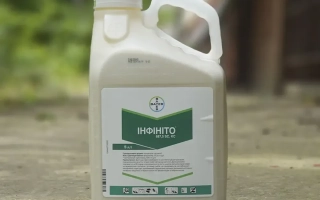
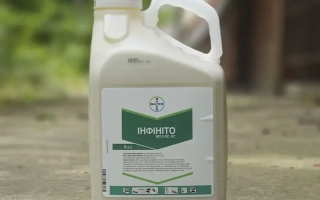
Infinite 61 SC
фірмі Байєр КропСаєнс АГ, м.Франкфурт, Німеччина
054 6 offers
22.54 €per 1 l ≈ 1 164 ₴



See also
Often considered together with this product






Recently viewed
Products you’ve viewed on this site
Reviews · 0