
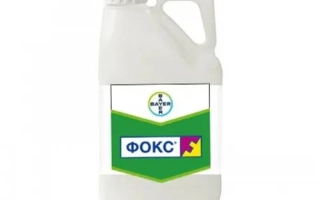


SKU #631
·
1 251 views
Medison 263 SC
Fungicides
Schirm GmbHUser rating
0 votes0% positive reviews
No ratings yet — be the first.
Maximum number of treatments
2
Last Processing Date, Days
30
Type of Action
Systemic fungicide
Form of the preparation
Suspension concentrate
Prices in stores
from13.59 €per 1 l
pack from 5.42 € per 10 ml
21 offer from 17 stores
Store offers · 21 from 17 stores
Prices are updated on loadLoading offers…
Available at: Agrariyam · Agro-Time · Агрозахист · Agrobest · Agromaks2020 · Agrotovar · ePole · Fermerenko · Harvest Center · ЗЗР Агро · Nazorey · Semena-online · Sprint Agro · TDA Shop · Vetapteka Vinnica · Вітасад
Aggregator catalog: prices are collected automatically from store websites, normalized by AI and converted at the current exchange rate. Before ordering, confirm the price and availability on the store's website. This block is not indexed by search engines — the data is loaded after the page opens.
About product

A powerful combination of prothioconazole and trifloxystrobin for comprehensive control of fungal diseases in cereals and beets.
Maximum number of treatments
2
Last Processing Date, Days
30
Type of Action
Systemic fungicide
Form of the preparation
Suspension concentrate
Description
Systemic Protection for Your Crops
«Madison 263 SС» is a professional-grade crop protection solution that leverages the synergy between triazoles and strobilurins. By combining prothioconazole and trifloxystrobin, this product provides broad-spectrum control over critical pathogens in cereal crops and fodder beet. It acts both curatively and preventively, making it an essential tool for high-yield farming.
Technological Edge
As a suspension concentrate, the formulation ensures excellent surface adhesion and rapid penetration into plant tissues. Its systemic action allows for uniform distribution throughout the plant, offering protection against diseases like rust, septoria, powdery mildew, and various rot complexes. This is particularly effective during the plant's active growth phases when disease pressure can rapidly escalate.
International Standards
Developed through a collaborative effort of major global chemical entities, including Bayer AG and several European manufacturing partners, «Madison 263 SС» is engineered for performance and reliability. It is a proven solution in the European agricultural market, trusted for its consistent impact on phytosanitary safety.
- Maximum applications per season: 2.
- Pre-harvest interval: 30 days.
- Application rate: 0.5–1.0 L/ha.
Integrating this systemic fungicide into your management program helps mitigate pathogen-related risks and secures your crop's development throughout its life cycle.
Composition
Active ingredients
- Prothioconazole фунгицид Триазолы
- Trifloxystrobin фунгицид Стробилурины
Application
Used on crops
Against diseases
Specifications hover over for a hint about the specification
|
Maximum number of treatments
Maximum number of treatments
Maximum recommended number of treatments per vegetation period. |
2 |
|---|---|
|
Last Processing Date, Days
Last Processing Date, Days
Number of days from processing to harvest cleanup |
30 |
|
Type of Action
Type of Action
Insecticides are divided into contact, systemic, stomach, and fumigants based on their mode of entry into the organism. Contact insecticides affect insects upon contact with any part of their body, penetrating into their organism through the integument. They are used against pest... |
|
| Form of the preparation | |
|
Drug Consumption
Drug Consumption
Mass of the preparation per unit of treated area. It is customary to express the dosage rate in kilograms per hectare. The dosage rate is most often given in terms of 100% active ingredient, although sometimes it is calculated based on the preparation in the form of application w... |
From 0.5 - 1.0 L/ha |
| Danger Class | 2 |
| Registration year | 2019 |
| Catalog | Catalog → Fungicides |
| Manufacturer | Schirm GmbH |
| Manufacturer | BAYER |
| Manufacturer | Arysta LifeScience |
| Manufacturer | Cheminova Deutschland GmbH & Co. KG |
| Manufacturer | Isagro S.p.A. |
| Manufacturer | Bayer LP |
| Manufacturer | Phytorop S.A. |
| Manufacturer | SBM Formulation S.A. |
| Legal data |
Show · 1
|
| Country | Germany |
Not yet комментариев. Be the first!
Alternatives
Fungicides · similar preparations





See also
Often considered together with this product



Recently viewed
Products you’ve viewed on this site
Reviews · 0