


SKU #73931
·
60 views
VULPINA
Foxtail Grass
DLFUser rating
0 votes0% positive reviews
No ratings yet — be the first.
Usage
Hay Bales, Pasture
Registration year
2025
About product

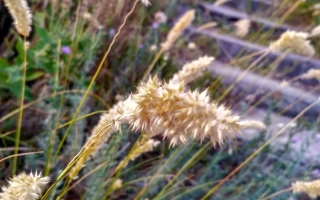
VULPINA – a perennial grass of the Poaceae family, belonging to the genus Cenchrus (species Cenchrus ciliaris L.). The plant is characterized by erect, ascending shoots 30–120 cm tall and loose tussocks. Leaf blades are narrow (4–8 mm), flat, rough-textured, green, with smooth sheaths; the ligule is 1–2.5 mm long and covered with a membranous surface bearing awns or short hairs.The inflorescence i…
Usage
Hay Bales, Pasture
Registration year
2025
Description
VULPINA – a perennial grass of the Poaceae family, belonging to the genus Cenchrus (species Cenchrus ciliaris L.). The plant is characterized by erect, ascending shoots 30–120 cm tall and loose tussocks. Leaf blades are narrow (4–8 mm), flat, rough-textured, green, with smooth sheaths; the ligule is 1–2.5 mm long and covered with a membranous surface bearing awns or short hairs.
The inflorescence is a cylindrical spikelet panicle (9 cm long and about 1 cm wide) with short branches pressed to the axis. Glume scales are equal, keeled, and fused almost to the middle; the lower floral scale has a projecting awn on the back. Caryopses are ovoid, flattened, 4–6 mm long, and 1000 seeds weigh about 0.3 g when harvested.
In natural conditions, VULPINA prefers dry meadows, floodplain meadows, shorelines, edges, and glades. The plant tolerates prolonged flooding (30–45 days) well but does not withstand stagnant water, soil salinity, or drought. It is shade-tolerant and frost-hardy, often forming pure stands on meadows with mixed herbs and grasses.
The forage value of the plant is high: seeds contain 5.1 kg of digestible protein per 100 kg of hay, and hay yield ranges from 25 to 60 c/ha. Per 100 kg of hay, there are approximately 48 feed units and 10 g of carotene. The plant is resistant to hay drying and moderate grazing, though it can be rapidly depleted under intensive grazing.
VULPINA is widely cultivated in Europe, Asia, and North America as a valuable hay and pasture plant. Thanks to its high biomass productivity (up to the 3rd year of life) and good adaptation to various climatic conditions, it is actively used for establishing cultivated pastures and hay meadows.
The inflorescence is a cylindrical spikelet panicle (9 cm long and about 1 cm wide) with short branches pressed to the axis. Glume scales are equal, keeled, and fused almost to the middle; the lower floral scale has a projecting awn on the back. Caryopses are ovoid, flattened, 4–6 mm long, and 1000 seeds weigh about 0.3 g when harvested.
In natural conditions, VULPINA prefers dry meadows, floodplain meadows, shorelines, edges, and glades. The plant tolerates prolonged flooding (30–45 days) well but does not withstand stagnant water, soil salinity, or drought. It is shade-tolerant and frost-hardy, often forming pure stands on meadows with mixed herbs and grasses.
The forage value of the plant is high: seeds contain 5.1 kg of digestible protein per 100 kg of hay, and hay yield ranges from 25 to 60 c/ha. Per 100 kg of hay, there are approximately 48 feed units and 10 g of carotene. The plant is resistant to hay drying and moderate grazing, though it can be rapidly depleted under intensive grazing.
VULPINA is widely cultivated in Europe, Asia, and North America as a valuable hay and pasture plant. Thanks to its high biomass productivity (up to the 3rd year of life) and good adaptation to various climatic conditions, it is actively used for establishing cultivated pastures and hay meadows.
Crop & resistance
Crop
Specifications
| Usage | |
|---|---|
| Registration year | 2025 |
| Catalog | Catalog → Foxtail Grass |
| Manufacturer | DLF |
| Country | Denmark |
Store offers
Prices are updated on loadLoading offers…
Aggregator catalog: prices are collected automatically from store websites, normalized by AI and converted at the current exchange rate. Before ordering, confirm the price and availability on the store's website. This block is not indexed by search engines — the data is loaded after the page opens.
Not yet комментариев. Be the first!
Alternatives
Foxtail Grass · similar varieties

See also
Often considered together with this variety






Recently viewed
Products you’ve viewed on this site
Reviews · 0