


SKU #4362
·
229 views
Berezovka
Currant
User rating
0 votes0% positive reviews
No ratings yet — be the first.
Type of Sort
Blackcurrant
About product

Medium-ripening variety, obtained at Buryat PIAOS (now Buryat NIISS) from crossing the varieties 'Pushistaya' and 'Omskaya 2'. Breeders: T.I. Voronina, E.G. Sokratova, G.S. Smolina, D.A. Markova. Included in the State Register of Selection Achievements approved for use in the East Siberian region in 2000.
Strong-growing, moderately spreading bush. Growing shoots are medium, straight, light gre…
Type of Sort
Blackcurrant
Description
Medium-ripening variety, obtained at Buryat PIAOS (now Buryat NIISS) from crossing the varieties 'Pushistaya' and 'Omskaya 2'. Breeders: T.I. Voronina, E.G. Sokratova, G.S. Smolina, D.A. Markova. Included in the State Register of Selection Achievements approved for use in the East Siberian region in 2000.
Strong-growing, moderately spreading bush. Growing shoots are medium, straight, light green, hairless, matte.
Five-lobed leaf, dark green, large. Leaf blade is bare, glossy, leathery, slightly wrinkled, concave along the central vein. Lobes are sharp with small notches; middle lobe strongly bent downward, lateral lobes with raised edges. Leaf base has a small notch. Teeth are sharp and short. Petioles are purple.
Flowers are medium, bell-shaped, lilac. Stamens are positioned at the level of the pistil. Fruit cluster is very short (2.5–3.0 cm), dense, with a straight, hairy axis.
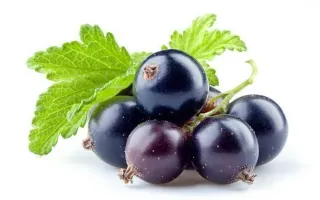
Berries are medium-sized (0.9–1.5 g), round, black, glossy, ripen simultaneously, with medium skin density, few seeds, dry detachment, transportable. Pedicel is short, green, fleshy; calyx is medium, closed. Flavor is sour-sweet (4.7 points), delicate, with aroma. Berries are of universal use. Chemical composition: dry solids — 12.8–14.1%, titratable acidity — 1.8–2.2%, total sugars — 8.6–10.8%, ascorbic acid — 101.2–174.2 mg/100 g, polyphenolic compounds — 198.0–254.0 mg/100 g, soluble pectin — 0.5–0.7%.
Highly winter-hardy, highly self-fertile (60–75%), weak drought resistance, resistant to powdery mildew and bud mite, easily propagated by green and woody cuttings and layering, average yield 9 t/ha, maximum — 13 t/ha.
Advantages of the variety: high yield, winter hardiness, high self-fertility, resistance to powdery mildew and bud mite.
Disadvantages of the variety: weak drought resistance, insufficient berry size.
Crop & resistance
Crop
Disease resistance
Pest resistance
Specifications
| Type of Sort | |
|---|---|
| Catalog | Catalog → Currant |
Store offers
Prices are updated on loadLoading offers…
Aggregator catalog: prices are collected automatically from store websites, normalized by AI and converted at the current exchange rate. Before ordering, confirm the price and availability on the store's website. This block is not indexed by search engines — the data is loaded after the page opens.
Not yet комментариев. Be the first!
Alternatives
Currant saplings · similar varieties




See also
Often considered together with this variety




Recently viewed
Products you’ve viewed on this site
Reviews · 0