


SKU #57098
·
27 views
Memory
Corn
User rating
0 votes0% positive reviews
No ratings yet — be the first.
Ripening
Early
Hybrid Type
Variety (population)
Kernel Type
Yellow-Orange, Flint
Use Direction
Silage, Food, Fresh Consumption, Food Products
About product

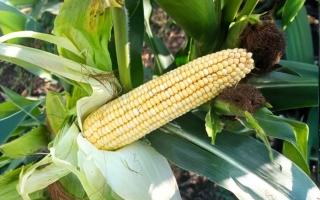
An early-maturing flint corn variety, highly valued for its versatility in silage, animal feed, and human food production.
Ripening
Early
Hybrid Type
Variety (population)
Kernel Type
Yellow-Orange, Flint
Use Direction
Silage, Food, Fresh Consumption, Food Products
Description
A Reliable Variety for Versatile Farm Operations
The «Pamyat» (Memory) maize variety, developed by breeder Viktor Vasilyevich Milenin, represents a cornerstone of adaptive selection. Unlike modern intensive hybrids that require strictly controlled environments, «Pamyat» offers stability and versatility, making it a preferred choice for producers who value consistency over high-input performance.
Agronomic Profile and Characteristics
The primary advantage of this variety is its early maturation cycle. This trait allows the crop to avoid late-season weather volatility, ensuring reliable harvests even in regions with shorter growing seasons. The kernel type is flinty (crenated), displaying a vibrant yellow-orange color. This specific endosperm structure provides the grain with excellent physical durability and high nutritional density, which defines its market niche.
Core Applications
- Silage Production: The variety produces high-quality vegetative biomass, which is essential for creating nutrient-dense forage for livestock.
- Feed Industry: Due to the characteristics of the flinty grain, it serves as an excellent component for high-quality animal feed.
- Food and Fresh Consumption: Unlike purely industrial hybrids, «Pamyat» is noted for its good taste profile, making it suitable for both fresh consumption and food industry processing.
«Pamyat» stands out as a pragmatic solution for farmers seeking to lower production costs without sacrificing quality. Its adaptability to soil conditions and natural resilience make it a long-standing favorite for those who prioritize efficiency and a predictable return on their investment.
Crop & resistance
Crop
Specifications hover over for a hint about the specification
| Ripening | Early |
|---|---|
| Hybrid Type | |
|
Kernel Type
Kernel Type
Dent corn (Zea mays indentata) — Large, elongated, flat kernels. The endosperm is horny on the sides of the kernel, mealy in the center and at the top. A depression forms at the top of the kernel upon ripening. Dent corn is the most widely cultivated group among others. Plants ty... |
|
|
Use Direction
Use Direction
Dual-purpose hybrids: for silage and grain in all growing regions. These are "stay-green" type hybrids, meaning the plants remain green for a longer period. However, this does not affect the sugar, cellulose, and hemicellulose content, nor the degree of lignification of the plant... |
|
| Registration year | 2013 |
| Catalog | Catalog → Corn |
| Legal data |
Show · 1
|
| Country | Russia |
Store offers
Prices are updated on loadLoading offers…
Aggregator catalog: prices are collected automatically from store websites, normalized by AI and converted at the current exchange rate. Before ordering, confirm the price and availability on the store's website. This block is not indexed by search engines — the data is loaded after the page opens.
Not yet комментариев. Be the first!
Alternatives
Maize seeds · similar varieties




See also
Often considered together with this variety





Recently viewed
Products you’ve viewed on this site
Reviews · 0