
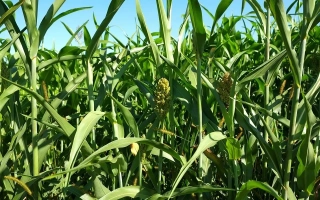


SKU #31828
·
49 views
DKC3711
Corn
MONSANTOUser rating
0 votes0% positive reviews
No ratings yet — be the first.
FAO
90–1240
Ripening
90-100 days
Hybrid Type
Variety (population)
Use Direction
Silage, Bioethanol, Biogas
Store offers · 4 from 3 stores
Prices are updated on loadLoading offers…
Available at: Агроексперт-Трейд · Prom-agro · TD Everest · TDA Shop
Aggregator catalog: prices are collected automatically from store websites, normalized by AI and converted at the current exchange rate. Before ordering, confirm the price and availability on the store's website. This block is not indexed by search engines — the data is loaded after the page opens.
About product

A high-performance hybrid optimized for silage, bioethanol, and biogas production with 72% starch content.
FAO
90–1240
Ripening
90-100 days
Hybrid Type
Variety (population)
Use Direction
Silage, Bioethanol, Biogas
Description
Maximizing Biogas and Silage Yields
When producing silage for energy purposes—whether it's bioethanol or biogas—the starch content is the primary driver of profitability. The DKS3711 hybrid from Monsanto is a proven workhorse that consistently hits that 72% starch mark. Based on field observations, the 90-100 day maturity window is a massive advantage for logistics planning, ensuring the silage window is managed efficiently.
Resilience and Protection
From an operational standpoint, disease management is crucial. DKS3711 shows robust resistance to common smut, which saves us significant time and budget on fungicide applications. It also holds up well against Fusarium and stalk rot, ensuring that the biomass remains healthy throughout the entire growing season until harvest.
Seeding Flexibility
One of the aspects I appreciate most is the planting density flexibility. Whether you are operating on lower-yielding soil or intensive acreage, the range of 65,000 to 85,000 plants per hectare allows for precise optimization. Even at the higher end of the density spectrum (80-85k), the stalks maintain excellent integrity, which makes harvesting significantly smoother.
- Classification: Hybrid corn.
- FAO Rating: 90–1240.
- Starch Content: 72%.
- Maturity: 90-100 days.
- Primary Usage: Silage, Bioethanol, Biogas.
- Recommended Density: 65-85k plants/ha.
If you need a reliable hybrid that delivers consistent energy output and high-quality biomass, DKS3711 remains a top-tier choice for modern agricultural operations.
Crop & resistance
Crop
Disease resistance
Specifications hover over for a hint about the specification
|
FAO
FAO
Corn hybrids are classified by maturity groups and by the FAO number. All corn hybrids are distributed according to the FAO scale. Under Central European conditions, a difference of 10 FAO units between hybrids results in a 1-2 day difference in their maturity. The higher the FAO... |
90–1240 |
|---|---|
| Ripening | 90-100 days |
| Hybrid Type | |
|
Use Direction
Use Direction
Dual-purpose hybrids: for silage and grain in all growing regions. These are "stay-green" type hybrids, meaning the plants remain green for a longer period. However, this does not affect the sugar, cellulose, and hemicellulose content, nor the degree of lignification of the plant... |
|
|
Recommended Density
Recommended Density
Optimal productivity is achieved at a planting density of 4000-5500 plants/ha. Possible planting scheme: 300-500x40-80 cm. |
65-70 thousand pcs/ha, 75-80 thousand pcs/ha, 80-85 thousand pcs/ha |
| Starch content, % | 72 |
| Registration year | 2015 |
| Catalog | Catalog → Corn |
| Manufacturer | MONSANTO |
| Country | USA |
Not yet комментариев. Be the first!
Alternatives
Maize seeds · similar varieties







See also
Often considered together with this variety



Recently viewed
Products you’ve viewed on this site
Reviews · 0