


SKU #69897
·
53 views
Mazurka
Chrysanthemum
User rating
0 votes0% positive reviews
No ratings yet — be the first.
Plant Type
Shrubbery, Decorative
Plant Height
Medium (30-60)
Flower Color
Red
Bloom Time
Early (September)
About product

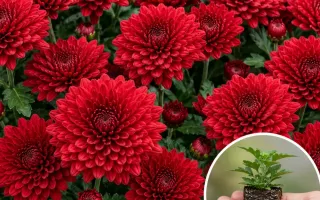
The Mazurka chrysanthemum variety is a compact bush reaching about 60 cm in height, featuring erect, moderately foliated stems and sturdy flower stalks. The inflorescences of this variety are red, single, dense, and measure about 5 cm in diameter. Each plant forms between 500 and 580 inflorescences, ensuring abundant and prolonged blooming from late September for approximately 33 days. Mazurka is…
Plant Type
Shrubbery, Decorative
Plant Height
Medium (30-60)
Flower Color
Red
Bloom Time
Early (September)
Description
The Mazurka chrysanthemum variety is a compact bush reaching about 60 cm in height, featuring erect, moderately foliated stems and sturdy flower stalks. The inflorescences of this variety are red, single, dense, and measure about 5 cm in diameter. Each plant forms between 500 and 580 inflorescences, ensuring abundant and prolonged blooming from late September for approximately 33 days. Mazurka is resistant to diseases such as septoria and rust, making it a versatile and reliable choice for gardeners. This variety belongs to the group of small-flowered chrysanthemums and is a perennial plant of the aster family, originating from Korea and Japan. Korean selection chrysanthemums, including Mazurka, are characterized by simple, entire, and toothed leaves resembling oak leaves, which sometimes gives them the folk name "oak bushes". The plant is short-day and flowers for a long time, starting from late August and continuing until the first frosts, withstanding minor autumn frosts. For successful cultivation, Mazurka chrysanthemums are recommended to be planted in sunny areas with well-drained, slightly acidic, and organic-rich soil, avoiding waterlogging. The plant requires regular, abundant watering, especially during the budding period, as well as two feedings with mineral fertilizers — in spring to build green mass and during budding to enhance flowering. To form a more compact and bushy bush, stems should be pinched, and to increase flower size, extra buds should be removed, leaving only a few on the bush. For winter, bushes are cut back, leaving 5-10 cm of stems, and mulched with peat or manure, which ensures good wintering in the middle belt. In northern regions, additional covering is required.
Crop & resistance
Crop
Disease resistance
Specifications hover over for a hint about the specification
| Plant Type | |
|---|---|
| Plant Height | Medium (30-60) |
| Flower Color | |
| Bloom Time | |
|
Flowering Duration
Flowering Duration
Flowering begins on the 37-48th day after emergence and lasts 20-40 days. As for pollination, rapeseed is facultative self-pollinating (up to 20% of plants can self-pollinate cross-pollinated), the spatial isolation norm on seed plots is not less than 500m. |
21-30 |
| Cold Resistance | |
| Flower diameter, cm | Small-flowered (up to 5) |
| Assignment | |
| Light Requirement | |
| Planting Period | |
| Growing period (from planting to flowering), days | 91-120 |
| Scent | |
| Registration year | 1995 |
| Catalog | Catalog → Chrysanthemum |
| Legal data |
Show · 3
|
| Country | Russia |
Store offers
Prices are updated on loadLoading offers…
Aggregator catalog: prices are collected automatically from store websites, normalized by AI and converted at the current exchange rate. Before ordering, confirm the price and availability on the store's website. This block is not indexed by search engines — the data is loaded after the page opens.
Not yet комментариев. Be the first!
Alternatives
Chrysanthemum plants · similar varieties



See also
Often considered together with this variety






Recently viewed
Products you’ve viewed on this site
Reviews · 0