


SKU #61830
·
46 views
KOZA-YEGOZA
Cabbage
User rating
0 votes0% positive reviews
No ratings yet — be the first.
Plant Type
Colored cabbage
Direction
Fresh Market, Recycling
Maturation (seedlings)
50-60 days, 60-70 days
Head / Head; shape
Round-flat
About product

Colored cabbage of the Koza-Yegoza variety is a mid-early, high-yield variety that is characterized by synchronized ripening and versatility in cultivation. The plant development period varies depending on the planting time: when planted in March-April, the ripening period is 57 to 70 days; in April-June, it is 51 to 62 days; and when planted in June-July, it is 52 to 68 days. The plant forms a ro…
Plant Type
Colored cabbage
Direction
Fresh Market, Recycling
Maturation (seedlings)
50-60 days, 60-70 days
Head / Head; shape
Round-flat
Description
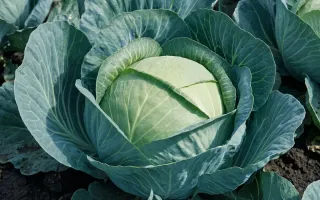
Colored cabbage of the Koza-Yegoza variety is a mid-early, high-yield variety that is characterized by synchronized ripening and versatility in cultivation. The plant development period varies depending on the planting time: when planted in March-April, the ripening period is 57 to 70 days; in April-June, it is 51 to 62 days; and when planted in June-July, it is 52 to 68 days. The plant forms a rosette of leaves pointing sharply upwards, with the head covered slightly by leaves, which facilitates harvest. The cabbage head is of medium convexity, very dense, without being loose, white in color without reddish or yellowish tints, weighing from 680 to 800 grams, sometimes reaching up to 1 kg.
The Koza-Yegoza variety is distinguished by its high commercial value and technological qualities, making it suitable for fresh consumption, canning, and freezing. The heads have a round-flat shape and maintain their qualities during storage, which expands their use in cooking, including the preparation of colorful side dishes and vegetable mixtures. The recommended planting density is about 4 plants per square meter, which promotes optimal development and high yield.
Moreover, this variety is resistant to autumn frosts and a number of diseases, making it a reliable choice for cultivation in various climatic conditions. Thanks to its characteristics, Koza-Yegoza is suitable for open ground cultivation in spring, summer, and autumn, ensuring a stable and quality yield throughout the season.
The Koza-Yegoza variety is distinguished by its high commercial value and technological qualities, making it suitable for fresh consumption, canning, and freezing. The heads have a round-flat shape and maintain their qualities during storage, which expands their use in cooking, including the preparation of colorful side dishes and vegetable mixtures. The recommended planting density is about 4 plants per square meter, which promotes optimal development and high yield.
Moreover, this variety is resistant to autumn frosts and a number of diseases, making it a reliable choice for cultivation in various climatic conditions. Thanks to its characteristics, Koza-Yegoza is suitable for open ground cultivation in spring, summer, and autumn, ensuring a stable and quality yield throughout the season.
Crop & resistance
Crop
Specifications hover over for a hint about the specification
| Plant Type | |
|---|---|
|
Direction
Direction
Existing varieties and types of cabbage are grown for fresh consumption, long-term storage, and technical processing. |
|
|
Maturation (seedlings)
Maturation (seedlings)
By the length of the vegetation period, cabbage varieties are conditionally divided into three maturity groups: early maturing (100 — 120 days), mid-season maturing (120 — 150 days), and late maturing (more than 150 days). When sowing cabbage seeds in March — April, cabbage seedl... |
50-60 days, 60-70 days |
|
Head / Head; shape
Head / Head; shape
The head shape depends on the cabbage variety. Thus, in white-headed, red-headed, and savoy cabbage, it is round or flat-round, in colored cabbage — compact, and in Peking cabbage — barrel-shaped. |
|
|
Cabbage head; mass
Cabbage head; mass
The mass of the cabbage head depends on the variety characteristics and cultivation techniques. It can reach 10 kg and even more. |
0.5-1.0 kg |
| Recommended Density | 40-50 thousand pcs/ha |
| Registration year | 2021 |
| Catalog | Catalog → Cabbage |
| Legal data |
Show · 2
|
| Country | Russia |
Store offers
Prices are updated on loadLoading offers…
Aggregator catalog: prices are collected automatically from store websites, normalized by AI and converted at the current exchange rate. Before ordering, confirm the price and availability on the store's website. This block is not indexed by search engines — the data is loaded after the page opens.
Not yet комментариев. Be the first!
Alternatives
Cabbage seeds · similar varieties





See also
Often considered together with this variety




Recently viewed
Products you’ve viewed on this site
Reviews · 0