
Potato yellowing alfamovirus
Potato yellowing
Potato yellowing alfamovirus is a plant pathogenic virus belonging to the Alfamovirus genus. It is characterized by its bacilliform virions containing positive-sense single-stranded RNA.
What the section contains
Potato yellowing alfamovirus
The virus acts as a systemic pathogen, colonizing the vascular tissues of the potato plant and disrupting the translocation of essential sugars and nutrients.
It is an obligate parasite that relies on mechanical transmission and the use of infected tubers to persist and spread within agricultural landscapes.
The biological nature of this virus allows it to maintain a latent stage in potato tubers, ensuring that subsequent crops are often infected from the start of the season.
Beyond cultivated potatoes, the virus can infect various wild Solanaceae species, which serve as long-term environmental reservoirs for the pathogen.
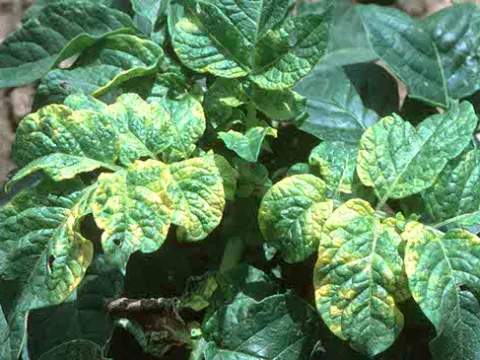
The primary symptom of the disease is a distinct interveinal yellowing (chlorosis) of the leaves, which eventually progresses across the entire leaf surface.
Infected plants exhibit stunted growth and loss of vigor, often appearing significantly smaller than healthy plants in the same field.
Leaf curling, deformation, and wrinkling are common, which severely limit the photosynthetic capacity of the plant and reduce overall tuber development.
Lower leaves frequently show signs of premature senescence and necrosis, leading to rapid foliage loss and a decrease in the canopy's health.
- interveinal chlorosis (yellowing);
- stunted vegetative growth;
- leaf curling and distortion;
- premature wilting of lower foliage;
- reduced tuber size and overall crop yield.
The virus thrives under moderate temperatures during the primary growth phase, making late spring and early summer high-risk periods.
Mechanical injury during agricultural practices, such as hilling and weeding, acts as a primary vector for the virus, especially when tools are contaminated.
The presence of insect vectors, such as aphids, can significantly enhance the rate of viral spread within a field if they are feeding on infected foliage.
Plants under environmental stress, including drought or imbalanced nutrient supply, are more susceptible to severe viral infection and display more pronounced symptoms.
Poor sanitation within the storage facility and during the planting process facilitates the movement of the virus between healthy and infected seed lots.
The economic impact of Potato yellowing alfamovirus is primarily linked to significant yield losses, often resulting in reduced tuber count and quality.
Infected potatoes often have lower starch content and reduced nutritional value, making them less suitable for commercial processing or consumption.
Viral infection weakens the plant's natural defense systems, increasing its vulnerability to secondary bacterial and fungal pathogens.
Using tubers from infected plants as seed potatoes leads to crop degeneration, forcing farmers to source new, certified seed stock frequently.
The cumulative effect of these factors is a major reduction in farm profitability due to increased labor costs and lower produce marketability.
The primary defense strategy is to plant certified, virus-free seed tubers obtained from reputable propagation programs that use tissue culture techniques.
Field sanitation is critical; immediately rogue and remove any plants showing symptoms of yellowing or leaf distortion to stop the primary infection cycle.
Implement rigorous weed control programs in and around fields to eliminate alternative hosts that allow the virus to persist between seasons.
Disinfect all farming equipment and tools between different fields to minimize the risk of mechanical transmission of the virus during the season.
Practice crop rotation and maintain isolation between commercial fields and seed production plots to further reduce the risk of viral cross-contamination.