
Potexvirus
Potexvirus
The genus Potexvirus consists of plant-pathogenic viruses with a single-stranded RNA genome. The virions are characterized by flexible, filamentous structures ranging from 470 to 580 nm in length.
What the section contains
Potexvirus
The type species of this genus is Potato virus X (PVX). Unlike many other plant viruses, potexviruses do not rely on specific insect vectors; they are primarily transmitted through mechanical means.
Transmission occurs through the physical contact of infected plant sap with healthy tissues. This frequently happens during agricultural operations such as pruning, cultivation, or even contact between foliage in the wind.
These viruses exhibit high environmental stability. They can persist on gardening tools, in crop residues, and within soil for extended periods, making them difficult to eradicate once established.
Potexviruses have a broad host range, infecting various families of plants, including Solanaceae (potatoes, tomatoes), Fabaceae (legumes), and various ornamental species.
Symptoms of potexvirus infection are highly variable and range from asymptomatic (latent) infections to severe morphological changes, depending on the virus strain and the host genotype.
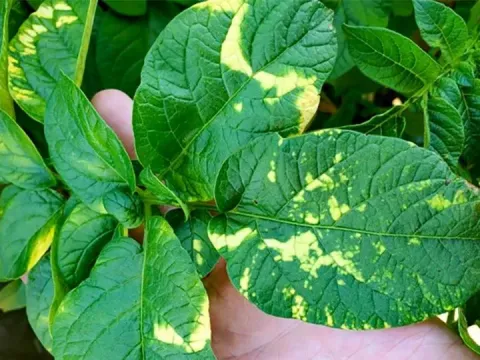
The most common visual symptom is mosaic patterns on leaves, characterized by alternating light and dark green areas. In severe cases, significant leaf deformation and puckering occur.
Infections can lead to chlorosis and the development of necrotic spots. These spots may coalesce over time, causing premature senescence and necrosis of entire leaves.
Affected plants often display stunted growth, leading to reduced overall vigor. In potatoes, the infection can cause mild mosaic or rugosity, often acting synergistically with other viruses to cause severe yield loss.
- Mosaic leaf patterning
- Leaf deformation and crinkling
- Chlorotic spotting
- Growth retardation
- Necrosis of leaf tissue
The spread of potexviruses is closely linked to agricultural activities. Any process that causes minor mechanical injury to plant tissues facilitates the entry of the virus.
Favorable conditions for virus persistence include moderate temperatures and high humidity, which help maintain the infectivity of the viral particles in sap on various surfaces.
High planting density increases the likelihood of virus transmission through physical contact between leaves and stems during high-wind events or cultivation processes.
The presence of weeds serves as a vital reservoir for the virus, allowing it to survive between cropping seasons and spread back into commercial fields.
Repeated use of the same land for susceptible host plants leads to an accumulation of viral inoculum in the soil and debris, steadily increasing disease pressure.
The primary economic impact of potexviruses is reduced crop yield. Infected plants channel energy into stress responses rather than biomass accumulation, resulting in significant losses.
Quality degradation is a major concern; for tubers and fruits, internal quality, taste, and storage capacity are often negatively affected, reducing their marketability.
Plants infected with potexviruses are generally more susceptible to secondary infections, such as bacterial or fungal pathogens, which can lead to premature crop failure.
Economic losses are compounded by the need for costly phytosanitary measures, including the systematic removal of infected plants and the purchase of certified virus-free seed stock.
Because many infections are latent, the virus can be unknowingly distributed through contaminated seed materials, turning healthy plots into new sources of infection.
The most effective strategy is the use of certified, virus-free seed material obtained through meristem-tip culture and rigorous laboratory indexing.
Strict sanitation protocols are essential: all tools used for pruning or cultivation must be disinfected after contact with each plant using approved disinfectants like alcohol or bleach.
Regular field scouting to rogue out and destroy infected plants is critical to prevent the local spread of the disease, along with maintaining rigorous weed control programs.
Implementing crop rotation and maintaining sufficient spatial isolation between susceptible crops helps to break the contact-based transmission cycle of the virus.
Breeding and deploying resistant or tolerant cultivars is the most sustainable long-term solution for managing potexviruses in intensive agricultural systems.