
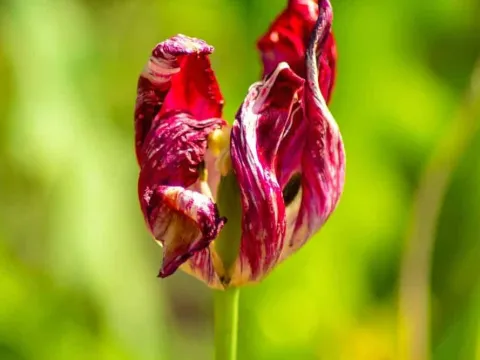
Tulip breaking
Tulip severe
The disease is caused by the Tulip breaking virus (TBV), a member of the Potyvirus genus. It is a highly specialized plant pathogen that exclusively infects members of the Liliaceae family.
What the section contains
Tulip breaking
While tulips are the most famous hosts, the virus can also persist in lilies. Lilies often act as symptomless carriers, maintaining the virus in the garden and serving as a reservoir for infection.
The primary transmission mechanism is through insect vectors. Various species of aphids transmit the virus in a non-persistent manner, meaning they pick it up while feeding and can immediately infect healthy plants.
Mechanical transmission is also common. The virus is easily spread by pruning tools, knives, and even gardeners' hands if they move from an infected plant to a healthy one without proper disinfection.
The virus does not spread through soil or seeds. However, it is systemic, meaning it infects the entire bulb and is passed down to all daughter bulbs, ensuring the disease persists year after year.
The most distinctive symptom is the color-breaking effect on the petals. Varieties that should have solid, uniform colors exhibit streaking, flecking, or feathered patterns that are actually symptoms of viral damage.
Leaves often show early signs of the infection, such as mild mosaic patterns, mottling, or light-green streaks. These symptoms are usually visible before the flower buds open, providing an early warning.
Over time, the plant loses vigor. Infected tulips often become shorter, the stems may twist, and the overall plant growth is significantly stunted compared to healthy bulbs of the same variety.
Flower quality suffers dramatically. Besides the color streaking, the flowers may appear deformed, smaller than average, or fail to open properly due to the physiological stress caused by the virus.
- Color streaking and feathering on petals
- Mosaic patterns or mottling on foliage
- Stunted height and poor stem strength
- Deformed flower shapes
- Gradual decline in bulb size and vigor
The primary harm is the destruction of the cultivar's ornamental value. What was once thought to be a desirable "breaking" of color is now recognized as a debilitating disease that ruins the intended look.
The virus leads to a gradual degeneration of the entire population. Infected bulbs produce smaller and weaker daughter bulbs, eventually leading to the total loss of the variety in the garden.
Infected plants serve as a constant source of inoculum. If not removed, they allow the virus to spread rapidly throughout the entire planting bed via aphid populations and routine gardening activities.
For professional bulb producers, the virus is a major threat that necessitates strict quarantine and phytosanitary measures, as infected stocks are often unsellable and must be destroyed.
The disease limits the diversity of tulips that can be grown, as older or more susceptible cultivars may succumb to the virus faster than others in areas with high aphid activity.
There is no known cure for infected bulbs. The only reliable management strategy is the immediate roguing (removal and destruction) of any plant that displays even minor symptoms of the virus.
Controlling aphid populations is essential. Using systemic or contact insecticides during the growing season helps reduce the frequency of insect-mediated virus transmission between tulip plants.
Rigorous sanitation of tools is mandatory. Tools used for cutting or dividing should be disinfected with alcohol or other effective sanitizers between every plant to prevent mechanical spread.
Always source bulbs from reputable, certified growers who conduct regular testing and inspection to ensure their stock is virus-free, avoiding bulbs from unknown or neglected gardens.
Spatial isolation is a key preventive measure. Keeping tulips separated from lilies and other ornamental bulbs that might act as hidden viral hosts significantly lowers the risk of primary infection.