
Southern cowpea mosaic virus
Sobemovirus scpmv
The causative agent of the disease is the Southern cowpea mosaic virus (SCPMV), which belongs to the Sobemovirus genus.
What the section contains
Southern cowpea mosaic virus
It is a small isometric virus containing a single-stranded RNA, known for its high level of contagiousness in field environments.
The virus demonstrates significant stability in the environment, allowing it to persist for long periods in plant debris and seeds.
This pathogen is highly specialized, primarily affecting members of the Fabaceae family, particularly cowpea and beans.
Genetic variability of the virus can lead to the emergence of new strains capable of overcoming resistance in some commercial crop varieties.
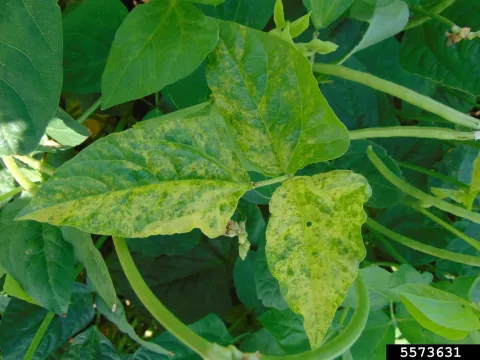
The primary symptom of infection is chlorotic mosaic on the leaves, manifesting as a pattern of light green and dark green spots.
As the disease progresses, deformation of the leaf blades is frequently observed, including wrinkling and a reduction in overall leaf size.
Infected plants show noticeable stunting, resulting in a dwarfed appearance compared to healthy neighboring plants.
In affected individuals, the number of flowers is reduced, and those that do develop are often malformed or drop prematurely.
Necrotic spots may appear on the pods, and the pods themselves often become deformed, which critically reduces the market value of the crop.
The primary vectors of the virus in agroecosystems are phytophagous insects, most commonly various species of leaf beetles and weevils.
Infection also spreads through mechanical wounding of plant tissues during agricultural practices or simply through contact between leaves.
High humidity and moderately warm temperatures favor the intense reproduction of insect vectors, which accelerates the spread of the disease.
The virus can be transmitted via seeds, which is a key factor in its wide geographical distribution across different farming regions.
Infected weeds belonging to the legume family often serve as reservoirs for the virus during the off-season.
The harmfulness of SCPMV lies in the substantial reduction of legume productivity, leading to significant yield losses in terms of seed production.
Infection during early growth stages often leads to complete plant sterility or premature death, reducing the overall crop stand density.
Beyond weight loss, the virus negatively affects the quality parameters of seeds, impairing their germination and vigor.
Accumulation of infection in seed stocks makes them unsuitable for subsequent planting, requiring a complete replacement with healthy seeds.
Economic losses are composed of direct yield reductions and the costs associated with mandatory phytosanitary measures to contain disease outbreaks.
The foundation of protection is the use of certified, virus-free seed material that has undergone rigorous laboratory screening.
It is essential to strictly maintain spatial isolation between new legume plantings and areas where the pathogen was previously detected.
Controlling insect vectors is a crucial stage of management, which should be carried out using insecticides during early growth phases.
Regular rogueing and destruction of infected plants and weed reservoirs help significantly lower the overall infection pressure.
Implementing crop rotation with non-host plants allows growers to break the pathogen's life cycle effectively in specific fields.