
Plant reoviruses
Reoviridae
The pathogens belong to the family Reoviridae, which consist of a segmented double-stranded RNA genome. These systemic pathogens invade plant cells and severely disrupt normal molecular processes.
What the section contains
Plant reoviruses
These viruses lack a lipid envelope and possess a complex capsid structure, contributing to their high environmental stability. They are strictly transmitted by specific insect vectors rather than through mechanical sap contact.
Leafhoppers are the primary vectors for these viruses. The virus undergoes replication within the insect's body, which is a key biological feature allowing for persistent and often transovarial transmission.
The specificity of the virus-vector relationship limits the host range and geographical distribution. Each reovirus type is generally adapted to transmit through particular species of hemipteran insects.
Upon infection, viral particles accumulate in the cytoplasm of host cells, creating distinct inclusions that serve as diagnostic markers for laboratory identification using electron microscopy.
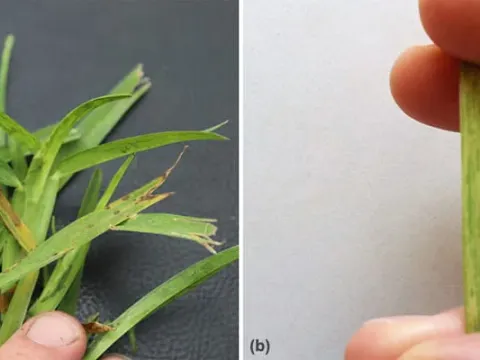
The hallmark symptom of plant reovirus infection is severe stunting. Plants exhibit shortened internodes and a rosette-like growth habit, making them appear significantly smaller than healthy counterparts.
Leaves often show chlorotic patterns, striping, or mosaic symptoms, which are indicative of hampered chlorophyll synthesis and impaired nutrient transport within the vascular system.
In cereal crops, reoviruses trigger abnormal tillering, resulting in a clump of weak, unproductive shoots. The plant's energy is diverted from grain development to excessive vegetative malformations.
Root systems are also compromised, becoming less vigorous and more susceptible to soil-borne pathogens. This further weakens the plant, making it unable to recover from environmental stress.
In late-stage infections, the plant may reach maturity but produce poorly filled panicles or ears. The grains produced are typically shriveled, lightweight, and have low germination potential.
The prevalence of reoviral diseases is primarily driven by the population density of insect vectors. Warm, dry weather conditions usually favor the migration and rapid feeding activity of leafhoppers.
Temperatures ranging from 20 to 28 degrees Celsius are optimal for both viral replication within the host and the life cycle of the vector insects, accelerating the spread across fields.
Reservoir weed hosts play a crucial role in overwintering the virus. These plants serve as local hubs for infection, allowing the virus to persist between cropping seasons in the absence of main crops.
Planting dates are critical; early or late sowing can sometimes prevent the most susceptible growth stages of the crop from coinciding with the peak flight and migration periods of vectors.
Nutritional status and soil health also impact disease progression. Plants under stress or suffering from nutrient deficiencies show more pronounced and rapid symptom development after infection.
The primary economic impact is a massive reduction in grain yield. Severe infections can lead to total crop failure, as the plant fails to produce a viable reproductive output.
Systemic viral infections disrupt photosynthesis, resulting in significantly lower biomass accumulation. This affects not just the quantity but also the nutritional quality of the harvest.
Because these viruses are systemic, infected plants cannot be cured. Furthermore, the presence of the virus in seeds can occasionally lead to vertical transmission, complicating long-term management.
Infested areas become economically non-viable for traditional farming. Increased costs for pesticide application against vectors drastically reduce the profit margins of the affected farm.
The persistence of reoviruses in the local ecosystem often limits the choice of cultivars available to farmers, necessitating the use of resistant varieties which may not always be available.
The first line of defense is the use of high-quality, virus-free certified seeds. Selecting resistant or tolerant cultivars is the most sustainable approach to mitigating yield losses.
Managing vector populations is essential. Applying systemic insecticides at the early growth stages is necessary to disrupt the transmission chain and prevent initial field colonization.
Sanitation practices, such as the systematic removal of weeds around field margins, effectively reduce the number of potential reservoirs and vector habitats near the crop.
Monitoring fields closely allows for the identification and removal of symptomatic plants. This rogueing process is helpful in preventing the virus from spreading further during the season.
Integrating crop rotation and adjusting sowing dates based on regional vector monitoring data helps interrupt the infection cycle and keeps the population of virus carriers under control.