
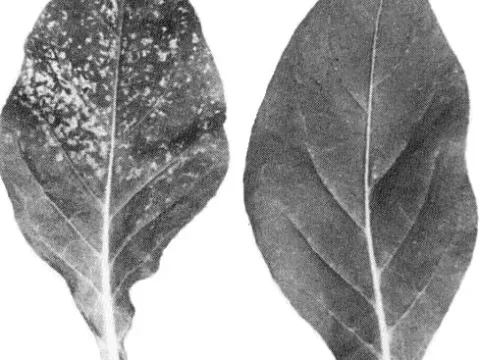
Plantago mosaic virus
Potexvirus marmorplantagonis
The causative agent of the disease is the Plantago mosaic virus (PlMV), a member of the Potexvirus genus. It is a single-stranded RNA virus known for its high environmental stability.
What the section contains
Plantago mosaic virus
This phytopathogen has a broad host range, infecting various weeds and important agricultural crops, which complicates effective management in field and greenhouse conditions.
The virus is primarily transmitted through mechanical contact; the sap of infected plants can easily transfer the virus via pruning tools, hands, or direct leaf-to-leaf contact.
A key biological characteristic is the virus's ability to create a systemic infection throughout the entire plant, including the roots and seeds, making it particularly persistent.
Due to the stability of the virions, the pathogen can survive for long periods on farming equipment, tools, and surfaces, posing a continuous threat to subsequent plantings.
The most common sign of infection is the development of a mosaic pattern on leaves, characterized by alternating light and dark green spots. Leaves may also show significant curling and deformation.
Infected plants frequently exhibit stunted growth and reduced vigor. Over time, the entire plant structure becomes distorted, leading to a loss of overall health.
Symptoms on fruits and stems may manifest as necrotic streaks, water-soaked lesions, or mottled skin, which drastically reduces the marketability of the produce.
In many cases, the infection remains latent, meaning the plant shows no obvious visual symptoms but continues to act as a reservoir for the virus, slowly weakening its physiological functions.
Because these symptoms can often mimic nutrient deficiencies or other viral infections, accurate diagnosis usually requires specialized laboratory testing, such as ELISA.
High temperatures facilitate the replication of the virus within the plant tissues, leading to a faster and more aggressive spread of the infection throughout the crop.
Greenhouse conditions with high plant density significantly increase the risk of transmission, as the proximity of plants allows for easy contact between healthy and infected foliage.
The presence of wild hosts, particularly from the Plantaginaceae family, in or around the fields acts as a persistent source of the virus, fueling new outbreaks each season.
Human activity, including pruning, harvesting, and routine maintenance, serves as the primary vector for transmission as these processes create the necessary mechanical injuries for viral entry.
Soil moisture and contaminated water sources can also facilitate the persistence of the virus, allowing it to potentially infect plants through root damage or micro-abrasions.
The disease causes substantial yield losses by stunting plant development and leading to the premature shedding of flowers, buds, and immature fruit.
Product quality is severely degraded; affected fruits are typically small, misshapen, and possess reduced sugar and nutrient content, making them commercially unviable.
Viral infection suppresses the plant’s immune response, making the crop significantly more susceptible to secondary fungal and bacterial infections that can lead to rapid plant collapse.
Economic damage is compounded by the loss of the seed source, as the virus can be seed-borne, ensuring that the next generation of crops is already infected.
Managing an outbreak requires labor-intensive sanitization and often the total destruction of plant batches, leading to significant financial setbacks for agricultural operations.
The primary control strategy involves using only certified, virus-free planting material obtained through tissue culture or rigorous health certification programs.
Strict sanitation protocols must be enforced, including the regular disinfection of pruning shears and all farm equipment using appropriate chemical agents (e.g., sodium hypochlorite or alcohol).
Maintaining a weed-free environment in and around growing areas is critical to eliminating the wild host reservoirs that keep the virus active in the ecosystem.
If symptomatic plants are identified, they should be carefully removed and destroyed immediately to prevent the virus from spreading to neighboring healthy plants.
Field workers should be trained in phytosanitary practices, such as washing hands between plant rows and avoiding direct contact with potentially infected plant sap to minimize mechanical transmission.