
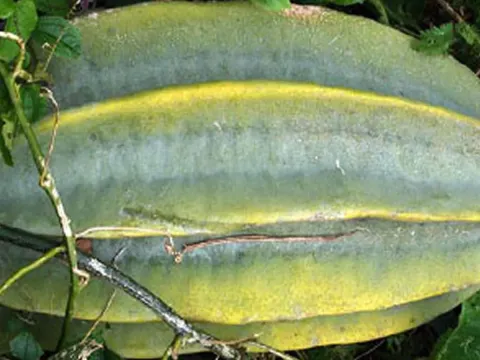
Telfairia mosaic virus
Potyvirus telfairiae
The causative agent of the disease is the Telfairia mosaic virus (TeMV), a member of the Potyvirus genus within the Potyviridae family. It is a single-stranded RNA virus consisting of flexuous filamentous particles.
What the section contains
Telfairia mosaic virus
The virus primarily affects members of the Cucurbitaceae family. Its main host is the fluted pumpkin (Telfairia occidentalis), which is an essential leafy vegetable and oilseed crop cultivated in tropical Africa.
Transmission occurs primarily through aphid vectors in a non-persistent manner. The virus is acquired by the aphid during short probing sessions on infected plants and is immediately transmitted to healthy plants during subsequent feeding.
The virus can also be spread mechanically during agricultural practices. Handling plants, pruning, or using contaminated equipment can transfer the viral sap to healthy tissues through microscopic wounds.
Molecular studies confirm that TeMV shares a high genetic homology with other potyviruses that infect vegetable crops, explaining the similarities in pathogenesis and clinical manifestation.
The primary symptom is a distinct mosaic pattern on young leaves, characterized by alternating patches of light and dark green. Leaves often exhibit a mottled appearance shortly after initial infection.
Leaf deformation is a common secondary symptom, often manifesting as curling, twisting, or a reduction in leaf size. This severely impairs the plant's photosynthetic capacity and slows overall growth.
Infected plants show systemic symptoms, including significant stunting and failure to thrive compared to non-infected individuals. The entire foliage may appear chlorotic and unhealthy under close inspection.
Early infections in seedlings often lead to stunted, frail plants that fail to produce adequate lateral growth, which is detrimental for crops grown for leaf harvesting.
Symptom expression can vary widely depending on the host variety, the plant's developmental stage at the time of infection, and environmental factors like temperature and humidity.
The economic impact of Telfairia mosaic virus is significant, as it leads to substantial yield losses in cucurbit crops. The reduction in photosynthetic efficiency translates directly into lower biomass and fruit production.
The virus causes physiological stress that disrupts the plant's vascular system, leading to premature senescence and a shortened harvest duration for the growers.
Marketable quality is severely compromised by the virus. Fruits and leaves often show deformities, spots, or irregular sizing, making the produce unattractive and unsuitable for commercial sale.
In regions where TeMV is prevalent, it can act as a limiting factor for cultivation, forcing farmers to abandon sensitive varieties or invest heavily in vector control measures.
Infected crops serve as continuous sources of inoculum for surrounding fields, necessitating rigorous field sanitation to prevent the spread of the disease to adjacent plantings.
There is no curative treatment available for plants once they are infected with the virus; therefore, management strategies are strictly focused on prevention and limiting the spread.
Vector management is the most critical component. Controlling aphid populations through the use of insecticides, reflective mulches, or biological control agents helps reduce the rate of virus transmission.
Growers should prioritize the use of certified virus-free seeds or healthy planting material and perform regular nursery inspections to identify and destroy any symptomatic seedlings early on.
- Implement strict field sanitation by removing weeds that may serve as alternate hosts.
- Disinfect all pruning and harvesting tools between rows or plant blocks.
- Adopt crop rotation and spatial isolation from older, potentially infected cucurbit plantings.
Breeding and utilizing host-plant resistance remains the most sustainable and effective long-term solution for managing Telfairia mosaic virus in commercial agriculture.