
Schlumbergera potexvirus
Potexvirus ecschlumbergerae
The causal agent is Potexvirus ecschlumbergerae, a specific viral pathogen that primarily infects plants of the Cactaceae family, particularly the Schlumbergera genus.
What the section contains
Schlumbergera potexvirus
As a member of the Potexvirus genus, it consists of filamentous particles containing single-stranded RNA. It spreads systemically throughout the host plant, disrupting internal cellular processes.
Infected cacti serve as the primary reservoir for the virus. The pathogen is highly stable and can survive for extended periods in plant sap and on contaminated gardening tools.
Transmission occurs primarily through mechanical means: wounding during grafting, pruning, or repotting. Non-sterilized tools act as the main vector for the spread of this infection.
The infection is often latent, meaning plants can carry the virus without showing obvious signs until environmental stress triggers the development of visible symptoms.
Symptoms of Potexvirus ecschlumbergerae can vary significantly depending on the plant's variety and growing conditions.
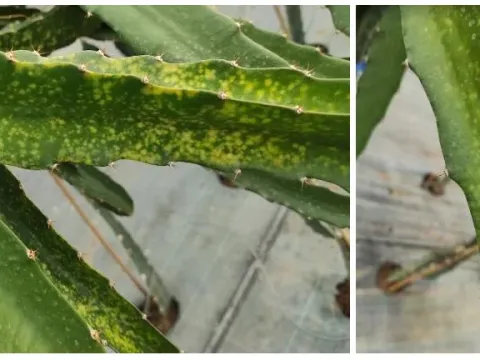
Common clinical signs include the appearance of chlorotic spots, light-colored streaks, or a distinct mosaic pattern on the stems or phylloclades of the plant.
In many cases, the affected stem segments become deformed, stunted, or lose their natural turgor, making the plant look withered despite adequate watering.
Necrotic lesions may also appear on the surface of the segments, leading to sunken dark spots and localized tissue death as the infection progresses.
- Mottled or mosaic-like discoloration of segments.
- Significant stunting and slowed growth rates.
- Deformed phylloclades or shriveled stems.
- Necrotic spots and potential bud drop.
The virus is more likely to manifest visible symptoms when plants are stressed by high temperatures, poor light, or improper watering regimes.
The primary driver of transmission in greenhouse environments is poor hygiene during propagation. Sharing cutting tools without sterilization ensures the spread of the virus to healthy stock.
Pests such as mealybugs or spider mites may contribute to the spread by creating microscopic wounds and serving as secondary vectors of the viral particles.
Crowded growing conditions facilitate contact between healthy and infected plants, increasing the risk of mechanical transmission through leaf-to-leaf friction.
Weakened plant immunity, caused by nutritional imbalances or environmental stressors, allows the virus to replicate more aggressively and show severe symptoms.
There are no known chemical treatments to cure an established viral infection, making infected Schlumbergera plants permanent carriers of the pathogen.
Chronic viral infection weakens the plant's systemic resistance, making it highly susceptible to opportunistic bacterial and fungal rots that often cause plant death.
The virus poses a major threat to succulent collections, as it can decimate entire batches of ornamental plants if strict containment measures are not followed.
Economic losses are significant for commercial growers, as symptomatic plants lose their aesthetic value and cannot be legally or ethically used for propagation.
Vegetative propagation from infected mother plants ensures the perpetuation of the virus, rendering the offspring permanently diseased from the start.
The most effective strategy is the implementation of rigorous sanitation protocols and mandatory equipment sterilization.
All gardening tools used for pruning or propagation must be thoroughly disinfected with alcohol or heat-treated after each individual plant to prevent cross-contamination.
Any plant displaying symptoms of viral infection must be immediately isolated from the collection and destroyed to protect surrounding healthy specimens.
Maintaining a clean growing environment and controlling pest populations are essential to reducing the chances of mechanical virus transmission.
Always source new plants from certified nurseries and maintain a strict quarantine period for all new arrivals to monitor for latent symptoms before integration.