
Beet mosaic virus
Divavirus betadiuris
Description
Symptoms
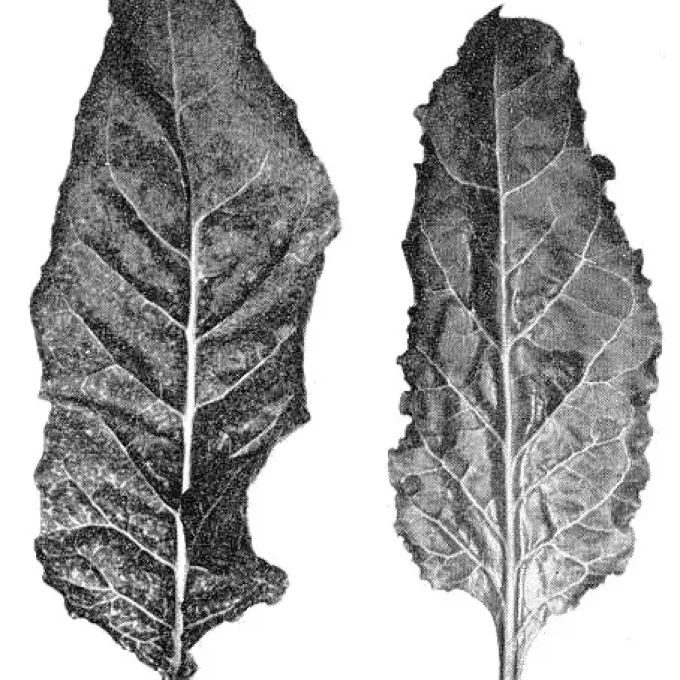
Symptoms typically appear on younger leaves during the early stages of infection as faint, light-green spots.
As the disease progresses, a distinct mosaic pattern emerges, characterized by a mix of dark-green and yellow-green chlorotic patches.
Leaf deformation is common, often presenting as crinkling, puckering, or downward curling of the leaf margins.
Vein clearing, where the leaf veins appear transparent or pale, is often observed as one of the very first diagnostic signs.
Infected plants display reduced vigor, slower growth rates, and stunted development compared to healthy specimens in the field.
Pathogen
The Beet mosaic virus (BtMV) is a viral pathogen classified under the Potyvirus genus, known to infect various plants.
It acts as an obligate parasite, requiring a living host cell to replicate and produce its genetic material.
The virus persists in overwintering weed hosts or in ground-keeper sugar beet roots left behind after the harvest season.
Transmission within the field is primarily mediated by aphid species, which pick up the virus from infected plants while feeding.
Once injected into the plant tissue, the virus spreads systemically, disrupting the plant's metabolic pathways and chlorophyll production.
Conditions for development
The spread of the virus is highly dependent on environmental conditions that favor aphid population growth and migration.
Warm and moist weather patterns typically accelerate the life cycles of insect vectors and the development of weeds.
Proximity to overwintering sources, such as seed crops or vegetable gardens, significantly increases the pressure of the virus.
The density of weed hosts in field margins provides a green bridge for the virus to migrate into fresh sugar beet plantings.
Early-season planting near older, infected crops is a primary risk factor for widespread field infection by the mosaic virus.
Why it matters
Infection results in impaired photosynthetic efficiency, leading to a significant reduction in sucrose accumulation in the root.
Farmers often experience yield losses in terms of both total root biomass and the overall quality of the processed sugar.
The weakened state of infected plants makes them more susceptible to secondary soil-borne pathogens and storage rots.
Economic impact is further exacerbated by the costs associated with repeated insecticide applications required to control the vectors.
Extensive viral outbreaks can compromise the uniform maturation of the crop, complicating the logistics of the harvest process.
Protection
Integrated pest management focusing on aphid control is the most effective approach to preventing the spread of the virus.
Maintaining adequate spatial isolation between new sugar beet crops and seed production fields is essential to reduce infection risks.
Sanitation measures, including the systematic removal of weeds and volunteer beets, help eliminate the primary viral reservoirs.
Planting resistant or tolerant cultivars serves as a long-term strategy for minimizing the damage caused by the Beet mosaic virus.
- Use of systemic insecticides for aphid control.
- Spatial isolation from previous years' plantings.
- Aggressive weed control in field boundaries.
- Selection of resistant sugar beet hybrids.
- Monitoring of field edges for early infection signs.
Discussion
No discussions yet — be the first.