
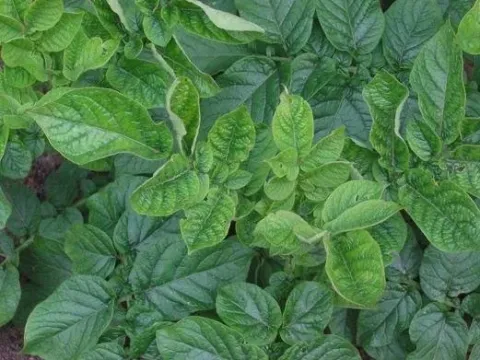
Polerovirus
Polerovirus ctrlv
Polerovirus is a genus of viruses within the family Solemoviridae, characterized by a single-stranded positive-sense RNA genome. These viruses are strictly phloem-limited, meaning they colonize the transport vessels of the plant, which is the primary reason for their systemic impact.
What the section contains
Polerovirus
Transmission occurs exclusively through an aphid vector in a persistent, circulative, and non-propagative manner. The virus is ingested during feeding, travels through the aphid's gut, and reaches the salivary glands, allowing the insect to transmit the virus for the remainder of its life.
Unlike some other viral genera, Poleroviruses do not replicate in the insect vector, nor are they mechanically transmissible by contact or pruning tools. This biological specificity makes insect control the primary focus of field management.
The virions are small, icosahedral particles approximately 25-30 nm in diameter. Their genome organization is highly efficient, encoding proteins essential for movement through the plant’s sieve elements and evading host defenses.
Prominent members of this genus include the Potato leafroll virus (PLRV), Beet western yellows virus (BWYV), and Turnip yellows virus (TuYV), all of which cause significant economic losses in global agriculture.
Symptoms of Polerovirus infection usually manifest as chlorosis, often beginning at the leaf margins and spreading inward. This discoloration is typically due to the accumulation of starch and sugars in the leaves as phloem transport is inhibited.
Leaf rolling or curling is a classic symptom, particularly in solanaceous crops like potatoes. The foliage becomes leathery, brittle, and stiff, often displaying an upward curling that significantly alters the plant's appearance.
Stunting is a universal sign, with infected plants exhibiting shortened internodes and a reduced overall canopy size. The overall vigor of the plant is significantly impaired, leading to premature aging of the foliage.
In root crops, infection can result in reddening or yellowing of the foliage, which acts as a reliable indicator of reduced carbohydrate transport to the storage organs. This directly affects the size and quality of the final harvest.
In many cases, early infection may remain latent or sub-clinical, making visual identification difficult. However, systemic spread eventually compromises the metabolic efficiency of the host, leading to visible decline.
The prevalence of Polerovirus is intrinsically linked to the migration patterns of aphid vectors. Warm, temperate climates that support early and rapid aphid colonization are highly conducive to disease outbreaks.
Weedy hosts serve as critical reservoirs for the virus during the off-season. Field borders, hedge rows, and nearby abandoned plots often harbor infected weeds, providing the initial inoculum for migrating aphids.
Planting dates are crucial; crops that emerge during peak aphid migration windows are at the highest risk of infection. Synchronizing planting to avoid these windows can significantly reduce the infection rate.
Regional wind patterns play a major role in the long-distance dispersal of infected winged aphids. Consequently, large-scale viral spread can occur rapidly across different fields and regions.
Agricultural practices that promote the build-up of aphid populations, such as late-season fertilization or improper weed control, exacerbate the risk of virus transmission throughout the growing season.
The fundamental damage caused by Poleroviruses is the disruption of assimilate partitioning. By blocking the phloem, the virus prevents nutrients from reaching tubers, roots, and fruits, leading to lower yields and poor nutritional quality.
Economic losses arise not only from reduced yield but also from decreased market value. Crops may be smaller, misshapen, or possess inferior storage characteristics, making them unsuitable for commercial sale.
Infected plants are often more susceptible to secondary stressors, including water deficit, extreme temperatures, and opportunistic fungal pathogens. This synergy of stressors often leads to rapid crop failure.
Seed production is heavily impacted, as viruses can affect seed viability and transmit the pathogen to the next generation in some instances. This reduces the quality of planting stock for subsequent seasons.
Given that there are no curative measures for viral infections in the field, once a crop is systemically infected, the potential for high-yield harvest is permanently lost.
Effective management focuses on limiting the aphid population, particularly during the early stages of plant growth. Systemic insecticides can provide a critical window of protection against initial colonization.
Rigorous weed control is essential to remove reservoir hosts from the vicinity of production fields. Keeping field margins clean minimizes the pool of available virus for vectors to acquire.
Utilizing certified, virus-free seed or propagative material is the single most important preventive step. Testing protocols ensure that starting material is clean from the very beginning of the cycle.
Deploying resistant or tolerant cultivars offers the most sustainable and efficient strategy. Genetic resistance acts as a shield, allowing plants to maintain productivity even when exposed to low levels of virus.
- Spatial isolation from older, potentially infected crops.
- Monitoring aphid migration with yellow sticky traps.
- Application of protective row covers in early development.
- Strategic selection of planting dates to avoid aphid peaks.
- Prompt roguing of symptomatic plants in small-scale gardens.