
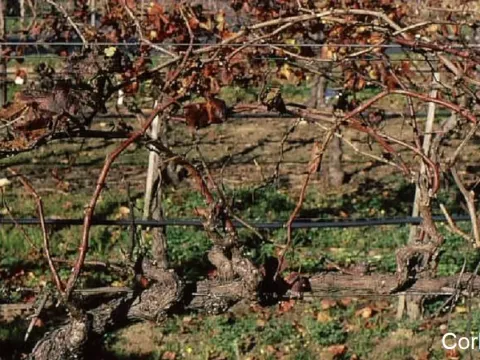
Grapevine corky bark
Grapevine corky
Grapevine corky bark is a viral disease caused by the Grapevine corky bark-associated virus (GCBV), which is part of the complex of viruses causing rugose wood in grapevines.
What the section contains
Grapevine corky bark
The pathogen belongs to the genus Vitivirus within the family Betaflexiviridae. It is a systemic virus that colonizes the phloem and xylem, disrupting the transport of water and nutrients.
The virus is primarily spread through vegetative propagation, specifically using infected scions or rootstocks, which is the most common way it enters new vineyards.
Mealybugs and scale insects serve as primary vectors, acquiring the virus while feeding on infected vines and transmitting it to healthy ones during their feeding cycles.
Once a plant is infected, the virus remains in its tissues permanently, as there are no chemical treatments available to cure systemic viral infections in grapevines.
The most distinctive symptom is the swelling of the lower portion of the shoots, where the bark becomes thick, corky, and rough, appearing cracked and woody.
Leaves on affected vines may show yellowing (chlorosis), curling, or premature reddening, which often indicates an imbalance in nutrient supply due to vascular damage.
Shoot growth is significantly stunted, with internodes becoming shortened and the shoots themselves appearing irregular, bent, or lacking normal vigor.
In winter, the canes of infected vines often fail to mature properly, remaining green and fragile, which makes them highly susceptible to winter cold and frost injury.
Grape clusters are usually smaller and looser than normal, with poor fruit set and uneven ripening, leading to significantly lower quality and quantity of the harvest.
The disease typically spreads when infected plant material is used for grafting or propagation in nurseries without rigorous virus indexing.
High population densities of insect vectors, such as mealybugs, accelerate the transmission of the virus within a vineyard during the active growing season.
Environmental stress, such as severe heat or water deficits, can exacerbate the visual symptoms of the disease, making it more apparent during stressful periods.
Contaminated pruning tools are a major factor in the mechanical transmission of the virus, especially in vineyards where equipment is not sterilized regularly.
Poor orchard management, including lack of weed control, can provide habitat for vector insects, increasing the risk of recurring infections across the field.
The disease causes a gradual decline in vine vigor, eventually leading to the death of the plant as its vascular system is overwhelmed by the viral infection.
Commercial yields drop dramatically, as affected vines produce significantly fewer clusters and poor-quality fruit that is often unsuitable for premium winemaking.
The longevity of the vineyard is severely compromised, forcing growers to remove blocks of vines much earlier than intended, which results in significant financial losses.
Loss of winter hardiness is a major issue, as affected vines often perish during colder seasons, creating gaps and uneven stands within the vineyard layout.
The presence of corky bark in a vineyard represents a long-term biosecurity risk, as the site becomes a source of inoculum for neighboring unaffected blocks.
The primary and most essential strategy is the exclusive use of certified, virus-tested planting material sourced from reputable and reliable nursery programs.
Implement a strict phytosanitary protocol that includes the identification and roguing (removal) of symptomatic vines to prevent further spread of the virus.
Execute an integrated pest management (IPM) plan to monitor and control vector insect populations, particularly mealybugs, throughout the growing season.
Sterilize all pruning and harvesting tools using bleach or alcohol solutions after moving from one vine to another to prevent accidental mechanical transmission.
Maintain proper distance between new plantings and older, potentially infected vineyards to create a buffer zone against the movement of vector insects.