
Maize rayado fino virus
Marafivirus maydis
The causal agent of the disease is the Maize rayado fino virus (MRFV), which belongs to the genus Marafivirus within the Tymoviridae family. It is an RNA virus that primarily infects plants of the grass family.
What the section contains
Maize rayado fino virus
The virus is characterized by high host specificity and is transmitted by a specific vector, the leafhopper Dalbulus maidis. The transmission occurs in a persistent manner, where the insect remains infectious for its entire life after a brief feeding period on an infected plant.
The pathogenesis mechanism involves the entry of viral particles into the phloem of the host plant, leading to systemic infection throughout the vascular system. The virus disrupts the plant's metabolism and photosynthetic activity.
Genome studies of the marafivirus confirm its close relationship with other typical tymoviruses affecting monocotyledonous crops. The biological activity of the virus directly depends on the physiological state of the host plant and environmental conditions.
In natural conditions, the virus can persist in overwintering perennial grasses, which act as primary infection reservoirs before the emergence of the new corn crop.
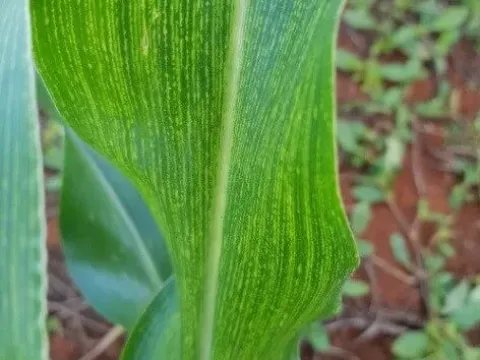
The first symptoms of infection appear as small chlorotic dots at the base of young leaves. Gradually, these dots coalesce to form characteristic dotted stripes along the leaf veins, giving the leaf a distinct streaked appearance.
As the disease progresses, the leaf color becomes paler, and the striping becomes more pronounced, especially in the upper parts of the plant. Affected plants often exhibit stunted growth and dwarfism.
Severe infection leads to ear deformation, resulting in underdeveloped ears or a reduced number of kernels. Early-stage field infection is associated with a significant decrease in plant height and leaf size.
Unlike other diseases, the streaking caused by this marafivirus is very thin and has a distinct punctate pattern. Under severe infection, leaves may turn yellow and wither prematurely.
Diagnosis of the disease is often difficult due to the similarity of symptoms with other viral mosaics, necessitating laboratory serological methods for confirmation.
The main factor in the spread of the disease is the high population density of the vector, the leafhopper Dalbulus maidis. Insect activity increases significantly in warm and moderately humid weather.
Epidemics of marafivirus occur more frequently in tropical and subtropical regions where the absence of a distinct winter period does not interrupt the life cycle of the vector.
Densely planted fields and the presence of weeds along the field margins create favorable conditions for the migration and reproduction of leafhoppers. These pests prefer corn during its active vegetative growth phase.
A temperature range of 20–30°C is optimal for the accelerated accumulation of viral load in plant tissues. Under these conditions, the incubation period of the virus within the plant is shortened.
Late planting dates for corn are often correlated with higher infection rates because the vector population peaks by that time.
The damage caused by the virus results in a significant reduction in grain yield, which can reach critical levels during early seedling infection. The reduction in overall ear weight is a primary indicator of crop loss.
Plants affected by the marafivirus become more susceptible to secondary fungal infections due to a weakened immune status. This leads to ear rot and a decrease in the quality of the grain product.
The infection disrupts kernel formation, leading to shriveled and low-quality seed material. Such seeds typically have poor germination rates and vigor.
Economic losses include not only the decrease in quantitative yield but also the costs associated with implementing additional control measures against the insect vectors.
In fields where the virus is prevalent, stand thinning is observed, which requires additional expenditures for reseeding or restoring plant density.
The primary prevention method is the use of resistant or tolerant corn varieties and hybrids, which are developed in many agronomic research centers worldwide.
Controlling the Dalbulus maidis population using insecticides is a mandatory element of protection in high-risk zones. Treatments should be carried out during the most vulnerable developmental stages of the crop.
An important agronomic practice is adhering to optimal planting dates, which helps minimize the period of overlap between the plant's sensitivity phases and the peak activity of the vector.
Eliminating weeds around fields and removing plant residues after harvest helps reduce viral reservoirs within the field agroecosystem.
- Use of certified seed material.
- Maintaining spatial isolation between crops.
- Monitoring the population density of insect vectors.