
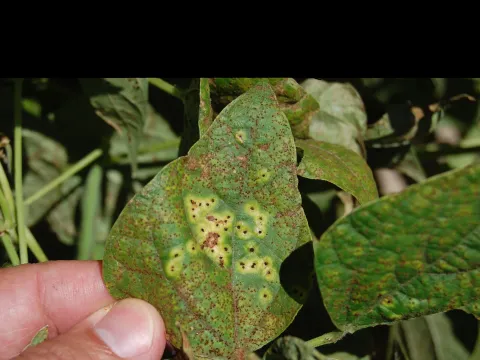
Macroptilium yellow
Macroptilium yellow
Macroptilium yellow is a viral disease caused by a specific pathogen that targets the vascular system of leguminous plants, leading to systemic infection and physiological disruption.
What the section contains
Macroptilium yellow
The virus primarily resides in the phloem tissue, where it interferes with the translocation of assimilates, severely hindering the plant's nutritional transport mechanism.
Transmission of the virus occurs predominantly through insect vectors, specifically leafhoppers, which acquire the pathogen from infected plants and transmit it during feeding.
The pathogen is known for its ability to persist in various weed hosts, which serve as reservoirs for the virus during off-seasons and periods of low agricultural activity.
As a systemic infection, once the virus enters the plant, it spreads throughout the tissues, making it impossible to cure the individual plant once the symptoms have manifested.
The most distinct symptom of Macroptilium yellow is the chlorosis of the leaves, where the leaf blades turn yellow, starting from the margins and spreading inwards.
Affected plants exhibit severe stunting and reduced internode length, resulting in a bushy or rosette-like appearance that contrasts sharply with healthy, vigorous plants.
Leaf deformation is common, with the foliage often curling, becoming brittle, and losing its natural elasticity due to the disruption of normal cellular processes.
In the reproductive phase, the disease severely affects flower development, often leading to flower abortion, poor pod set, and the development of small, shriveled seeds.
- Marginal chlorosis on leaflets
- Stunted growth and short internodes
- Leaf curling and deformation
- Flower abortion and poor pod development
- Reduced plant vigor and biomass
Favorable conditions for the disease development include warm and dry weather, which triggers the population boom of leafhoppers, the primary vector for the virus.
The proximity of leguminous weeds near agricultural fields acts as a catalyst for the spread of the disease, providing a continuous supply of the virus to new crops.
Poor field hygiene, especially the failure to manage weeds effectively, increases the likelihood of high viral transmission rates within the crop canopy.
The timing of the insect migration relative to the crop growth stage is critical; young plants infected early in their lifecycle suffer the most severe stunting.
High humidity levels, while sometimes seen as favorable for plant growth, can mask the early symptoms of the virus until the infection is already widespread in the field.
Macroptilium yellow causes significant yield losses, often leading to a total failure of pod production and reducing the economic value of the legume crop.
The reduction in biomass and stunted growth makes the crops highly susceptible to secondary infections and environmental stress, such as drought or heat waves.
Infected seeds from diseased plants are usually of poor quality, often showing reduced germination rates and low vigor, making them unsuitable for replanting.
The disease limits the photosynthetic capacity of the plant, which prevents the effective accumulation of reserves needed for seed filling and overall crop maturity.
In cases of severe outbreaks, the cumulative loss from both reduced yield and increased management costs poses a threat to the sustainability of the farming operation.
The primary control strategy is the use of high-quality, virus-free certified seeds to prevent the introduction of the pathogen into the field environment.
Integrated pest management (IPM) is essential to control the insect vector populations through the strategic use of insecticides and biological control agents.
Strict sanitation measures, including the destruction of weeds within and around fields, are critical to eliminating alternative hosts for the virus.
Strategic planting dates can help avoid the peak migration period of insect vectors, significantly lowering the risk of early-stage viral infection.
Implementing a crop rotation system that includes non-host plants helps break the disease cycle and reduces the viral pressure in the soil and local environment.