
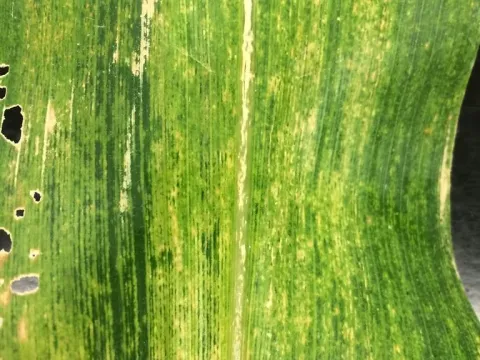
Maize chlorotic mottle virus
Machlomovirus zeae
The causative agent of the disease is the Maize chlorotic mottle virus (MCMV), a member of the Machlomovirus genus. It is a single-stranded RNA virus that is notorious for causing severe damage when occurring in complex with other viruses.
What the section contains
Maize chlorotic mottle virus
The pathogen is highly stable in the environment. It can persist in soil, crop residues, and infected seeds, posing a continuous threat to maize production in regions with intensive farming practices.
This is a systemic viral disease that affects the entire physiology of the plant. The virus disrupts metabolic pathways, specifically targeting chlorophyll synthesis and nutrient transport systems.
Biologically, the virus is transmitted primarily by insect vectors, including various beetles and thrips, which spread the infection while feeding on healthy young plants.
The virus replicates rapidly within the phloem tissues, causing localized and systemic symptoms that compromise the overall health and reproductive capacity of the maize plant.
The first symptoms include fine chlorotic spots or stripes on the young leaves, which eventually coalesce into a mosaic pattern. This is a classic indicator of viral stress in corn plants.
Progressive stages of the disease feature leaf deformation, curling, and severe stunting of the entire plant. Internode shortening is a common observation in heavily infected fields.
Upper leaves often exhibit pale yellow or white discoloration, reflecting the failure of photosynthesis. Ears are typically malformed, showing poor kernel set or complete barrenness.
Early-season infection can lead to seedling death or result in extremely stunted plants that fail to produce any viable ears, leading to significant yield loss.
- fine chlorotic spots and stripes
- mosaic leaf patterns
- severe stunting and dwarfing
- deformed and poorly filled ears
- tissue necrosis in late stages
Disease spread is highly dependent on the population dynamics of insect vectors. Warm, dry weather conditions favor insect migration and increase the transmission rate of the virus.
Monoculture is a primary factor in the accumulation of the virus. Continuous maize production creates a reservoir of infection that allows the pathogen to survive from one season to the next.
Optimal temperatures for viral replication range from +20°C to +30°C. In these conditions, the virus spreads rapidly through the vascular system of the host plant.
Mechanical transmission via agricultural machinery can also play a role, as virus-laden sap is transferred from infected tissues to healthy plants during cultivation or spraying.
Nearby weed populations often act as alternate hosts, preserving the virus during the off-season and providing an initial source of inoculum for the next crop cycle.
The economic impact of this virus is devastating, with yield losses often ranging from 50% to 90%. Severe outbreaks can result in the complete failure of the maize crop.
Poor grain fill and kernel development significantly reduce both the quantity and quality of the harvest, rendering the grain unsuitable for standard market use or processing.
Infected plants exhibit reduced vigor, making them more susceptible to opportunistic secondary infections, such as root and stalk rots, which further degrade the crop.
Managing the aftermath of an outbreak incurs significant costs, and in many cases, there are no curative measures once the plant is systemically infected.
The synergy between MCMV and other viruses often creates complex, multi-viral infections that are significantly more aggressive than single-virus infections.
The use of certified, virus-free seed is the first line of defense. Selecting hybrids with documented genetic resistance to viral pathogens is the most effective management strategy.
Effective control of insect vectors using systemic insecticides during the early vegetative stages is essential to prevent primary transmission and reduce field-wide spread.
Implementing a rigorous crop rotation schedule, avoiding maize on the same field for at least 3-4 years, helps to break the survival cycle of the virus.
Sanitation practices, including the aggressive removal of weeds around field margins, are crucial to reducing the reservoir of both the virus and its insect vectors.
Post-harvest tillage is recommended to accelerate the decomposition of crop residues, which limits the survival of viral particles and prevents the carry-over of inoculum to the next season.