
Prunus necrotic ringspot virus
Ilarvirus prrsv
The causal agent of the disease is the Prunus necrotic ringspot virus (PNRSV), belonging to the Ilarvirus genus. This virus contains a single-stranded RNA genome and is characterized by a wide host range, affecting nearly all stone fruit species.
What the section contains
Prunus necrotic ringspot virus
The virus is primarily transmitted through vegetative propagation: via infected scion and rootstock. Transmission through pollen and seeds has also been documented, making it a critical threat for nurseries.
Transmission within an orchard can occur mechanically during pruning if tools are not properly sanitized. While thrips can act as vectors, the contact-based pathway remains the most significant in agricultural settings.
Viral particles spread systematically through the plant's vascular system, localizing in meristematic tissues. External symptoms often do not appear immediately, as the virus can remain in a latent state for extended periods.
Genetic variability among viral strains means that the severity of the disease varies significantly depending on the cultivar and the physiological condition of the host tree.
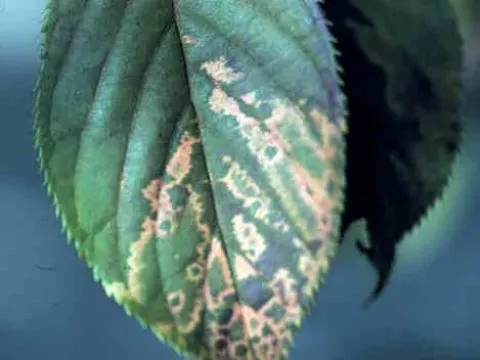
The primary symptoms include chlorotic and necrotic rings appearing on leaf surfaces in the spring. As necrosis progresses, affected areas may drop out, creating a characteristic "shothole" effect on the leaves.
Infected trees exhibit stunted shoot growth, shortened internodes, and deformation of leaf blades. Leaves may become lanceolate or curled, reflecting the systemic nature of the infection.
On fruits, the virus causes necrotic spots, indentations, or deformations, which significantly diminish the market value. Fruits often lose flavor quality and may experience premature fruit drop.
In certain cherry and sour cherry varieties, a "line pattern" symptom appears on the leaves, which is particularly visible during cool early spring weather. Symptoms may be partially masked in summer due to vigorous foliage growth.
- Vein yellowing.
- Leaf edge curling.
- Premature leaf drop.
- Thinning of the canopy.
- Reduced winter hardiness.
The development of the virus is favored by the moderate temperatures typical of the spring season. During prolonged, cool springs, symptoms manifest most clearly and affect larger portions of the tree canopy.
The virus spreads more actively in high-density orchards, where conditions are favorable for pollen movement between trees. Windy weather during the flowering period facilitates the transfer of virus-infected pollen to healthy trees.
The use of untested nursery stock is the primary cause of initial infection. If a seedling is already a carrier of the virus, it serves as a source of infection throughout the life of the orchard.
Stress factors such as drought, waterlogging, or pest infestations weaken the tree's immune system, allowing the virus to progress more rapidly. In such conditions, latent infections frequently transition into the active phase.
Failure to follow proper agronomic practices, particularly the lack of tool disinfection between trees during pruning, poses a constant risk of infection spread throughout the orchard.
The primary economic impact is a substantial reduction in yield, which can decrease by 30–50% or more, depending on the age of the tree and the virulence of the specific strain.
The virus causes premature tree aging. Infected trees exhibit reduced longevity, lose fruit-bearing capacity sooner, and often require removal from the orchard.
Fruit quality declines to levels that make the produce unsuitable for the fresh market. Furthermore, storage life and transportability are negatively affected.
Viral infection lowers the tree's overall frost resistance. During winter, affected trees are more susceptible to sunscald and bark cracking, which provides entry points for secondary fungal infections.
The overall financial loss includes costs associated with constant phytosanitary monitoring and the forced uprooting of infected trees, leading to significant setbacks for farming operations.
The most effective prevention strategy is the exclusive use of certified, virus-free planting material. Sourcing saplings from nurseries that undergo regular certification is essential.
Regular phytosanitary monitoring of the orchard is necessary. Upon the detection of symptoms, infected trees should be immediately removed and destroyed to prevent the further spread of the virus.
Strict hygiene must be maintained during pruning: tools should be disinfected with alcohol or a sodium hypochlorite solution after treating each individual tree.
Managing insect vectors, such as thrips and aphids, helps reduce the risk of viral transmission. The use of systemic insecticides helps maintain pest populations at low levels.
Spatial isolation of new orchards from older, infected plantings is highly recommended. It is also advisable to avoid planting stone fruits on sites where crops previously affected by ilarviruses were grown.