
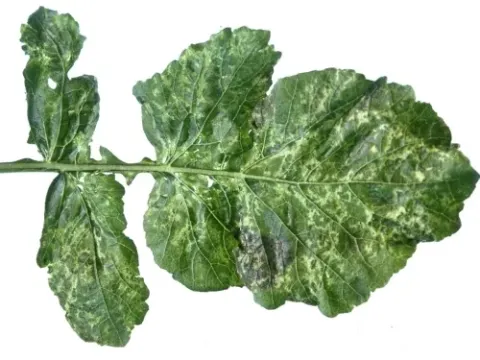
Radish mosaic
Comovirus raphani
The causative agent of this disease is the Radish mosaic virus (RMV), scientifically known as Comovirus raphani. It belongs to the Comovirus genus and contains a bipartite positive-sense single-stranded RNA genome.
What the section contains
Radish mosaic
The virus primarily affects plants belonging to the Brassicaceae family. Major hosts include radish, turnip, various cabbage cultivars, mustard, and rapeseed, as well as several wild cruciferous weeds that serve as reservoirs.
It is a systemic viral disease that propagates through the vascular system of the host plant. The infection disrupts normal physiological processes, leading to stunted growth and altered metabolism.
In the field, transmission occurs mechanically through plant-to-plant contact and insect vectors. Specific leaf-feeding beetles and aphids act as primary agents for virus dissemination across crops.
The virus can persist in seeds and soil-borne plant debris, which serves as a source of primary inoculum for subsequent planting cycles, making crop rotation an essential strategy.
Early symptoms appear as light green or yellowish mottling on the foliage, which eventually develops into a pronounced mosaic pattern. Leaf tissue becomes uneven in color as chlorophyll is degraded.
As the infection progresses, leaves exhibit significant deformation, curling, and crinkling. The margins may become wavy or serrated, which dramatically reduces the total leaf surface area available for photosynthesis.
Infected plants show stunted development and shortened internodes, resulting in a compact and rosette-like appearance. This condition prevents the proper formation and development of the root crop.
Seed production is negatively impacted, leading to sterility or the formation of malformed seeds with poor germination rates. Flowers and young pods may drop prematurely due to systemic stress.
Internal tissues of the roots may show necrotic spots or abnormal coloration. The quality of the vegetable is compromised, with the flesh often becoming woody and lacking the characteristic flavor.
Warm weather conditions favor the rapid proliferation of insect vectors like aphids and beetles. Higher insect activity directly correlates with an increased rate of viral transmission throughout the field.
Dense planting patterns promote physical contact between plants, facilitating the mechanical spread of the virus via grooming or wind movement that causes leaf rubbing.
Proximity to infested weed patches acts as a continuous source of inoculum. If wild hosts are present in the surroundings, they provide a bridge for the virus to migrate into fresh crop plantings.
Agricultural operations, such as thinning or weeding, can inadvertently spread the virus if contaminated tools are used without proper sanitation protocols between different areas of the field.
Excessive humidity or suboptimal environmental stress can weaken the plant's resistance, making it more susceptible to systemic viral invasion once the pathogen enters the tissue.
The primary impact is a severe reduction in harvest yield. Stunted growth and poor root development make the crop commercially unviable, leading to significant economic losses for growers.
Marketability is heavily affected by visual symptoms such as mosaic patterns and plant deformity. Produce that does not meet aesthetic standards is often rejected by retailers and consumers.
Infected plants are more susceptible to secondary pathogenic infections, such as bacterial soft rot, which can destroy the harvest during storage or transport due to lowered immunity.
Seed-borne transmission poses a long-term risk. Using contaminated seeds means the virus is introduced to the farm from the very beginning of the season, complicating control efforts.
Since there are no curative chemicals for viral infections in plants, the disease is notoriously difficult to manage once established, often requiring the total destruction of infected patches.
The most effective strategy is the use of certified virus-free seed stock. Starting with healthy material is the cornerstone of preventing the introduction of RMV to a farm.
Integrated Pest Management (IPM) focusing on the control of aphids and beetle populations is essential. Reducing vector numbers effectively slows down the spread of the disease.
Strict field sanitation is required, including the removal of all cruciferous weeds from the area. Clearing field borders helps minimize the presence of viral reservoirs.
Implement rigorous disinfection protocols for all agricultural tools. Sterilizing equipment after use in suspicious or confirmed areas prevents the mechanical transfer of the virus.
Early rogueing is critical. As soon as symptoms are identified, affected plants should be carefully removed and destroyed to minimize the potential for further viral spread.