
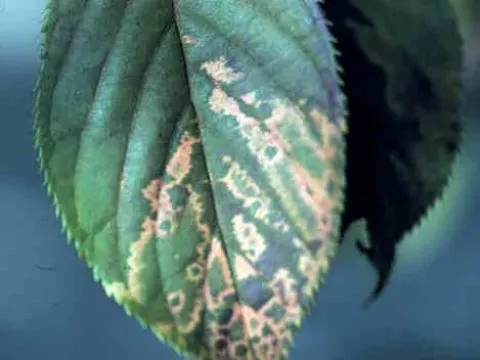
Prunus necrotic ringspot virus
Ilarvirus pdv
The causative agent of the disease is the Prunus necrotic ringspot virus (PDV), which is a member of the genus Ilarvirus.
What the section contains
Prunus necrotic ringspot virus
This virus consists of isometric particles containing a tripartite single-stranded RNA genome.
It is one of the most widely distributed viruses in stone fruit crops globally, affecting plums, cherries, almonds, and peaches.
The virus spreads systemically throughout the host plant, concentrating in the leaves, pollen, and reproductive tissues.
Due to its high mutability, different strains of the virus can cause varying levels of severity in orchard trees.
Symptoms often appear in spring as chlorotic rings, necrotic spots, or line patterns on the leaves.
Infected trees exhibit reduced vigor, stunted growth, and smaller leaf size compared to healthy specimens.
Flowering may be delayed or reduced, with petals sometimes showing mottling or deformation.
Fruit set is significantly affected, and the fruit that does develop is often stunted, deformed, or of poor internal quality.
Chronic infection leads to the dieback of branches and an overall decline in tree longevity and structure.
The primary route of long-distance spread is through the use of infected propagation material, such as budwood and rootstocks.
Within an established orchard, the virus spreads efficiently through infected pollen during the flowering season.
Mechanical transmission is a secondary factor, occurring through contaminated pruning tools during routine orchard maintenance.
The presence of weeds and wild hosts in the vicinity can harbor the virus, increasing the risk of re-infection.
Environmental stress, such as drought or frost, can trigger the transition from a latent state to active symptom expression.
The economic impact of the virus is significant, as it leads to cumulative yield losses and reduced fruit marketability.
Infected trees demonstrate lower resistance to cold injury and are more susceptible to opportunistic fungal and bacterial pathogens.
The reduced photosynthetic capacity of the foliage hinders the tree's ability to store reserves for the following season.
Orchard profitability declines due to the reduced lifespan of infected trees and the constant need for replacement plantings.
Long-term infections cause structural weakness in trees, making them more prone to wind breakage and environmental damage.
The most effective strategy is the exclusive use of virus-free nursery stock certified through strict diagnostic testing.
Strict sanitation protocols, including the thorough disinfection of pruning tools with alcohol or bleach, are essential.
Roguing, or the systematic removal and destruction of infected trees, is necessary to prevent the further spread of the virus.
Maintaining a high level of orchard hygiene, including weed control and optimizing irrigation, helps support tree health.
Regular monitoring by trained staff during the critical spring period allows for the early identification and isolation of diseased plants.