
Granulovirus
Granulovirus
Granuloviruses belong to the family Baculoviridae, genus Betabaculovirus. They are highly specific entomopathogenic viruses that target particular species of Lepidoptera larvae.
What the section contains
Granulovirus
The infectious agent consists of a proteinaceous inclusion body, known as a granule, which protects the virions from environmental degradation such as heat and UV radiation.
Their specificity is one of their most valuable traits, as they affect targeted pests without causing harm to beneficial insects, natural predators, or human health.
Infection begins when a larva ingests contaminated plant tissue. The alkaline environment of the insect's midgut dissolves the granule, releasing viral particles into the system.
The virus then replicates within the host's cells, systematically destroying the internal tissues of the larva and eventually causing its death.
The initial signs of granulovirus infection in larvae are often subtle, including reduced feeding activity and sluggish movement compared to healthy individuals.
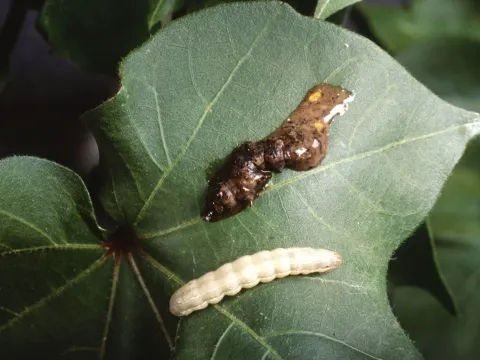
As the infection progresses, the larva's body color often pales, turning into a characteristic yellowish or whitish hue, which is a key diagnostic sign for field scouts.
Infected larvae typically cease feeding and may be found hanging from leaves or fruit, eventually becoming fragile and liquified due to the breakdown of internal tissues.
When the larva dies, the body wall ruptures, releasing millions of new viral particles into the surrounding area, which serves as a natural inoculum for secondary infections.
Observing high mortality rates within a specific larval population, especially in orchards, is the most common indicator of a successful granulovirus outbreak.
The efficacy and spread of granulovirus are heavily dependent on the host density; higher pest populations facilitate faster transmission through the larval community.
Moderate temperatures and adequate humidity are optimal for the persistence and transmission of the virus, while extreme drought or heat can limit its activity.
Ultraviolet (UV) light is the most significant environmental constraint, as it rapidly degrades the protein matrix of the granules, reducing their infectivity on plant surfaces.
Natural dispersal occurs through contaminated leaves, movement of larvae, rainfall, or incidental transport by other insects and machinery working in the fields.
Successful field application requires matching the timing of spray treatments with the early larval stages (neonates) to ensure maximum intake of the viral particles.
From an agronomic perspective, granuloviruses are beneficial agents of biological control rather than pathogens of the plants themselves, helping to suppress pest numbers.
The primary economic danger related to these pests, such as the codling moth, is the extensive damage they cause to fruit, which can lead to significant yield losses if left uncontrolled.
The challenge for growers is ensuring that the virus is present before larvae bore into the fruit, where they become protected from the virus's surface-applied form.
Misuse or failure to monitor pest life cycles can lead to insufficient control, making it seem as though the biological agent is ineffective when, in fact, it was applied too late.
While resistance to granuloviruses is rare compared to chemical pesticides, long-term continuous use without monitoring can potentially exert selective pressure on pest populations.
Management involves the application of standardized biological insecticides formulated with specific granulovirus strains, typically applied as foliar sprays during peak hatching periods.
- Apply during evening hours to minimize UV exposure and prevent rapid degradation.
- Ensure thorough coverage of all plant surfaces where larvae are likely to feed.
- Monitor weather conditions to avoid wash-off from heavy rainfall shortly after application.
- Use pheromone traps to time the application precisely with the emergence of the first larval instar.
- Integrate biological treatments with cultural practices to enhance overall pest management outcomes.
Proper cold-chain storage is essential for these products, as granuloviruses are living biological entities that remain active only under specific temperature conditions.
Strategic use of granuloviruses allows farmers to reduce their reliance on synthetic chemical insecticides, contributing to more sustainable and eco-friendly agricultural practices.
Ongoing scouting programs are crucial to assess the effectiveness of the treatment and to determine if subsequent applications are necessary based on larval thresholds.