
Fabavirus
Fabavirus
Fabaviruses (genus Fabavirus) are plant viruses belonging to the Secoviridae family. These pathogens are known to infect a wide range of dicotyledonous plants, with a significant economic impact on legume crops.
What the section contains
Fabavirus
The type species of this genus is the Broad bean wilt virus. The viral particles are isometric and non-enveloped, containing a bipartite, positive-sense single-stranded RNA genome that is essential for their replication cycle within host cells.
Transmission in the field is primarily mediated by aphid vectors in a non-persistent manner. This means that aphids can acquire the virus after a brief feeding period on an infected plant and transmit it immediately to a healthy host.
While mechanical transmission through sap contact is possible in laboratory settings, it is less common in agricultural practice compared to insect vector transmission. The virus relies on reservoirs, such as perennial weeds, to survive between crop seasons.
The molecular characterization of the Fabavirus genome has facilitated the development of advanced diagnostic techniques, such as RT-PCR and ELISA, allowing for precise identification and monitoring of viral outbreaks.
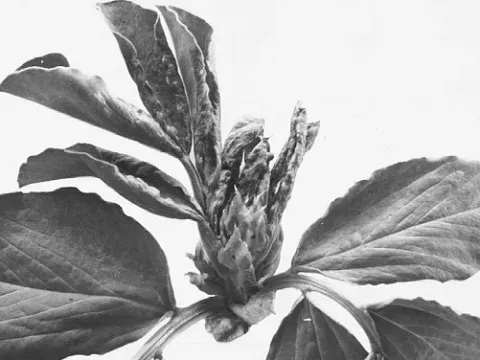
Symptoms of Fabavirus infection often manifest as systemic mosaic patterns on leaves, characterized by alternating light and dark green areas. Leaf deformation, crinkling, or curling are common clinical manifestations.
Infected plants frequently exhibit stunted growth, which is typically observed through shorter internodes and a reduced overall canopy size. This makes infected individuals distinct within the field population.
Chlorosis, or the yellowing of young leaves, is a frequent symptom at the early stages of infection. This occurs due to the impairment of chlorophyll synthesis and metabolic disruption caused by viral replication.
Reproductive growth is severely affected. Flowers may undergo premature abscission, and pods often develop into distorted, smaller, or empty structures, significantly reducing the yield potential of the plant.
In severe cases, necrotic streaks may appear on stems and petioles, leading to the collapse of plant tissues. The intensity of symptoms is generally dependent on the viral strain, the plant's growth stage, and environmental conditions.
The spread of Fabavirus is highly dependent on the activity and population density of aphid vectors. Warm and humid conditions generally favor the reproduction of these insects, leading to faster viral transmission.
The optimal temperature for viral replication in plants usually ranges from 20 to 25 degrees Celsius. While extreme heat may not kill the virus, it can modulate the severity of symptoms and the rate of plant infection.
The presence of wild legume hosts acting as natural reservoirs is a critical factor in the epidemiology of the disease. These plants sustain the virus through the winter, providing a source for spring outbreaks.
High-density planting configurations create a favorable environment for rapid virus spread, as the movement of aphids between adjacent plants is significantly facilitated.
Inadequate crop rotation and the repeated planting of host species in the same fields lead to the accumulation of viral inoculum, significantly increasing the probability of severe outbreaks in subsequent seasons.
The primary economic consequence of Fabavirus infection is a substantial reduction in marketable yield. Losses can range from 10% to over 50%, depending on the timing of the initial infection.
Seed quality is severely compromised, with infected seeds showing lower germination rates and poor seedling vigor. This creates a risk of long-distance dissemination of the virus through trade.
The physiological stress caused by the viral infection suppresses the plant's natural immune response, rendering it more susceptible to secondary infections by fungal pathogens, bacteria, and other environmental stressors.
Market value is further diminished due to the poor aesthetic appearance of the produce, which often does not meet quality standards for fresh market sale or commercial processing.
Managing the disease requires significant financial investment, including the costs of insecticidal applications, rogueing of infected plants, and the potential need for crop destruction in extreme cases.
Integrated Pest Management (IPM) is the most effective approach to control Fabavirus. This includes systematic monitoring of aphid populations and the timely application of insecticides to reduce vector pressure.
Good agricultural practices are essential, including long-term crop rotation to break the cycle of infection and maintaining a weed-free buffer zone around fields to eliminate primary viral sources.
The use of certified, virus-free seeds is the first line of defense. Selecting resistant or tolerant cultivars developed by plant breeding programs provides a sustainable solution for long-term protection.
In greenhouse environments, rigorous sanitation is necessary. This includes disinfecting tools and equipment and implementing physical barriers like insect-proof netting to prevent aphid entry.
Early identification through diagnostic screening allows farmers to remove and destroy primary infection foci, preventing the virus from spreading throughout the entire crop field.