
Euphorbia guangxiense mosaic virus
Begomovirus euphorbiaguangxiense
Description
Symptoms
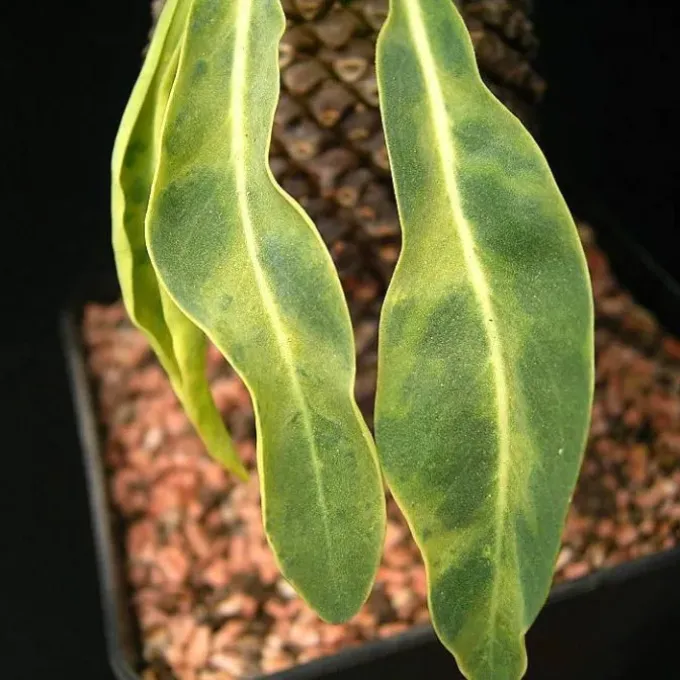
The most distinctive symptoms include a mosaic pattern of yellow, green, or white mottling on the leaves. This uneven distribution of color is caused by the virus disrupting chlorophyll synthesis.
Leaves often exhibit severe deformation, including crinkling, curling, or reduction in size. The veins may become chlorotic or show irregular patterns compared to healthy foliage.
Stunted growth is a hallmark of the infection. Infected plants appear significantly smaller and less vigorous than healthy counterparts of the same age.
Flower production is frequently inhibited or results in malformed, discolored blooms. In advanced stages, early leaf drop is commonly observed.
- Mosaic mottling and chlorosis.
- Leaf distortion and curling.
- Severe stunting and growth inhibition.
- Reduced vigor and overall decline.
Pathogen
The causal agent is the Begomovirus euphorbiaguangxiense, a member of the genus Begomovirus within the Geminiviridae family. These viruses are characterized by circular single-stranded DNA genomes.
The virus particles are geminate (twinned) in structure, which is typical for the family. It relies on specific insect vectors for effective transmission between host plants in nature.
The virus primarily resides within the vascular tissues (phloem) of the host plant, from where it is acquired by vectors during feeding. It can persist within the plant for the duration of the host's life.
The primary vector responsible for the spread of this virus is the whitefly Bemisia tabaci. This insect acquires the virus in a persistent circulative manner, meaning it can transmit the virus for several days or throughout its lifespan.
Mechanical transmission is less common but can occur through tools or handling during propagation or maintenance tasks in greenhouses.
Conditions for development
The development and spread of the virus are highly dependent on the population density of its vector, the whitefly. Warm temperatures and high humidity facilitate rapid reproduction of the pest.
Greenhouse environments provide optimal conditions for both the virus and its vector, often leading to rapid colonization if not properly managed with sanitation and pesticides.
Crowded planting conditions promote the movement of whiteflies from plant to plant, increasing the probability of widespread transmission within a crop batch.
Seasonal patterns influence the intensity of the disease; during peak summer months, the pressure from whitefly migration is usually at its highest.
Stress factors, such as improper irrigation or nutrient imbalance, may exacerbate the symptoms of the virus, making the plant look significantly more distressed.
Why it matters
The virus causes significant economic losses in the ornamental industry due to the loss of aesthetic appeal. Deformed and mottled plants are unfit for retail sale.
Since the infection is systemic, it cannot be cured. Once a plant is infected, it remains a permanent source of the virus, posing a threat to all other susceptible plants in the vicinity.
The widespread nature of the infection can lead to total crop failure in greenhouse settings if aggressive management practices are not implemented early.
Loss of plant vitality leads to increased susceptibility to other pathogens, which can complicate diagnostics and lead to secondary infections.
The virus severely impacts the potential for plant propagation, as infected mother plants will produce diseased cuttings, perpetuating the cycle of infection.
Protection
Prevention through the use of virus-free certified plant material is the most important step in disease management. Always source stock from reputable, tested nurseries.
Aggressive vector control is essential. Regularly monitor for whiteflies and apply appropriate systemic insecticides to keep populations at or near zero.
Strict sanitation protocols must be followed. This includes disinfecting all tools with alcohol or appropriate biocides after use on any symptomatic plant to prevent spread.
Promptly rogue and destroy any plants showing signs of infection. Do not keep symptomatic plants in the same area as healthy ones, as they act as a virus reservoir.
Use insect-proof screening on greenhouse vents and doors to minimize the entry of whiteflies from external environments and wild host plants.
Discussion
No discussions yet — be the first.