
Eustoma begomovirus
Begomovirus lisianthi
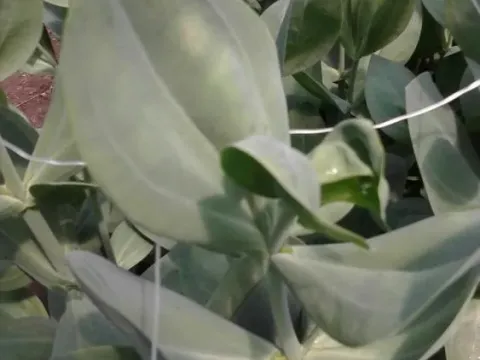
The primary symptom of Eustoma begomovirus infection is a pronounced mosaic pattern on the leaves, characterized by alternating light-green, yellow, and dark-green areas.
What the section contains
Eustoma begomovirus
Infected eustoma plants show significant stunting and developmental delays compared to healthy specimens growing in the same greenhouse environment.
Shoot tips of the plants often suffer from deformations, twisting, or curling, which renders the flower stalks unsuitable for market or professional floristry.
Early stages of the infection may exhibit vein chlorosis, which gradually spreads across the entire leaf surface, severely hindering the plant's photosynthetic efficiency.
In cases of severe infection, buds may drop prematurely or open into malformed flowers with altered petal coloration, drastically reducing the crop's economic value.
The causative agent of this disease is a virus belonging to the Begomovirus genus (family Geminiviridae), which is specifically adapted to infect eustoma (lisianthus).
The virus consists of a single-stranded circular DNA genome enclosed in a geminate capsid, a hallmark characteristic of the Geminiviridae family.
The main natural reservoirs for the virus are infected eustoma plants, as well as various weed species that may grow in the proximity of greenhouses.
The disease is transmitted by the tobacco or greenhouse whitefly (Bemisia tabaci), which acquires the virus while feeding on the phloem sap of an infected plant.
Upon ingestion, the virus undergoes a persistent transmission cycle, remaining within the whitefly's system for the remainder of its lifespan.
The development and spread of the viral infection are directly tied to the whitefly population dynamics within the greenhouse, which acts as the primary vector.
Optimal conditions for rapid vector proliferation include high air temperatures (above 25-28 degrees Celsius) and elevated humidity levels within the growing facility.
Lack of rigorous phytosanitary inspection of incoming plant materials contributes significantly to the introduction of the virus through contaminated nursery seedlings.
Poor ventilation protocols and the proximity of eustoma to other susceptible ornamental crops significantly accelerate the spread of the disease throughout the site.
Failure to implement weed control measures inside the greenhouse provides a stable environment for overwintering whitefly populations that harbor and transmit the virus.
Eustoma begomovirus causes significant economic losses for commercial flower growers, as infected plants completely lose their commercial aesthetic appeal.
The virus disrupts normal flower stalk formation, leading to a major decrease in the harvestable yield per square meter of greenhouse space.
Infected specimens become increasingly susceptible to secondary fungal and bacterial pathogens due to the overall weakening of the plant's immune system.
Without appropriate mitigation measures, the infection can rapidly spread throughout the entire crop, necessitating the complete removal and destruction of the affected plants.
The reduction in marketability of the flowers makes eustoma production unprofitable in environments with a high incidence of viral disease.
The priority in managing this disease is constant monitoring of the whitefly population using yellow sticky traps placed strategically throughout the greenhouse.
It is essential to maintain a strict phytosanitary regime, which includes sourcing only healthy, certified plant material from reputable nurseries.
Effective vector control requires the timely application of authorized insecticides specifically registered for greenhouse use, with a focus on chemical class rotation to prevent resistance.
Any plants showing initial symptoms of viral infection must be immediately rogue out and removed from the greenhouse to prevent further transmission.
Regular weeding is a crucial practice, as weed species can serve as alternate hosts for both the whitefly vectors and the begomovirus itself.