
Fig chlorosis ilarvirus
Ilarvirus fcilv
Description
Symptoms
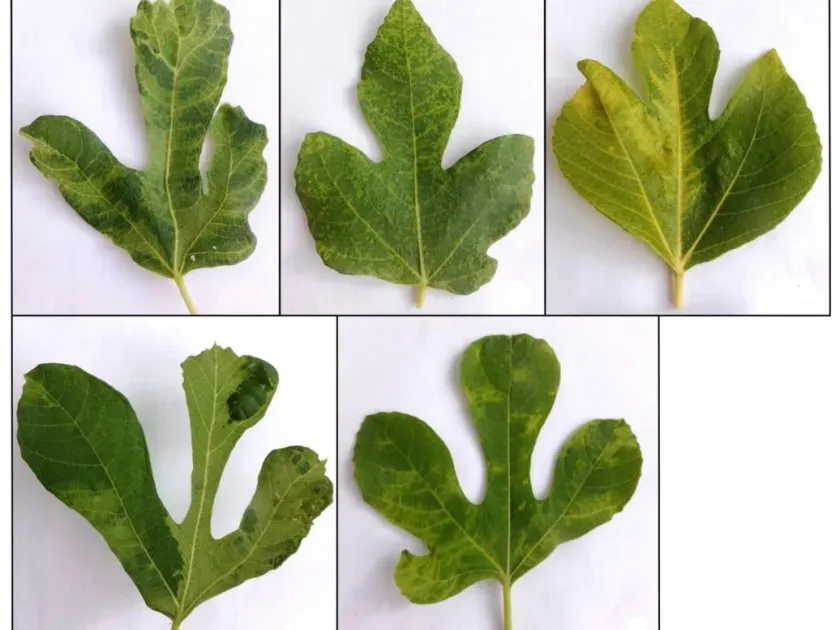
The primary symptom is chlorosis, which manifests as yellowing of the leaf tissue. This often appears in the form of mosaic patterns, ringspots, or distinct yellowish line patterns on the leaves.
In addition to discoloration, affected leaves may show signs of deformation, such as leaf curling or uneven growth of the leaf blade. The mosaic pattern can vary in intensity depending on the cultivar and environmental conditions.
Symptoms are typically most prominent during the peak growing season, specifically in spring and early summer. During these periods, the virus interferes with chlorophyll synthesis, resulting in reduced photosynthetic capacity.
Plants affected by the virus may exhibit stunting and overall loss of vigor. The canopy may become sparse as leaves yellow prematurely and drop, leading to lower fruit production and reduced tree vitality.
- Yellowing (chlorosis) of leaves
- Ringspot and mosaic patterns
- Distortion of leaf blades
- Stunted shoot growth
- Premature leaf senescence
Pathogen
The causative agent of this disease is a virus belonging to the Ilarvirus genus. These viruses are known for their ability to form isometric particles and cause various ringspot-type symptoms in many woody plant species.
The pathogen is an obligate parasite that colonizes the plant systemically. Once the virus enters the plant cells, it replicates and spreads through the vascular tissue, specifically the phloem, to infest the entire plant organism.
The infection is classified as a systemic viral disease. It is primarily transmitted through vegetative propagation, making the use of infected cuttings, scions, or rootstocks the most common way for the disease to spread across orchards.
Research indicates that this virus is highly stable within plant tissues. It can persist indefinitely in the host, constantly interfering with metabolic pathways and negatively impacting the plant's health and development.
Due to its high persistence and systemic nature, there is no curative chemical treatment for the virus. Managing the disease relies heavily on preventing its initial introduction into the garden environment.
Conditions for development
The spread of fig chlorosis ilarvirus is strictly linked to human activities, especially the movement of plant material. Using non-certified or untested nursery stock is the primary cause of disease outbreaks.
Mechanical transmission is a critical factor. Gardening tools, such as pruning shears or grafting knives, can carry infectious sap from a diseased tree to a healthy one if they are not properly sterilized between uses.
Pollination is another potential route of viral dispersal. As seen with other members of the Ilarvirus genus, the virus can potentially be spread through pollen, which can lead to rapid spread within high-density orchard settings.
Environmental conditions do not directly cause the virus, but they can influence symptom expression. Plants experiencing abiotic stress, such as drought or nutritional deficiencies, often show more severe symptoms of chlorosis.
Seasonality plays a significant role in disease manifestation. The most intense symptoms appear when the host plant is actively metabolizing and growing, as the virus exploits the plant's active transport systems.
Why it matters
The primary economic impact of this disease is the significant reduction in crop yield. As the leaves lose their ability to photosynthesize effectively, the tree cannot produce high-quality, sugary fruit, leading to smaller harvests.
Chronic infection weakens the overall structure and health of the fig tree. Weakened trees are significantly more susceptible to opportunistic secondary pathogens, including wood-decay fungi and insect pests.
For commercial growers, an outbreak of the virus can necessitate the removal and destruction of the entire orchard. This represents a substantial financial loss and a long-term threat to the viability of the planting site.
The aesthetic value of the trees is also compromised, which is particularly relevant for those growing figs as decorative or landscape plants in private gardens.
Because the virus is persistent and systemic, it acts as a permanent reservoir of infection. This makes it impossible to maintain a healthy orchard if the virus is present, leading to the gradual decline of the plant population.
Protection
Prevention is the only effective management strategy. The use of certified, virus-indexed nursery stock is essential to ensure that new plantings start free from the pathogen.
Strict sanitation practices must be implemented. All pruning and grafting tools should be disinfected with a 70% ethanol solution or an appropriate bleach solution after every individual tree to prevent cross-contamination.
If an infected tree is identified, it should be promptly removed, including the root system, and destroyed by burning. This eliminates the source of infection and prevents the virus from spreading to neighboring healthy trees.
Managing insect vectors, such as aphids or thrips, can help reduce the potential for mechanical transmission within the garden, although they are not the primary cause of this specific viral disease.
Regular monitoring and routine inspection of fig trees are crucial for early detection. Maintaining optimal tree health through proper fertilization and irrigation helps the plant withstand the physiological strain of the viral infection.
Discussion
No discussions yet — be the first.