
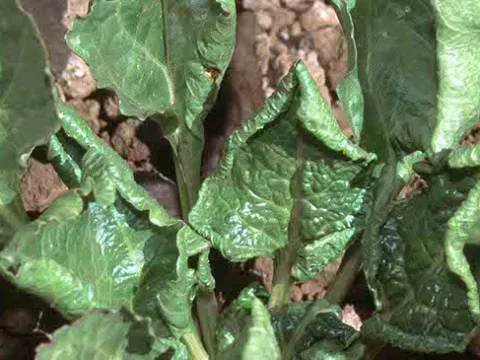
Beet curly top
Curtovirus betae
Beet curly top is caused by the Beet curly top virus (BCTV), which belongs to the Curtovirus genus within the Geminiviridae family.
What the section contains
Beet curly top
This pathogen is characterized by its single-stranded DNA genome and is exclusively transmitted by insect vectors rather than through seeds or soil.
The primary vector for the virus is the beet leafhopper (Circulifer tenellus), which acquires the pathogen after feeding on infected host plants.
Once the leafhopper ingests the virus, there is a latent period before it can transmit the pathogen, but thereafter, it remains infectious for the rest of its life.
The virus has an extremely wide host range, infecting various weeds and cultivated crops, which serves as a reservoir for the virus between growing seasons.
Early symptoms include a subtle clearing of the veins on the youngest leaves, which is often the first visual indicator of infection.
As the disease progresses, leaves become curled, puckered, and thickened, often turning a dark, leathery green color with downward-curled edges.
Root development is severely stunted, and the taproot may exhibit a hairy appearance due to the proliferation of excessive lateral rootlets.
Internal symptoms involve phloem necrosis, visible as darkened vascular tissues in the root, which impedes the movement of sugars and nutrients.
Severely infected sugar beet plants appear stunted, chlorotic, and deformed, standing out clearly from the healthy, vigorous plants in the field.
The spread of the virus is highly dependent on the migration patterns of the beet leafhopper, which are driven by environmental conditions.
Hot, dry summers accelerate the desiccation of rangeland weeds, forcing leafhoppers to migrate to lush, irrigated sugar beet fields.
The population dynamics of the beet leafhopper are significantly influenced by winter and spring rainfall, which determine the amount of breeding habitat available.
Early planting of sugar beets can provide plants with enough time to reach a more mature, less susceptible stage before the major influx of leafhoppers occurs.
Local topography and wind patterns can also influence the direction and timing of leafhopper movement from native vegetation into commercial fields.
The economic impact of curly top can be devastating, causing significant yield losses, especially in years when leafhopper migration is early and intense.
In addition to reduced root weight, the virus drastically lowers the percentage of sucrose, which negatively impacts the recovery of sugar during processing.
Infection during the early seedling stage often leads to complete plant death, forcing farmers to replant and incurring additional labor and seed costs.
The disease affects the overall uniformity of the crop, making mechanical harvesting less efficient and reducing the marketable value of the beet harvest.
Widespread outbreaks can result in severe financial losses for growers and sugar processing facilities due to the reduced quality and quantity of the feedstock.
Managing Beet curly top primarily involves reducing the exposure of the crop to infected leafhoppers through integrated pest management practices.
Controlling weed hosts in the surrounding landscape and along field margins can help reduce the local population of the virus reservoir.
Planting resistant or tolerant sugar beet varieties is the most effective and sustainable strategy for mitigating damage in high-risk areas.
Systemic insecticides can be used to protect young plants during the most vulnerable early stages of growth, although their efficacy against migrating leafhoppers is variable.
- Utilizing early planting dates to outgrow the most susceptible phase.
- Monitoring leafhopper populations using yellow sticky traps.
- Maintaining field hygiene to eliminate potential virus reservoirs.
- Applying insecticides strategically based on threshold levels of leafhoppers.