
Caulimovirus
Caulimovirus
Caulimoviruses (Caulimovirus) represent a genus of plant viruses containing double-stranded DNA. They are specific phytopathogens that possess a unique replication mechanism via a reverse transcription stage.
What the section contains
Caulimovirus
The type species of this genus is the Cauliflower mosaic virus. These viruses are characterized by spherical virions and are capable of infecting a wide range of dicotyledonous plants, disrupting their normal physiological metabolism.
The viral infection spreads systemically through plant tissues, using the vascular system (phloem) to move from the point of infection to young, growing organs. This makes the pathogen difficult to detect at early stages of infection.
The genetic structure of caulimoviruses allows them to effectively integrate into the host genome, which leads to the long-term persistence of the infectious agent in vegetatively propagated crops.
Studies of these viruses in sweet potato crops are of particular importance, as they can cause latent or mild forms of infection that reduce the plant's overall immunity.
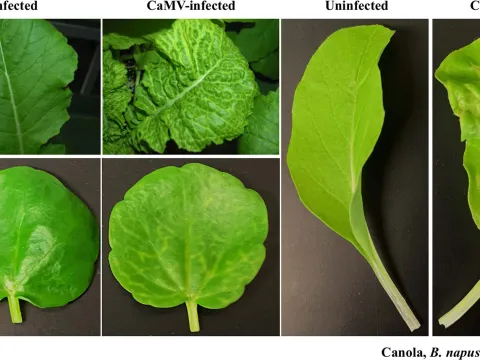
Symptoms of caulimovirus infection depend on the crop type, but common signs include chlorotic spots and leaf mottling.
Frequent observations include a pronounced mosaic pattern of the leaf blade, accompanied by deformation and general growth suppression of the plant.
In some cases, interveinal chlorosis develops on infected plants, which may eventually progress to necrotic processes.
In affected root crops, such as sweet potatoes, shape irregularities, reduced marketability, and changes in pulp texture may be observed when the virus is strongly developed.
- Mosaic pattern on leaves.
- Delayed growth and development.
- Leaf blade deformation.
- Chlorosis or yellowing of tissues.
- Reduced crop quality.
The primary mode of natural transmission for caulimoviruses in agroecosystems is through sucking insect vectors, most commonly aphids.
The virus is transmitted in a non-persistent manner: the insect acquires the virus during brief probing of plant tissues and rapidly transmits it to healthy individuals.
A second critical factor for spread is the use of infected planting material, tubers, or cuttings during vegetative propagation.
Conditions of high humidity and the presence of numerous intermediate hosts among weeds contribute to the rapid growth of virus vector populations.
Optimal temperature conditions that favor active aphid flight directly correlate with peaks in crop infection rates by caulimoviruses.
The harmfulness of caulimoviruses lies in a significant reduction in crop yield due to the general suppression of plant vital functions.
Infected plants lose their ability for full-scale photosynthesis, leading to a decrease in the accumulation of dry matter and sugars in the marketable part of the harvest.
Viral infection makes crops more susceptible to other pathogens, including fungal and bacterial diseases, which complicates crop protection.
On an industrial scale, viral infection leads to the rejection of a significant percentage of produce, causing direct economic damage to agricultural enterprises.
In vegetatively propagated crops like sweet potatoes, the accumulation of viral load year after year leads to variety degradation and the loss of economically valuable traits.
The main control method is the use of healthy, certified planting material obtained through tissue culture techniques (meristem culture).
Strict control of insect vectors, such as aphids, is necessary through the application of insecticides during the early stages of plant development.
An important preventive measure is weed management near fields, which often serve as a reservoir for the virus during the off-season.
Maintaining spatial isolation between new plantings and old, potentially infected agricultural areas is highly recommended.
Timely culling and destruction of plants showing primary symptoms of infection help prevent large-scale epiphytotics on a specific site.