
Cauliflower mosaic
Caulimovirus tessellobrassicae
Description
Symptoms
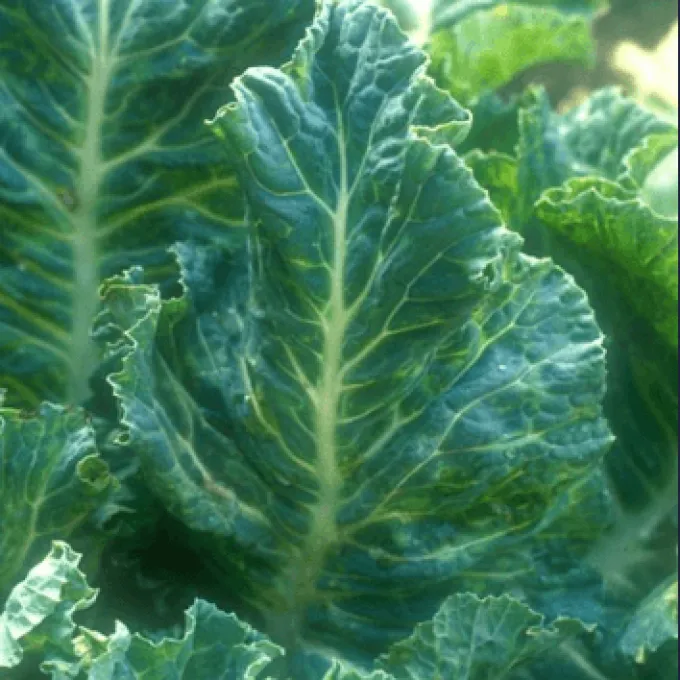
The most characteristic symptom is the formation of a mosaic pattern on leaves, consisting of alternating light and dark green areas.
Plants infected at an early stage exhibit stunted growth, which is often accompanied by leaf curling and distortion.
Vein clearing and yellowing of the leaf tissue are commonly observed in later stages of the viral infection process.
Infected cauliflower plants often produce undersized, loose, and deformed heads that lack commercial marketability.
Severely affected plants may develop necrotic spots on the foliage, significantly reducing the photosynthetic capacity of the crop.
Pathogen
The disease is caused by the Cauliflower mosaic virus (CaMV), which is the type species of the genus Caulimovirus.
This virus is a double-stranded DNA virus and represents a significant pathological threat to plants in the Brassicaceae family.
A wide range of crops is susceptible to this virus, including cauliflower, broccoli, cabbage, turnip, and various mustard species.
The transmission of the virus occurs primarily through aphid vectors that acquire the virus while feeding on infected plant tissues.
Although mechanical transmission can occur through contaminated handling tools, insects remain the primary vector for field spread.
Conditions for development
The spread of the virus is highly dependent on the population dynamics of aphids, which thrive in warm and dry environmental conditions.
Weeds within the Brassicaceae family serve as the primary overwintering reservoirs for the virus, acting as inoculum sources in spring.
High planting densities combined with poor weed control on field margins promote rapid secondary spread by aphid vectors.
The absence of spatial isolation between different brassica planting dates significantly increases the risk of early-season infection.
Temperatures between 20 and 25 degrees Celsius facilitate optimal conditions for viral replication and increased aphid activity.
Why it matters
The disease causes major economic losses by significantly reducing both the total yield and the quality of the harvested produce.
Deformed and undersized cauliflower heads fail to meet quality standards, making them unsuitable for fresh produce markets.
Plants infected with the mosaic virus are immunocompromised, rendering them more susceptible to other bacterial and fungal infections.
Reduced photosynthetic efficiency leads to lower biomass accumulation and lower concentration of nutrients within the plant tissues.
Severe infestations can lead to total crop failure, necessitating large-scale replanting and increasing production costs.
Protection
Strategic control involves rigorous weed management to eliminate reservoirs of the virus in and around the production fields.
Effective insecticide applications are necessary to manage aphid populations and break the transmission cycle of the virus.
Implementing a strict crop rotation schedule, avoiding brassica crops on the same land for at least three years, is essential.
The use of resistant or tolerant cultivars is the most effective approach for minimizing the impact of the Cauliflower mosaic virus.
Maintaining proper spatial isolation between plantings of different ages helps prevent the migration of aphids from infected older crops to younger ones.
Discussion
No discussions yet — be the first.