
Celery yellow
Celery yellow
Celery yellow is caused by phytoplasmas, which are specialized wall-less bacteria that inhabit the phloem tissue of infected plants. These pathogens act as systemic parasites, disrupting the flow of nutrients and essential metabolites within the celery plant.
What the section contains
Celery yellow
The pathogen is an obligate parasite and cannot survive long-term outside of a living host or its insect vector. It relies entirely on specific insects to move from one plant to another, making it a classic example of an insect-vectored plant disease.
The primary vectors for the pathogen are leafhoppers. When these insects feed on the sap of an infected celery plant, they ingest the phytoplasma, which then colonizes their salivary glands, allowing for transmission to healthy plants during subsequent feeding.
The incubation period within the celery plant is relatively long, often delaying the onset of visible symptoms until the infection has already spread significantly throughout the vascular tissues of the crop.
Alternative hosts are a major component of the disease cycle. Various weed species, particularly those in the Apiaceae family, act as reservoirs for the phytoplasma, ensuring the pathogen persists in the environment even when celery is not being grown.
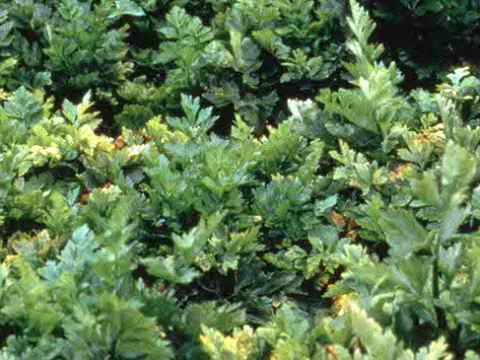
The first clinical sign of celery yellow is the development of systemic chlorosis, where leaves gradually turn from deep green to a pale yellow or lime-green color. This discoloration typically begins on younger foliage and progresses over time.
Stunting is a hallmark symptom of this infection. Plants exhibit significantly reduced growth rates, resulting in a stunted appearance compared to healthy plants in the same field, which is often observed in patches within the crop.
Affected plants often show abnormal growth patterns, such as proliferation of side shoots, which can give the plant a characteristic bushy appearance. This reaction is a result of the pathogen interfering with the hormonal balance of the plant.
In terms of harvestable quality, the root systems of infected plants are typically underdeveloped or severely deformed. The taproot may fail to reach market size, rendering the produce commercially unviable.
Internal symptoms include vascular necrosis, which may manifest as brownish discoloration of the phloem layers when the crown or root is cross-sectioned, indicating severe damage to the plant's transport system.
The development and spread of celery yellow are highly dependent on the population dynamics of leafhoppers. Warm, dry weather conditions provide the most favorable environment for these insects to thrive and migrate between host plants.
Weed management plays a critical role in disease severity. Fields adjacent to unmanaged hedgerows or wild patches of host plants often experience higher rates of infection due to the proximity of the vectors that carry the phytoplasma.
High temperatures accelerate the reproductive cycle of leafhoppers, leading to increased activity and more frequent feeding, which significantly amplifies the rate of transmission within the celery crop.
Planting density affects disease spread; overly dense rows create a microclimate that supports leafhopper movement and makes it easier for the insects to move from plant to plant without exposure to external environmental stressors.
Environmental stress, such as drought or nutrient imbalances, can weaken the plant's natural defenses, making it potentially more susceptible to colonization by the phytoplasma once introduced by an insect vector.
Celery yellow causes severe economic losses by directly impacting the yield and quality of the crop. Infected plants produce stunted, misshapen celery that does not meet the standards required for fresh-market sale.
The disease is particularly destructive because there is no known cure once the plant is infected. This necessitates the destruction of affected areas to prevent the spread to adjacent healthy celery plants, leading to direct crop loss.
Post-harvest losses are also significant, as celery infected with phytoplasmas has reduced shelf life. Such plants are prone to rapid tissue degradation and secondary infections, making them unsuitable for long-term storage.
The impact on production is cumulative, as the presence of the disease in a production region forces growers to implement more expensive preventative measures, such as intensive insecticide spray schedules.
In cases of severe infestation, entire blocks of celery may be deemed unfit for harvest, resulting in total loss of input costs including seeds, fertilizers, irrigation, and labor invested throughout the growing season.
Management of celery yellow is heavily focused on controlling the leafhopper population. Regular monitoring and the application of systemic or contact insecticides are essential to minimize the window for vector transmission.
Cultural practices are paramount, specifically the removal of reservoir weed hosts in and around the field perimeter. By eliminating these sources, growers can significantly reduce the pressure of the pathogen entering the crop.
- Using clean, certified, and healthy seedlings for planting.
- Frequent field inspections to identify and remove symptomatic plants immediately.
- Implementing spatial isolation between younger and older celery plantings.
- Employing sticky traps to track the migration patterns of leafhoppers.
- Optimizing irrigation and fertilization to maintain overall plant vigor.
Effective control requires an integrated approach that combines chemical intervention with diligent field sanitation. Keeping the field and surrounding areas clean is the most effective way to manage the risk of phytoplasma entry.
Early detection is vital. By identifying the first signs of yellowing and removing these plants immediately, growers can break the cycle of infection and protect the remaining crop from systemic spread.