
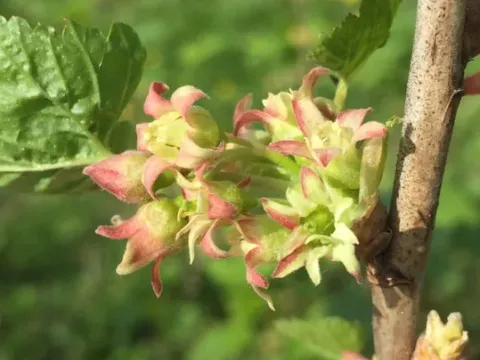
Blackcurrant reversion
Blackcurrant infectious
The causative agent of blackcurrant reversion is the Blackcurrant reversion virus (BRV). It is a systemic disease that severely affects the plant's physiological and developmental processes.
What the section contains
Blackcurrant reversion
The disease is viral in nature and currently has no cure. Once infected, the virus spreads throughout the plant's vascular system, causing irreversible damage to the reproductive organs and leaf structure.
The primary vector for the transmission of the virus is the blackcurrant gall mite (Cecidophyopsis ribis). These mites feed on infected tissue and carry the virus to healthy bushes during their migratory phases.
Transmission also occurs through contaminated propagation material. Using cuttings from an infected bush ensures that the resulting new plant will be a carrier of the disease.
The incubation period can be long, often spanning several years, during which the plant appears visually healthy despite being already infected and infectious to neighbors.
The most distinctive symptoms appear during the flowering stage. The petals of the flowers become narrow, elongated, and assume a purplish or greenish color, losing their typical appearance.
Leaves on affected branches undergo structural changes, losing their characteristic five-lobed shape. They often become three-lobed with irregular, coarse teeth and a simplified vein pattern.
A crucial diagnostic indicator is the loss of the typical strong scent of blackcurrant leaves. When crushed, leaves from an infected bush lack the characteristic smell associated with the species.
Affected plants often show excessive branching, creating clusters of thin, unproductive shoots known as witches' brooms. This leads to a dense, shrubby appearance that is non-productive.
Floral racemes are often deformed and sterile. The plants either fail to produce any berries at all or suffer from massive flower drop, resulting in zero yield for the season.
The primary economic harm of reversion is total yield loss. Because the virus causes absolute sterility in the plant, it becomes essentially a biological waste that occupies garden space.
The disease is chronic and progressive. There are no treatments available to restore an infected bush to health, making the immediate removal of the plant the only viable option.
Over time, the virus weakens the host plant, disrupting metabolism and photosynthesis. This leaves the bush vulnerable to secondary pathogens, environmental stress, and winter damage.
Blackcurrant reversion is highly contagious within the plantation. If left unmanaged, the presence of the gall mite vector ensures that the virus will eventually spread to every bush in the vicinity.
The visual similarity of early symptoms to nutrient deficiencies or climatic stress often causes gardeners to delay removal, which significantly increases the risk of a wider outbreak.
The most effective management practice is the immediate removal and destruction of the entire infected bush. The plant must be grubbed out, including the roots, and burned to kill the vector and eliminate the viral source.
Prophylaxis relies heavily on the control of the blackcurrant gall mite. Regular applications of acaricides during the bud burst and flowering stages are essential to break the transmission cycle.
Always source planting material from certified nurseries that practice strict health inspections. Avoid propagating plants from cuttings unless you are 100% certain of their health status.
Regular surveillance during the bloom period is vital. Checking bushes for deformed flowers and leaves allows for the early identification and removal of infected plants before the mite vector spreads.
Maintaining proper spacing between plants and following good pruning practices helps improve airflow and vigor, although these measures primarily support general health rather than offering direct antiviral protection.