
Blackcurrant anthracnose
Blackcurrant leaf
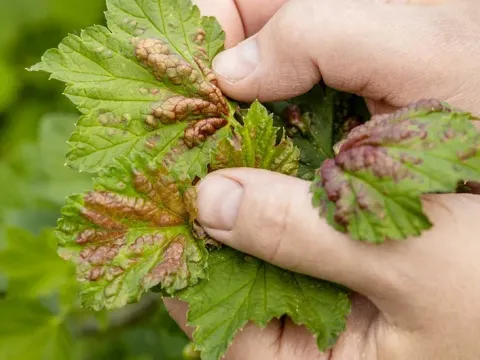
The first symptoms of anthracnose appear in early summer as tiny, reddish-brown spots with a darker border on the upper surface of the leaves.
What the section contains
Blackcurrant anthracnose
Over time, these spots expand and coalesce, covering large sections of the leaf blade, which leads to tissue necrosis and premature wilting.
In the center of the lesions on the underside of the leaves, small shiny pads develop, which represent the conidial sporulation of the fungus.
Heavily infected leaves turn yellow, curl, and fall off prematurely, significantly reducing the vigor of the entire currant bush.
On young shoots and leaf stalks, the infection manifests as elongated, sunken lesions that may also develop spore-bearing structures.
The pathogen responsible for this disease is the ascomycete fungus Drepanopeziza ribis, which exclusively affects the Ribes genus.
The fungus is a specialized parasite that disrupts the photosynthesis process and weakens the plant's structural integrity over the growing season.
It overwinters primarily in the form of mycelium and fruiting bodies within fallen, infected leaves that remain on the ground.
In spring, when temperatures rise and rainfall occurs, spores are released and disseminated by water splashes and wind to healthy foliage.
Throughout the season, the fungus produces multiple cycles of secondary spores, allowing the disease to spread rapidly under favorable conditions.
High humidity, frequent rain, and moderate temperatures ranging between 15°C and 20°C create optimal conditions for the infection to thrive.
Poorly ventilated and overly dense shrub plantations provide the perfect microclimate for spores to germinate and infect plant tissues efficiently.
Limited sunlight exposure on the inner parts of the bushes prevents moisture from evaporating, thereby extending the duration of leaf wetness.
Improper cultivation practices, such as excessive nitrogen fertilization, result in lush, soft tissues that are highly susceptible to fungal penetration.
Gardens situated in low-lying, damp areas are at a much higher risk of severe outbreaks due to persistent high relative humidity.
The primary impact of anthracnose is early defoliation, which robs the plant of essential nutrients needed to survive the winter dormancy.
Reduced photosynthetic capacity leads to a weakened plant that becomes highly susceptible to frost damage and winter kill.
Yields are severely compromised, as the berries on infected bushes are usually smaller, less sugary, and ripen unevenly due to stress.
Continuous infection over several consecutive years can cause the gradual decline of the plant, often leading to total loss of fruit production.
The disease effectively lowers the plant's overall immune response, leaving it vulnerable to subsequent infestations by pests and secondary pathogens.
The most critical cultural control measure is the thorough removal and destruction of all fallen leaves in autumn to eliminate the primary inoculum.
Regular pruning is essential to maintain an open canopy, ensuring adequate air circulation and sunlight penetration throughout the bush.
Preventative applications of copper-based fungicides before budding and after harvest significantly reduce the risk of early-season infection.
When weather conditions favor disease development, the use of systemic fungicides is recommended to protect the foliage during the growth period.
Selecting resistant cultivars is the most sustainable approach, as it significantly reduces the need for chemical interventions in the garden.