
Tomato leaf curl Gujarat virus
Begomovirus solanumgujaratense
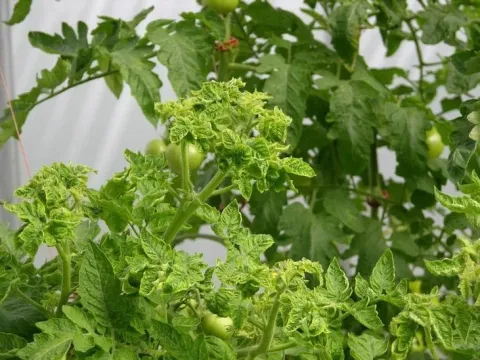
The primary symptom is the severe curling and crinkling of leaves, which often appear stunted or yellowed. This distortion interferes significantly with photosynthesis, leading to reduced plant vigor.
What the section contains
Tomato leaf curl Gujarat virus
Infected plants exhibit shortened internodes and a bushy, stunted appearance. The growth of new shoots is often severely inhibited, giving the plant an overall dwarf-like habit.
Flower production is drastically reduced, and existing flowers frequently drop prematurely. Any fruits that do develop are usually distorted, undersized, and lack marketable quality.
Symptoms are most pronounced on young, actively growing leaves. Early infection in seedlings can prevent the plant from ever reaching the reproductive stage.
Because these symptoms can sometimes mimic nutritional deficiencies or herbicide damage, careful observation and lab testing are often required for accurate diagnosis.
The pathogen is Tomato leaf curl Gujarat virus, a member of the genus Begomovirus within the Geminiviridae family. It is a monopartite virus with a circular, single-stranded DNA genome.
The virus is transmitted by the whitefly Bemisia tabaci. This insect acts as a persistent vector, meaning it carries the virus for the duration of its life after feeding on an infected host.
The transmission efficiency is highly dependent on the population density of the whitefly and the duration of feeding. Even short feeding periods can result in successful virus inoculation.
The virus has a wide host range, infecting various solanaceous crops including peppers, tobacco, and numerous wild weed species that serve as viral reservoirs.
Viral replication occurs in the host's phloem, where it hijacks cellular machinery, leading to the characteristic physiological and morphological changes seen in the plant.
Epidemics are most prevalent in warm, arid climates that favor the proliferation of whitefly populations. High temperatures accelerate the whitefly life cycle.
The presence of wild hosts and weed reservoirs near agricultural land is a critical factor, as these weeds maintain the virus in the environment between tomato cropping seasons.
Improper greenhouse management, such as poor ventilation and failure to use physical barriers like fine-mesh screens, creates an environment where whiteflies can thrive and spread the virus.
The overlapping of planting dates across neighboring fields ensures a continuous source of host plants, which facilitates the migration of infected whiteflies from old crops to young seedlings.
Environmental stress, such as drought, can sometimes exacerbate the symptoms and make the plants more attractive or susceptible to insect feeding.
The economic impact of this virus is devastating, with potential yield losses ranging from severe to total destruction of the tomato crop in infested areas.
Infected plants act as a permanent reservoir of the virus, meaning they must be removed and destroyed to prevent further spread within the field.
The virus severely damages the plant's metabolic processes, rendering it susceptible to secondary pathogens and reducing the overall productivity of the field.
The cost of implementing comprehensive pest management programs and replacing susceptible varieties puts significant financial pressure on tomato growers.
Losses also occur at the post-harvest stage, as the few fruits that are produced may not meet the quality standards required for commercial markets.
The most effective strategy is integrated pest management (IPM) focused on controlling the whitefly vector using a combination of biological and chemical tools.
The use of virus-resistant or tolerant cultivars is the most sustainable approach, as they significantly mitigate the impact of the disease even if the virus is present.
Physical exclusion methods, such as using whitefly-proof insect nets in greenhouses, are highly effective in preventing initial infection of seedlings.
Cultural practices, including thorough weeding of surrounding areas and the use of reflective mulches, help to reduce the pressure of whitefly populations on the crop.
- Application of systemic insecticides to manage whitefly populations.
- Regular field scouting for early symptom detection.
- Prompt roguing and disposal of infected plant material.
- Crop rotation to break the cycle of infection.