
Sida golden mosaic virus
Begomovirus sidavenae
Sida golden mosaic virus (Begomovirus sidavenae) is a member of the Geminiviridae family. As a single-stranded DNA virus, it poses a significant threat to various plant species, particularly in warmer climates.
What the section contains
Sida golden mosaic virus
The virus acts as an obligate parasite, infecting the host's phloem tissue. This leads to the disruption of nutrient translocation, severely impacting the overall physiological health of the plant.
Transmission occurs exclusively via the whitefly Bemisia tabaci. This insect vector acquires the virus while feeding on infected plant tissues and subsequently transmits it during feeding on healthy plants.
The molecular structure of the virus allows for high evolutionary rates, enabling it to overcome many plant resistance mechanisms. This rapid adaptation makes it difficult to manage through standard breeding programs alone.
The virus does not persist in the soil but relies heavily on the survival of its insect vectors or alternative host plants to maintain the infection cycle throughout the year.
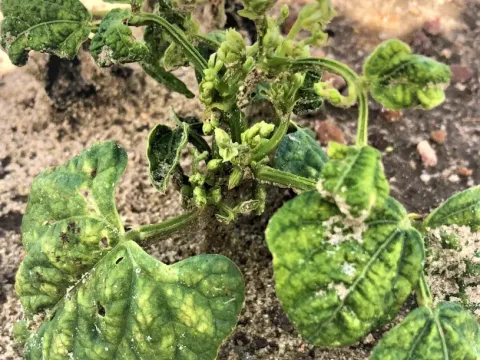
The primary symptom is a distinct golden or bright yellow mosaic pattern on the leaves. This chlorosis often follows the veins, leading to a mottled appearance that can affect the entire foliage.
Plants infected with the virus exhibit severe stunting, characterized by significantly shortened internodes. This gives the plant a compact, stunted appearance that halts further development.
Leaf deformation is another common sign. Infected leaves may become crinkled, curled, or distorted, resulting in a reduced surface area for photosynthesis and negatively affecting growth.
Reproductive success is severely compromised. Many infected plants show poor flowering, fruit abortion, and in cases of early-stage infection, complete failure to produce viable seeds or fruits.
- Golden mosaic patterns on foliage
- Stunted growth and shorter internodes
- Leaf curling and deformation
- Reduced flower and fruit production
Environmental conditions play a crucial role in the disease's epidemiology, primarily through the regulation of the whitefly population. Warm, arid conditions generally favor higher insect activity.
The availability of reservoir hosts, particularly weeds in the Malvaceae family, is vital for the survival of the virus during periods when no agricultural crops are present in the field.
High humidity combined with optimal temperatures creates a microclimate conducive to rapid whitefly reproduction. Frequent migrations of these insects often lead to explosive outbreaks of the mosaic virus.
Poor agricultural practices, such as lack of weed management or failure to rotate crops, contribute to the build-up of the viral inoculum in a specific area.
In regions where crops are planted continuously throughout the year, the virus can survive without interruption, creating a high-pressure environment for new seedlings.
Sida golden mosaic virus is responsible for massive economic losses. Infections can reduce yields by up to 90% in severe cases, making agricultural production unprofitable if left unchecked.
The quality of harvested produce is often compromised. Fruits and vegetables from infected plants tend to be smaller, misshapen, and possess lower nutritional content compared to healthy crops.
Secondary infections are common as the virus weakens the plant's overall immune response. This makes crops more susceptible to opportunistic fungal and bacterial pathogens that further degrade plant tissues.
The need for constant vector control programs increases the cost of crop production significantly, as farmers must invest in repeated insecticide treatments to manage whitefly populations.
Widespread outbreaks can devastate local economies, limiting the production of susceptible crops and necessitating a shift to less profitable or non-host plant varieties.
Managing the whitefly vector is the primary strategy for virus control. Consistent use of systemic insecticides during early crop growth stages is essential to prevent primary infections.
Sanitation practices are crucial; eliminating weed hosts in and around the fields removes the reservoir for the virus, thereby reducing the risk of transmission to the crop.
The use of certified virus-free planting material and protective netting for seedlings are effective ways to prevent the virus from entering the field in the first place.
Developing and utilizing resistant or tolerant crop varieties is the most sustainable approach to managing the disease in the long term.
Implementing proper spatial isolation between plantings can break the cycle of infection, and early removal of symptomatic plants can limit the spread within a managed field.