
Sida golden mosaic begomovirus
Begomovirus sidaureicostaricaense
Description
Symptoms
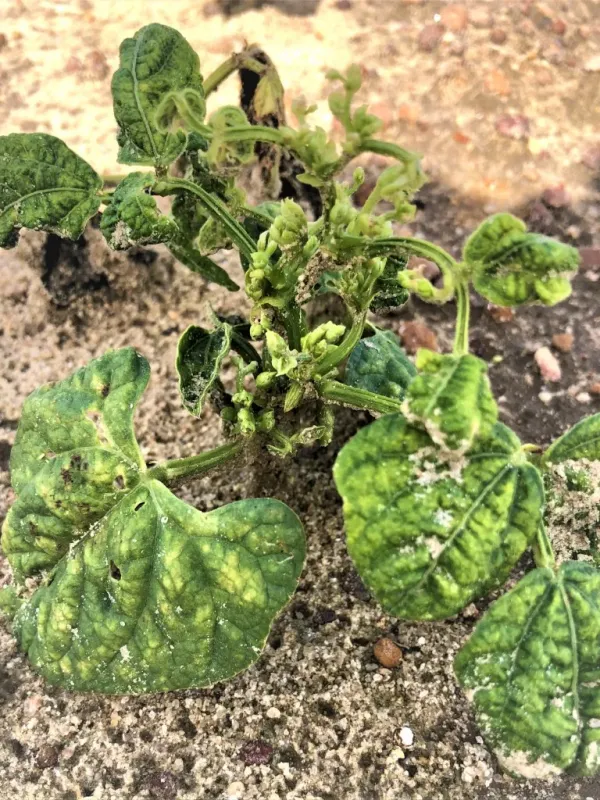
The hallmark of the disease is the development of bright golden or yellow mosaic patterns on the foliage. These symptoms are caused by the disruption of chlorophyll synthesis and chloroplast integrity in the leaf tissues.
Plants often exhibit severe leaf curling, wrinkling, and reduction in leaf size. The overall growth habit of the plant is stunted, and the internodes become significantly shortened.
Flowers may become malformed or fail to develop properly. Fruit set is often drastically reduced, and any fruits that do reach maturity are frequently stunted, distorted, or have poor quality.
Symptoms are usually most pronounced on younger, rapidly developing leaves. However, as the infection becomes systemic, older leaves may also show chlorotic spotting or mosaic symptoms.
Diagnostic verification often requires molecular methods, such as PCR, as symptoms can sometimes mimic nutritional deficiencies or damage from other environmental stresses.
Pathogen
The causal agent of this disease is Begomovirus sidaureicostaricaense, a member of the Geminiviridae family. These viruses are characterized by a circular single-stranded DNA genome and are typically transmitted by whitefly vectors.
The virions are small, geminate (twinned) particles composed of two incomplete icosahedra. The viral DNA encodes proteins necessary for replication, encapsidation, and movement within the host plant, effectively hijacking the host's cellular machinery.
The primary vector is the whitefly Bemisia tabaci, which acquires the virus through feeding on the phloem sap of infected plants. The virus is then transmitted in a persistent, circulative manner, meaning it persists in the insect's body for its entire lifespan.
The virus infects various hosts, primarily those in the Malvaceae family. Once the virus enters the plant, it moves systemically through the phloem to all plant parts, ensuring the systemic nature of the disease.
Genetic diversity of begomoviruses is high, often leading to the emergence of new, more virulent strains that can overcome existing plant resistances, making constant monitoring essential.
Conditions for development
The disease spread is directly tied to the population dynamics of Bemisia tabaci. High temperatures and humidity facilitate rapid whitefly reproduction and increased movement between plants.
The presence of alternative weed hosts acts as a virus reservoir. These plants sustain the virus population during seasons when the primary crop is not present, ensuring a constant source of infection.
Monoculture farming and high-density planting contribute to disease outbreaks by providing a continuous supply of food and breeding grounds for the insect vectors.
Human activity, specifically the transport of infected plant materials across regions, remains the most significant factor in the long-distance dissemination of the virus.
Water stress or nutrient imbalances can make plants more susceptible to initial infection and lead to more severe symptom expression once the virus is established.
Why it matters
The virus causes systemic infection that cannot be cured. Once a plant is infected, it remains a reservoir of the virus, posing a risk to the entire field, which necessitates immediate removal of infected specimens.
Economic damage is substantial, with potential yield losses ranging from significant reduction to total crop failure. The unmarketable quality of deformed fruits further adds to the financial loss.
Infection leads to reduced photosynthetic efficiency, which lowers the overall biomass and vigor of the plant. This makes the crop more vulnerable to secondary pest infestations and climate-related stresses.
The long-term impact on regional agriculture can be severe, potentially rendering specific land unsuitable for certain profitable crops if the whitefly-virus complex becomes established.
Costs associated with rigorous vector control and the need for frequent crop replacement significantly increase the overhead for agricultural production.
Protection
Integrated Pest Management (IPM) is essential. The strategy focuses on controlling the whitefly population through the timely application of systemic insecticides and the use of physical barriers like fine-mesh screens in greenhouses.
Sanitation practices are critical: removing infected plants promptly and destroying them prevents the virus from spreading. Weeds around the fields must be cleared to eliminate reservoirs.
Using resistant or tolerant cultivars is the most sustainable solution. Breeding programs focused on geminivirus resistance are key to long-term crop protection.
Implementing cultural practices, such as choosing optimal planting dates to avoid the peak whitefly migration season, can significantly reduce the incidence of primary infection.
Crop rotation and the use of reflective mulches (like aluminum-coated plastic) are effective methods to deter whiteflies from landing on the young plants, thus delaying or preventing initial infection.
Discussion
No discussions yet — be the first.