
Lycianthes leaf curl virus
Begomovirus lycianthesis
The Lycianthes leaf curl virus is a plant pathogen belonging to the genus Begomovirus within the family Geminiviridae.
What the section contains
Lycianthes leaf curl virus
This virus contains a single-stranded DNA genome and is primarily known for infecting plants within the Solanaceae family.
The disease is transmitted in a persistent manner by the tobacco whitefly (Bemisia tabaci) as it feeds on the phloem of infected host plants.
Once a whitefly acquires the virus, it remains capable of transmitting the pathogen for the remainder of its lifespan, facilitating rapid spread.
The viral genome exhibits significant adaptability, leading to the emergence of diverse strains that complicate disease prevention efforts.
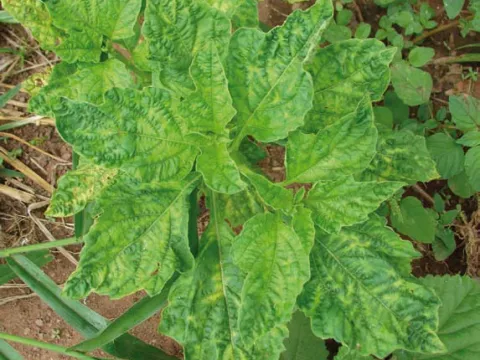
The primary symptom of infection is the severe curling and rolling of leaves, often accompanied by crinkling of the leaf surface.
Chlorosis, or yellowing, commonly occurs in the interveinal areas, disrupting photosynthesis and weakening the plant's overall vigor.
Infected plants typically show stunted growth, characterized by shortened internodes and a bushy, compact appearance due to suppressed development.
Flowering is significantly reduced, and any fruits that do develop are usually small, malformed, and of poor commercial quality.
- Upward or downward leaf curling
- Interveinal yellowing (chlorosis)
- Stunted growth and internode shortening
- Fruit malformation
The spread of the virus is directly linked to the population density of the whitefly vector within the local ecosystem.
High temperatures and dry environmental conditions provide an ideal climate for whitefly reproduction and rapid viral multiplication within plants.
Greenhouse environments often provide stable conditions for the virus to persist if sanitary measures are not strictly maintained throughout the year.
Long-distance dissemination primarily occurs through the transport of asymptomatic or mildly infected nursery transplants.
Weed hosts, particularly those related to the Solanaceae family, act as critical reservoirs for the virus during off-seasons.
The economic impact of the virus is substantial, as infected plants rarely produce a marketable harvest due to severe physiological distress.
Early-season infections can lead to total crop failure, as the plant's ability to produce biomass and fruit is severely impaired.
Managing the virus imposes high costs on growers, including expensive chemical pest control and the labor-intensive removal of infected plants.
The potential for rapid spread among neighboring plots makes this virus a serious threat to regional agricultural stability.
Seed production is strictly affected, as systemic viral infections lead to low-quality or non-viable seeds in many host species.
Integrated Pest Management (IPM) is essential, focusing on controlling whitefly populations through systemic insecticides and physical barriers.
Removing alternative weed hosts near cultivated fields and greenhouse perimeters is a crucial step in reducing initial viral inoculum.
Growers should prioritize the use of high-quality, virus-free nursery stock to prevent the introduction of the pathogen into clean areas.
Frequent field scouting allows for the early identification and rogueing of infected plants, which helps to contain local outbreaks.
Utilizing insect-proof netting in greenhouses significantly reduces the risk of whitefly migration and minimizes the incidence of the virus.