
Okra yellow mosaic virus
Begomovirus abelmoschusharyanaense
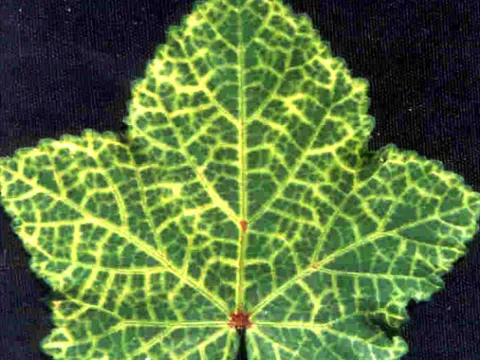
The primary symptom of the disease is the appearance of bright yellow or pale green patches on leaves, which eventually merge to form a distinct mosaic pattern. The tissue between the veins loses chlorophyll, leading to a bleached or chlorotic appearance of the foliage.
What the section contains
Okra yellow mosaic virus
Infected plants exhibit severe stunting and reduced growth rates. Leaves often show signs of deformation, becoming twisted, wrinkled, or curly, which significantly limits the plant's photosynthetic capacity and overall health.
Okra pods on affected plants are typically smaller, deformed, and lose their marketability. They often appear pale or mottled, rendering the harvest unsuitable for commercial sale and significantly reducing consumer value.
In cases of severe infection, premature shedding of flowers and fruit buds is observed, often leading to total crop failure. The plants appear weak, wilted, and suffer from rapid loss of foliage, failing to reach their productive potential.
The infection is systemic, meaning symptoms manifest throughout the entire plant, including young shoots and apical buds. This indicates that the virus has successfully infiltrated the plant's vascular system, disrupting the distribution of nutrients.
The causative agent is the Begomovirus abelmoschusharyanaense, a member of the Geminiviridae family. It is a single-stranded DNA virus known for its high mutation rate and ability to hijack host cell processes.
This begomovirus is transmitted in a semi-persistent manner by specific insect vectors. The virus primarily resides in the phloem tissue, where it interferes with the translocation of sugars and other essential metabolic products.
A key biological feature of this pathogen is its broad host range, allowing it to persist in various weed species during the off-season. This adaptability makes managing the disease in open fields particularly challenging.
Transmission is exclusively vector-borne via the feeding activities of insects. The virus is not mechanically transmissible through pruning tools or via seeds, which is a crucial detail for developing effective quarantine and containment procedures.
The virus manipulates the host's genetic machinery to replicate its own viral particles, causing cellular exhaustion. This process directly depletes the plant's resources, leading to the characteristic yellowing and growth retardation observed in the field.
The whitefly (Bemisia tabaci) is the primary vector responsible for spreading the virus. The disease incidence is directly correlated with the population density of these insects in the field.
Warm temperatures and moderate humidity create optimal conditions for whitefly multiplication. During hot periods, the insect's life cycle accelerates, leading to rapid disease outbreaks in okra plantations.
Drought-stressed plants are more susceptible to insect feeding, which increases the likelihood of virus transmission. Furthermore, weed-infested areas surrounding the farm serve as reservoirs, harboring both the vector and the virus between seasons.
Planting okra near already infected fields or in regions with high vector pressure poses a significant risk. Growing susceptible varieties in high-risk areas without implementing protective measures almost guarantees infection.
Poor agricultural practices, such as excessive nitrogen fertilization, result in lush, soft foliage that is highly attractive to whiteflies. This increased attractiveness leads to higher infestation rates, thereby accelerating the spread of the virus throughout the crop.
Okra yellow mosaic virus is considered one of the most destructive pathogens for this crop. Early-stage infections can result in yield losses ranging from 80% to 100%, causing severe economic damage to growers.
The damage extends beyond mere yield reduction; it involves a drastic decline in crop quality. Distorted, small, and discolored pods have no commercial value, leading to substantial financial losses for farmers.
The virus induces systemic physiological distress: root development is hampered, photosynthesis is suppressed, and nutrient metabolism is disrupted. This leaves the plant weak and susceptible to secondary infections or environmental stressors.
The accumulation of viral particles alters the plant's hormonal balance, frequently causing flower and pod abscission. Consequently, farmers are unable to maintain a stable harvest throughout the growing season, severely impacting profit margins.
Financial losses are further compounded by the high costs associated with repeated insecticide applications. Because these measures are often insufficient to stop the spread, farmers may be forced to abandon or destroy entire sections of their crop.
The primary control strategy involves integrated pest management (IPM) focused on whitefly suppression. The use of systemic insecticides during the early growth stages is vital to reduce vector populations and prevent primary infection.
Agricultural measures should include thorough weed control, as many weeds act as alternative hosts for the virus. Implementing a strict crop rotation cycle with non-host crops is essential to break the infection chain.
Prioritizing the cultivation of resistant or tolerant varieties is highly recommended. Modern breeding programs offer seeds with enhanced genetic resistance, which can help maintain yields even when the virus is present in the area.
In greenhouse settings, the use of fine-mesh insect-proof netting is an effective physical barrier against whitefly entry. Yellow sticky traps should be deployed for regular monitoring of insect populations to allow for timely interventions.
Infected plants must be rogued (removed) and destroyed immediately to eliminate sources of the virus. Combining strict field sanitation with effective vector control and the use of resistant germplasm is the most reliable approach to mitigating the damage caused by this virus.