
Description
Symptoms
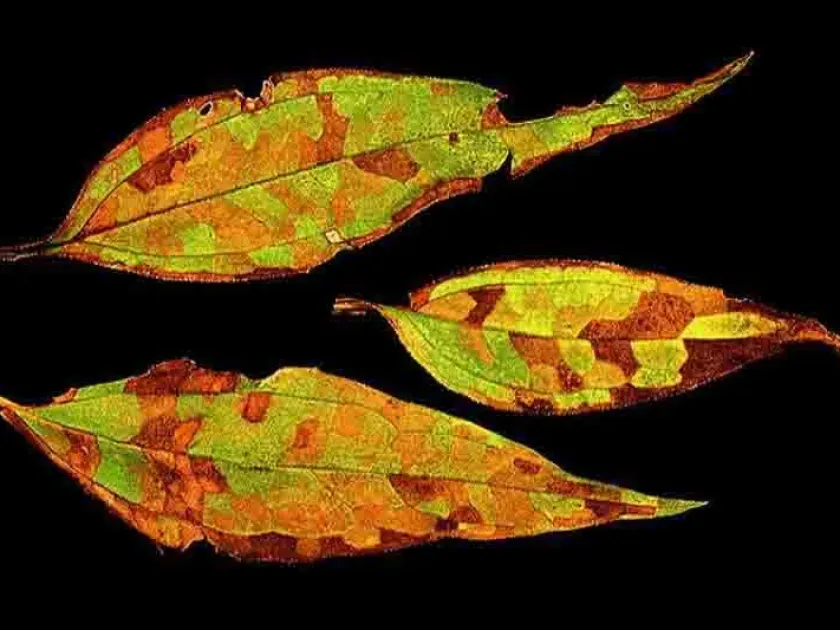
The first sign of infestation is the appearance of characteristic angular spots on leaves, confined by leaf veins. Initially, they are light green or yellowish, but as the disease progresses, they quickly turn brown and die.
Severe infestation leads to curling, deformation, and premature shedding of foliage. The plant appears stunted, and buds may fail to open or develop with visible abnormalities.
When inspecting affected bean or alfalfa plants, stem necrosis is often observed. Tissues inside the affected organs become soft, water-soaked, and gradually turn a dark, almost black color.
A characteristic symptom of nematode infestation is the development of necrosis spreading from the bottom of the stem upwards. Lower leaves dry out first, gradually leaving the lower part of the stem bare, which negatively affects photosynthesis.
- Yellowing of tissues between leaf veins.
- Appearance of necrotic spots with irregular shapes.
- Curvature and distortion of stems and flower stalks.
- Massive leaf drop under high humidity conditions.
Pathogen
The causative agent of the disease is the microscopic foliar nematode Aphelenchoides ritzemabosi, belonging to the class of roundworms. This dangerous endoparasite leads a hidden lifestyle inside the tissues of leaves and stems of cultivated plants.
This pest is highly mobile in moist environments, which allows it to actively move across the surface of the plant's aerial organs. The nematode penetrates tissues through the stomata, where it begins to feed intensively on the contents of plant cells.
During its life cycle, the parasite releases enzymes that break down cell walls and disrupt the metabolic processes within the plant. This leads to the rapid inhibition of the host organism and the loss of its decorative or agricultural value.
Of particular concern is the nematode's ability to maintain viability for long periods in dry plant debris, soil, or seeds. This makes the pest's life cycle difficult to break without a comprehensive management approach.
In addition to ornamental crops, this pest affects agricultural plants, such as alfalfa (lucerne) and common beans, causing significant economic damage to the agricultural sector.
Conditions for development
Optimal conditions for nematode reproduction and spread are high air humidity and moderate temperatures. The parasite actively moves through droplets of dew or rain, migrating from one plant to another.
Intensive population growth is observed in dense plantings where poor ventilation contributes to the accumulation of moisture on leaf surfaces. This creates an ideal microclimate for pest migration.
The spread of the nematode is also facilitated by the use of infested planting material, including cuttings, seedlings, or seeds. Nematodes can survive in the soil for one or two seasons, waiting for favorable conditions.
Agricultural machinery and tools coming into contact with diseased plants become primary vectors for spreading the infection within fields or greenhouses. Nematodes can easily be transported via soil attached to footwear or gardening equipment.
Greenhouse operations are particularly prone to outbreaks, as stable temperatures and overhead irrigation accelerate the parasite's development cycle, allowing it to produce several generations in a short time.
Why it matters
The harmfulness of the nematode lies in the total loss of the commercial appearance of ornamental plants and a decrease in the yield of fodder and legume crops. Heavily infested specimens often die.
In alfalfa and beans, the parasite causes stunted growth and a general reduction in vegetative mass. This leads to a significant decrease in the volume of green matter needed for fodder and reduces seed quality.
The disease disrupts the plant's metabolism, making it vulnerable to secondary fungal and bacterial infections. The combined impact of the pest and pathogens leads to the rapid death of the crop.
Economic losses consist of costs for protective measures and the loss of a portion of the harvest. Severe infestation of a field or greenhouse requires total plant destruction and radical disinfection.
The nematode is capable of spreading rapidly across a field, turning focal infestations into large-scale epidemics. Lack of control early in the growing season makes subsequent protection measures ineffective.
Protection
The foundation of protection is the use of healthy planting material. Before planting, cuttings should be disinfected using a thermal method, immersing them in hot water at 45-50 degrees Celsius for 5-10 minutes.
An important agronomic practice is crop rotation and weed control, as weeds can act as reservoirs for the pest. It is essential to timely remove and burn all infested plant debris.
In greenhouses, overhead irrigation should be avoided, as water droplets facilitate the rapid movement of nematodes. Drip irrigation or soil-level watering is recommended to minimize moisture contact with leaf surfaces.
The use of chemical controls, such as nematicides, is complicated by the pest's hidden lifestyle. However, the use of systemic preparations can reduce population levels during the initial phase of development.
Prevention includes soil disinfection using steam or specialized chemical fumigants before establishing a new crop. Additionally, planting resistant cultivars is an effective method if they are available in the current selection.
Pathogens and affected parts
Affects crops · 2
Discussion
No discussions yet — be the first.