
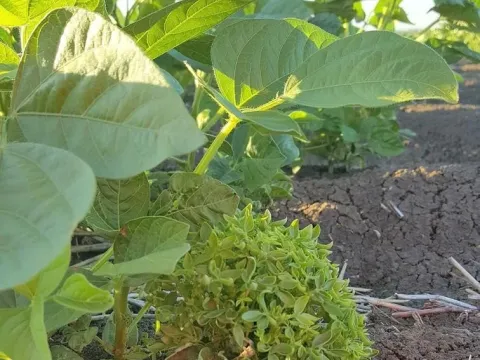
Plant phytoplasma
Phytoplasma
Phytoplasmas are specialized prokaryotic organisms that lack a cell wall. They belong to the class Mollicutes and are obligate parasites that colonize the phloem tissue of their host plants.
What the section contains
Plant phytoplasma
These pathogens cannot be grown in laboratory culture media, which complicates diagnosis. They rely on insect vectors to move from plant to plant within the phloem sap flow.
Phytoplasmas are persistent in wild weed reservoirs and insect vectors throughout the year. This makes the disease complex to eradicate once established in an agricultural landscape.
The infection is systemic, meaning the pathogen spreads through the entire vascular system of the plant, causing severe physiological and metabolic imbalances.
Many crops are susceptible, including Indian mustard, winter rapeseed, radish, turnip, peach, and ornamental species like Persian cyclamen and Jameson's gerbera.
The most common symptom is yellows (chlorosis), where leaves turn pale and yellow, often starting from the margins. This happens due to the disruption of chlorophyll synthesis.
Plants often exhibit abnormal growth patterns, such as stunting and severe leaf deformation. Some plants develop a bushy appearance known as "witches' broom" due to the proliferation of lateral buds.
Flowers may undergo phyllody, where floral parts transform into green leaf-like structures, rendering the plant completely sterile and unable to produce seeds or fruits.
The root system is typically underdeveloped and compromised, which leads to general wilting and reduced vigor, particularly during hot and dry weather conditions.
In woody plants like peach, the disease may cause bark necrosis, decline of the canopy, and a significant reduction in fruit size and quality.
Transmission occurs primarily through sap-sucking insect vectors, including leafhoppers, psyllids, and aphids. These insects acquire the pathogen by feeding on infected plants.
Environmental conditions that favor the rapid reproduction and migration of these insect vectors significantly increase the risk and speed of disease spread across fields.
Close proximity to weed-infested areas serves as a constant source of infection. Weeds often act as asymptomatic reservoirs, maintaining the phytoplasma population until insects move to crops.
Warm, dry weather is generally conducive to the activity of vectors, leading to localized epidemics. The longer the insect feeds on a plant, the higher the likelihood of successful transmission.
In orchards and nurseries, the pathogen can also be spread through grafting or the use of infected vegetative propagation material, leading to rapid outbreaks in young plantations.
Phytoplasma diseases lead to massive yield losses and reduced crop quality. Infected produce is often unmarketable due to discoloration, malformation, or lack of size.
In ornamental horticulture, plants like cyclamen and gerbera lose their aesthetic value entirely when infected, leading to total financial loss for growers.
Oilseed crops, such as rapeseed and mustard, suffer from reduced oil content and lower seed viability, affecting the profitability of the entire harvest cycle.
The systemic nature of the infection means that an infected plant is a permanent source of the pathogen. There are no curative treatments available for infected field crops.
The threat extends to entire regions, as outbreaks can persist for years if management practices are not strictly followed, potentially forcing the removal of entire fields.
Effective management begins with controlling the insect vector population through integrated pest management and the judicious use of systemic insecticides.
Sanitation is critical. Roguing and destroying infected plants promptly prevents the spread of the pathogen to healthy neighboring plants within the crop stand.
Maintaining weed-free conditions, particularly along field borders and near ornamental plots, reduces the availability of reservoir hosts for the phytoplasma and vectors.
Using certified, disease-free planting material is the most important preventive measure, especially when establishing new orchards or perennial flower beds.
- Monitor insect vectors using yellow sticky traps to time insecticide applications.
- Implement crop rotation to break the cycle of vectors and host plants.
- Establish spatial isolation between new healthy plantings and older, potentially infected areas.