
Plantain synchytrium
Synchytrium nigrescens
Description
Symptoms
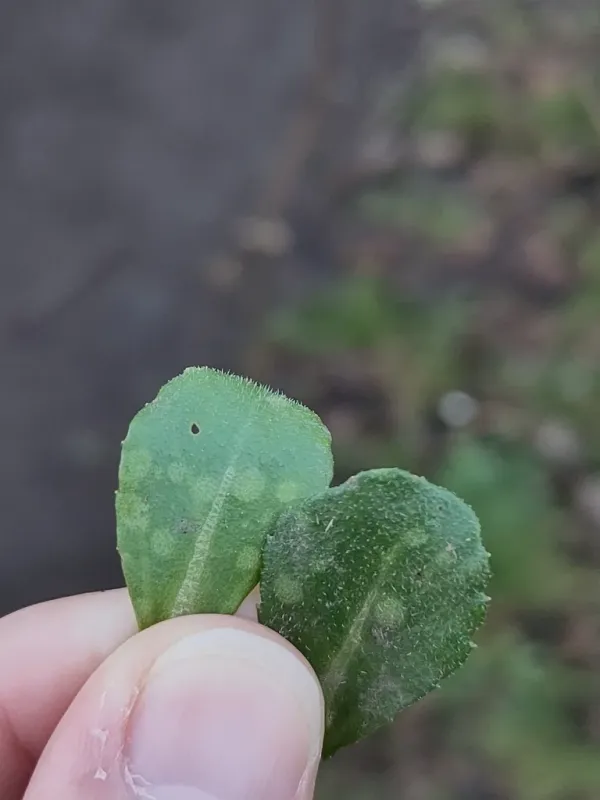
The primary symptom of the disease is the formation of specific galls or tumor-like growths on various organs of the host plant. These usually appear on leaf stalks and blades, but can also affect flower stalks.
At the early stages, small swellings emerge on the affected areas, which gradually increase in size. The surface of these galls is typically bumpy and may differ in color from healthy tissue, sometimes displaying a slightly greenish tint.
Inside the galls, the pathogen multiplies actively, leading to tissue deformation of the plantain. Affected leaves often become brittle, and in cases of heavy infection, they may yellow and die prematurely.
During field inspection, these growths are sometimes confused with the activity of gall-forming insects. However, close observation reveals that the underlying cause is an infectious fungal process.
In the final stages of the disease, tissues at the site of fungal localization may undergo necrosis. This leads to a general weakening of the plant and a significant reduction in the quality of the medicinal raw material.
Pathogen
The disease is caused by the microscopic fungus Synchytrium nigrescens, which belongs to the Chytridiomycetes class. It is an obligate parasite that thrives and reproduces exclusively within the living cells of the host plant tissue.
The pathogen's life cycle involves the formation of zoospores that move in a film of water to infect the epidermal cells of the plantain. Once inside, the fungus induces hypertrophy and hyperplasia in the host cells, resulting in gall formation.
Within these pathological growths, the fungus forms resting spores known as sporangia. These structures are highly resistant to adverse environmental conditions and can persist in the soil or plant debris for a long time.
The spread of the infection within the field occurs primarily through zoospores transported by water during rainfall or irrigation. Secondary infection is possible throughout the growing season if moisture is present.
The biology of Synchytrium nigrescens is closely tied to the life cycle of the broadleaf plantain, which serves as the primary reservoir for the infection. The pathogen's metabolism is geared toward exhausting the host cell's resources to support its own reproduction.
Conditions for development
High air and soil humidity are the critical factors for the development of the disease. A thin film of water on the plant's surface is necessary for the zoospores to move and successfully infect the tissues.
The optimal temperature range for spore germination and mycelial development is moderate. Prolonged rainy weather and fog during the spring and summer periods create ideal conditions for the rapid spread of the disease.
Dense plantain stands contribute to poor air circulation and increased humidity in the ground-level microclimate, which significantly accelerates the infection process.
Soil contaminated with fungal sporangia is the primary source of initial infection. During agricultural activities, spores can be mechanically transferred via tools or equipment, spreading the pathogen to new areas.
Failure to rotate crops and continuous cultivation of plantain on the same plot leads to a gradual buildup of the infection in the soil, increasing the risk of major outbreaks.
Why it matters
Plantain synchytrium causes significant economic losses in the industrial cultivation of the plant for medicinal use. The primary damage involves morphological changes to the leaves and a reduction in their biochemical quality.
Affected plants exhibit stunted growth, which directly impacts the total yield of leaf mass. The disruption of physiological processes, such as photosynthesis and nutrient flow due to gall formation, weakens the entire crop.
The quality of the harvested product drops significantly, as the presence of growths makes the material unsuitable for standard pharmaceutical processing, necessitating costly sorting.
Severe infection may lead to the death of individual plants, thinning the crop and allowing weeds to proliferate, which forces farmers to spend more on plantation maintenance.
The infection leads to premature senescence of the vegetative organs, shortening the effective lifespan of the plantation and reducing overall profitability.
Protection
The foundation of control is strict crop rotation. It is recommended to grow plantain on the same site no more frequently than every 3–4 years to reduce the infection load in the soil.
Thorough removal and destruction of all plant debris after the season is essential, as this prevents the fungus from overwintering and accumulating spores.
When establishing new plantations, it is crucial to use only healthy seeds and avoid using seedlings from suspected or already infected areas.
Managing planting density and controlling weeds help improve aeration, which reduces humidity in the lower canopy and inhibits fungal growth.
In cases of severe infestation, preventive contact fungicide treatments may be considered, provided that all safety regulations and pre-harvest intervals for medicinal crops are strictly followed.
Discussion
No discussions yet — be the first.