
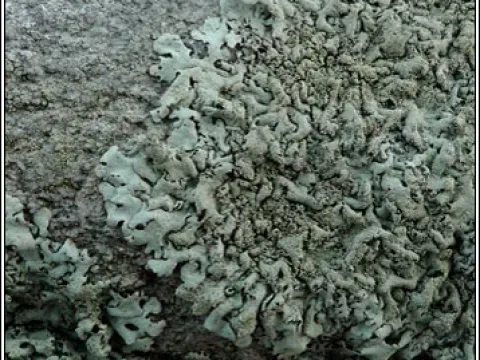
Xanthoparmelia conspersa
Xanthoparmelia conspersa
Xanthoparmelia conspersa is a leafy lichen that is often mistaken for a plant disease. In reality, it is a symbiotic organism composed of a fungus and an alga, which uses the bark of trees simply as a substrate for growth.
What the section contains
Xanthoparmelia conspersa
It is important to clarify that this lichen is not a parasitic pathogen. It does not penetrate the plant's tissues, nor does it consume nutrients from the host plant, making it a harmless epiphyte rather than a disease-causing agent.
In agronomy, the presence of this lichen on tree trunks is often misunderstood as a symptom of tree decay. However, its presence primarily indicates good air quality, as lichens are highly sensitive to atmospheric pollution.
Biologically, the organism grows very slowly, anchoring itself to the bark surface using structures called rhizines. It thrives by absorbing minerals from rainfall and dust, remaining physiologically independent of the tree's health.
The life cycle of this lichen is geared towards survival in stable environments. It can endure prolonged dry spells by entering a state of dormancy, which allows it to persist on trees for many years.
Visually, Xanthoparmelia conspersa appears as flat, circular rosettes firmly attached to the bark. Its color varies from grayish-green to brownish-yellow depending on light exposure and moisture conditions.
The edges of the thallus are distinctly lobed. On older colonies, one may observe small, brown cup-shaped structures called apothecia, which are the reproductive organs of the lichen.
The lichen is most commonly found on the trunks and skeletal branches of trees with rough, mature bark. It rarely colonizes young, smooth-barked saplings, as these surfaces are too unstable for successful attachment.
Unlike infectious plant diseases, there is no necrotic tissue or discoloration of the bark beneath the lichen. When the lichen is mechanically scraped off, the bark underneath appears healthy and intact.
The absence of characteristic disease symptoms, such as cankers, wilting, or sap oozing, confirms that the tree is not suffering from a pathological infection, but is merely serving as a home for the epiphyte.
Xanthoparmelia conspersa requires high air humidity for active growth. It frequently populates orchards located in low-lying areas or near water bodies where moisture levels remain elevated for longer periods.
Poor aeration within the tree canopy is a primary driver for the expansion of lichen colonies. Dense, unpruned canopies maintain a microclimate that prevents bark from drying out quickly after rain.
Rough bark, common in older trees, provides the ideal texture for spore attachment. The deep crevices allow moisture to pool, supporting the long-term colonization and development of the lichen thallus.
Lack of canopy maintenance and sanitation allows the lichen to gradually spread over time. Without regular pruning, the humidity levels around the main branches remain high enough to support lichen growth.
Clean air is essential for the survival of this lichen. In environments with heavy sulfur dioxide or other industrial pollution, the organism typically fails to thrive, making it an informal indicator of clean air.
This organism causes no direct harm to cultivated crops or trees. It does not interfere with vascular functions or compete for resources, meaning it does not reduce the tree's physiological vitality.
The indirect risk is that the dense thallus can serve as a shelter for various pests, such as scale insects or spider mites. These gaps between the lichen and the bark can provide a protective niche for insects to overwinter.
A thick cover of lichen might mask the early stages of genuine bark diseases, such as bacterial cankers. This can lead to a delayed diagnosis, making it harder for the agronomist to address real health issues.
While debated, some argue that heavy lichen coverage on very old trees might slightly impede normal gas exchange through the bark, although this is rarely considered a critical factor for tree health.
In ornamental landscaping, the presence of significant lichen growth is often perceived as a sign of poor garden maintenance, though this is an aesthetic concern rather than a biological one.
Control measures for Xanthoparmelia conspersa are generally unnecessary as it is not a plant disease. If removal is desired for aesthetic reasons, manual brushing during the dormant season is sufficient.
The best preventative strategy is proper horticultural practice. Regular pruning and canopy thinning improve air circulation, effectively reducing the humidity that the lichen requires to establish itself.
Whitewashing trunks with lime-based solutions is an effective way to prevent lichen colonization. The alkaline pH of the lime alters the bark surface, making it an unfavorable site for lichen development.
For severe cases, spraying with a 5% ferrous sulfate solution is a recommended approach. This treatment effectively eliminates existing colonies and provides the tree with a supplemental iron boost.
Always perform maintenance with care. Physical cleaning should be done gently to avoid damaging the tree's bark or cambium, as unintentional injuries to the tree are more harmful than the lichen itself.