
Potato wart
Synchytrium endobioticum
The causal agent of potato wart is an obligate parasite, the chytrid fungus Synchytrium endobioticum, which does not produce true mycelium.
What the section contains
Potato wart
This microscopic pathogen exists primarily as resting spores (sporangia) capable of surviving in the soil for several decades even in the absence of a host.
It is classified as a significant quarantine organism globally because of its extreme persistence and potential to cause total crop failure.
Potato plants are the primary host for the pathogen, though it can infect certain wild Solanaceae species, ensuring its survival in the environment.
There is no impact on crops like peaches, as the fungus is highly host-specific to the potato family and cannot infect woody perennials.
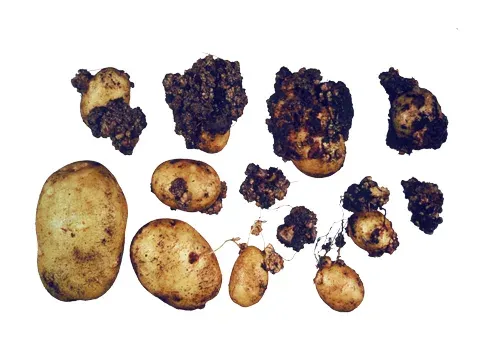
The hallmark symptom is the development of warty, cauliflower-like growths on the tubers, stolons, and stem bases of the plant.
These galls are initially small and light-colored but eventually expand and darken to a deep brown or black as the tissue decomposes.
Above-ground foliage usually shows no distinct symptoms, allowing the infection to spread undetected within a field until harvest time.
As the galls disintegrate in the soil, they release millions of resting spores, which contaminate the surrounding area and stay infectious for years.
Severe infestations can lead to the total replacement of tuber tissue with fungal galls, rendering the entire potato crop worthless.
The fungus thrives in cool and damp conditions, with optimal development occurring at soil temperatures between 15°C and 20°C.
High soil moisture is crucial for the germination of zoospores, which travel through soil water films to reach new potato roots and tubers.
The resting spores are incredibly robust, being able to withstand freezing temperatures, droughts, and chemical treatments that would kill other pathogens.
Movement of contaminated soil on farm machinery, boots, and tools is the most common way the disease is introduced into new, clean fields.
Moving infected seed tubers is the primary vector for long-distance spread, making certification programs essential to preventing further outbreaks.
Potato wart is a highly destructive disease that results in the complete loss of marketable potato produce on infested land.
The economic impact includes not only the loss of harvest but also stringent quarantine regulations that prevent the export of potatoes from affected regions.
Storage of infected tubers leads to rapid spread of rot in stockpiles, as the fungal galls break down and provide moisture for secondary infections.
Land infested with Synchytrium endobioticum may remain under quarantine for many years, forcing farmers to switch to non-host crops permanently.
The persistence of the pathogen in the soil makes eradication nearly impossible, necessitating a lifelong commitment to strict farm biosecurity.
The most reliable control measure is the exclusive use of resistant potato cultivars, which prevent the fungus from completing its life cycle.
Strict hygiene protocols, including washing machinery and boots when moving between fields, are essential to preventing the transfer of contaminated soil.
Farmers must avoid planting seed potatoes from unknown or suspected sources to prevent the introduction of this quarantine pathogen.
In cases of confirmed outbreaks, strict quarantine measures are enforced to stop the movement of soil, equipment, and plant debris from the site.
Crop rotation serves as a strategy to manage soil health, although it cannot effectively eliminate the long-lived resting spores of the pathogen.