
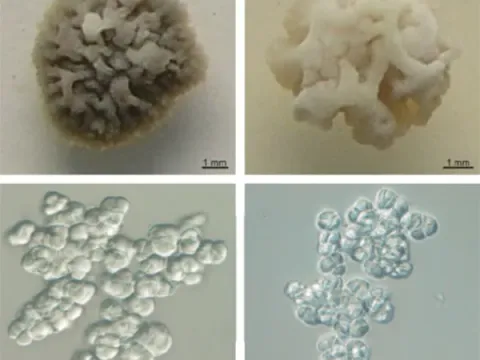
Wallemiomycetes
Wallemiomycetes
Wallemiomycetes is a class of fungi characterized by their remarkable ability to thrive in environments with low water activity, making them significant post-harvest pathogens.
What the section contains
Wallemiomycetes
The most prominent member of this group is Wallemia sebi, a cosmopolitan fungus frequently isolated from indoor environments and agricultural products.
These fungi are microscopic organisms that reproduce via spores, which are small enough to be easily transported through the air over long distances.
Morphologically, they form slow-growing, brown-colored colonies that are distinctive in their appearance on dry or sugary substrates.
Their biological adaptation to low-moisture environments distinguishes them from many common spoilage fungi that require higher humidity to colonize a host.
Wallemiomycetes thrive in conditions that are traditionally considered unfavorable for fungal growth due to their xerophilic nature, meaning they prefer dry habitats.
The primary trigger for the development of these fungi in an agricultural context is improper storage of grain or seeds with high moisture content.
Poor ventilation within storage facilities leads to the accumulation of moisture, creating optimal micro-climates for the rapid germination of fungal spores.
Temperature fluctuations in silos can facilitate condensation, which provides the necessary local moisture required for the fungus to initiate its colonization process.
High levels of impurities or damaged grains within a stored batch offer easier entry points for the fungal mycelium to penetrate and degrade the organic material.
The main impact of Wallemiomycetes is the degradation of quality and safety in stored agricultural commodities, leading to substantial economic losses.
As the fungus consumes the nutrients within the grain, it causes a reduction in nutritional value and destroys the germination potential of seeds.
Some strains produce metabolites that can be toxic, posing risks to livestock health when contaminated grain is used in feed production.
Visual quality is heavily impacted, as the dense fungal mats create unsightly discoloration and impart a stale, unpleasant odor to the entire batch.
Human health is also a concern, as the inhalation of concentrated fungal spores during handling of spoiled goods can lead to respiratory and allergic reactions.
Effective management begins with stringent post-harvest practices, specifically ensuring that crops are dried to their safe moisture levels before storage.
Regular sanitation of storage facilities and equipment is crucial to minimize the baseline spore count and prevent cross-contamination of clean batches.
Implementing active aeration and monitoring systems allows for the early detection and management of hot spots where moisture might accumulate.
Proper physical conditioning, including the removal of dust and fine particles, makes the stored material less hospitable to fungal growth.
- Maintenance of uniform temperature and moisture levels throughout the storage period.
- Disinfection of silos and warehouses using approved antifungal treatments before loading.
- Routine inspection and sampling to verify the quality and safety of stored agricultural goods.