
Waitea
Waitea
The disease is caused by the soil-borne fungus Waitea circinata, which is a member of the Rhizoctonia species complex. It acts as a necrotrophic pathogen, primarily attacking the roots and lower stems of a wide range of host plants.
What the section contains
Waitea
The pathogen produces a distinct white or light-colored mycelium that spreads through the soil profile. To ensure survival in adverse conditions, the fungus forms sclerotia — resilient, hardened structures that allow the pathogen to persist in the soil for several years.
Waitea circinata has a complex life cycle, reproducing both vegetatively through mycelial fragmentation and sexually via the formation of basidia and basidiospores. This flexibility allows the fungus to adapt effectively to diverse environments.
The fungus is highly saprotrophic, capable of thriving on crop debris and decaying organic matter. This makes it a persistent challenge in fields where plant residues are not adequately managed or turned into the soil.
Biological studies indicate that the pathogen outcompetes beneficial microflora in the rhizosphere, leading to significant disruption of the plant's nutrient and water uptake mechanisms, eventually causing systemic stress.
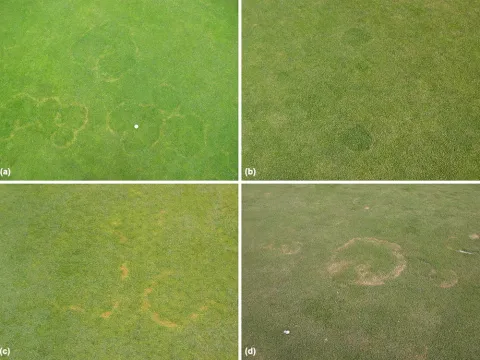
The most common symptom of Waitea disease is the formation of irregular patches of stunted and chlorotic plants within a field. These patches often expand as the fungus grows through the soil from plant to plant.
Root systems of affected plants exhibit characteristic necrosis, turning dark brown or black. The roots become fragile and fragmented, significantly reducing the plant's ability to maintain anchorage and obtain essential soil resources.
On stems, particularly near the soil line, one may observe patches of white fungal mycelium, especially under high humidity. Lesions may develop on the lower stem tissue, eventually leading to stem collapse and premature wilting.
Seedlings are particularly vulnerable; they may experience "damping off" before emergence or shortly after, leading to sparse and uneven crop stands. The remaining plants often show reduced vigor and tiller numbers.
In mature crops, the infection results in premature yellowing and lodging. Grain filling is often poor, resulting in shriveled seeds and significant loss in potential yield quality and weight.
Waitea disease thrives in environments characterized by moderate temperatures and high soil moisture. The optimal temperature range for fungal activity generally falls between 15°C and 25°C, matching common spring growing conditions.
Poor soil drainage and compaction create stagnant, high-humidity environments in the rhizosphere, which are conducive to rapid fungal infection and spread. Excessive rainfall after planting often exacerbates the severity of the disease.
Dense crop canopies can also facilitate infection by creating a localized high-humidity microclimate near the soil surface. This limits airflow and maintains the conditions required for mycelial growth.
A history of continuous monocropping significantly increases the inoculum load in the soil. The pathogen can survive for long periods in the absence of a host, but consistent planting of susceptible crops creates a cycle of persistent infection.
Any factor that delays seedling emergence, such as deep planting or cool soil temperatures, increases the time the young tissue is exposed to the pathogen, thereby increasing the risk of successful infection.
The primary economic impact of Waitea circinata is the reduction in final yield due to plant thinning and compromised physiological function. Total loss of stands in severely infested patches is not uncommon.
Plants that survive infection suffer from reduced nutrient uptake, which lowers their overall competitiveness against weeds and their tolerance to abiotic stressors like drought or heat later in the season.
In winter crops, the weakened root system impairs the plant’s ability to enter dormancy successfully, leading to higher rates of winterkill and decreased survival across the field.
Control measures, including the application of fungicides, increase production costs significantly. Furthermore, the disease degrades the uniform growth of the crop, making uniform harvesting and management more difficult.
The presence of the pathogen limits the choice of future crops in the rotation, as many varieties share susceptibility to this particular fungal complex, extending the economic burden over multiple seasons.
Implementing a diverse crop rotation is the most effective long-term management strategy. Avoiding the planting of highly susceptible hosts in infested fields for several years helps deplete the soil inoculum levels.
Seed treatment with systemic fungicides is crucial for protecting young, vulnerable seedlings from early-season root infections. This provides the crop with a head start before the fungus can establish itself.
Proper soil management, including thorough primary tillage, can help incorporate crop residues deeper into the soil profile, reducing the amount of inoculum available near the root zone of the subsequent crop.
Balanced fertilization, particularly ensuring adequate phosphorus and potassium levels, promotes stronger root development and helps the plant recover from minor infections or resist further spread.
- Strict sanitation of farm machinery to prevent the movement of soil containing sclerotia between fields.
- Improving field drainage to prevent localized waterlogging.
- Correcting soil pH through liming to create less favorable conditions for the fungus.
- Effective weed management to remove alternative hosts.